
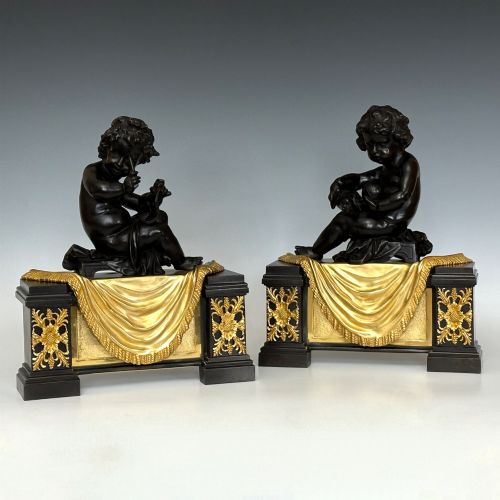
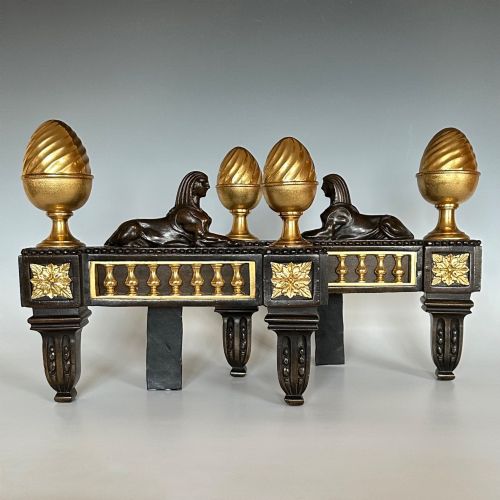
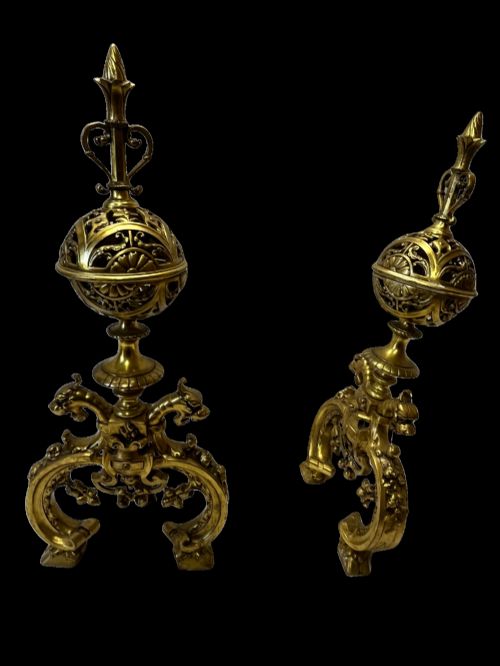
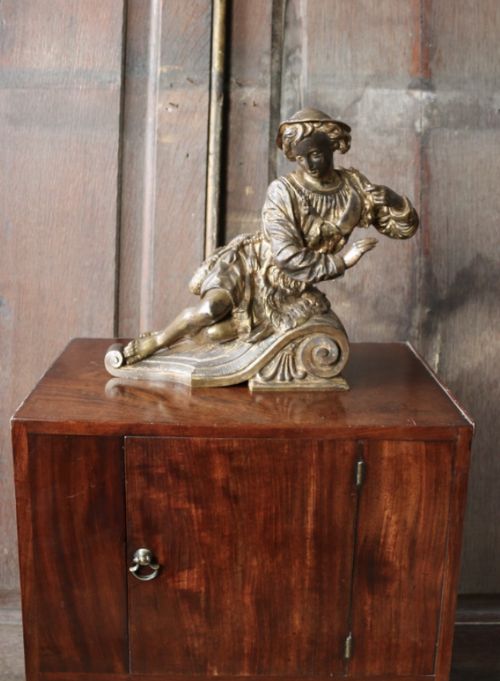


French Gilt Bronze Chenets
French gilt bronze chenets are hearth ornaments that frame a fireplace opening with bright gilded metalwork.
French Gilt Bronze Chenets
French gilt bronze chenets sit on the hearth to support firewood and decorate the fireplace opening. When you search for French gilt bronze chenets, you encounter pairs of heavy metal fire dogs designed to hold logs above the hearth floor.
The pieces appearing on this page span the eighteenth century, the Regency era, and the nineteenth century. Most examples date from the nineteenth century, including specific decades such as eighteen eighty and eighteen sixty, alongside revival periods.
Makers and designers drew on distinct historical vocabularies, producing forms that range from ornate Rococo curves to restrained Empire compositions and Louis XIV revival statuary. Many pairs combine cast bronze or iron with ormolu mounts, patinated bronze, and parcel gilt surfaces.
How they were made
Foundries produced these chenets by casting bronze, brass, or iron into detailed moulds to create figures, scrolling foliage, and structural fire bars. Craftsmen then chased the metal surfaces by hand, sharpening the cast details and undercut patterns before applying mercury gilding or ormolu finishes.
Makers frequently combined materials within a single pair, pairing dark patinated bronze bodies or iron supports with bright gilt bronze and ormolu mounts. Some designs incorporated adjustable widths or integrated fire tool rests and fender attachments into the main cast framework.
Materials recorded on this page include ormolu, patinated bronze, cast brass, and cast iron, often combined in single pairs.
What varies in quality
The weight of the cast metal and the complexity of the assembly distinguish standard production pieces from finer works. Superior examples maintain balance and proportion across complex Rococo or Louis XIV revival designs without relying on superficial surface smoothing.
The French Gilt Bronze Chenets Glossary
- Chenet
- A horizontal fire dog or hearth ornament placed in pairs to support logs inside a fireplace. They often feature decorative figural or scroll terminals facing the room.
- Ormolu
- Finely ground high-carat gold applied to a bronze base using a mercury amalgamation technique. It produces a rich, durable golden surface characteristic of quality French metalwork.
- Patinated bronze
- Bronze that has been chemically treated or allowed to darken naturally to create a deep brown or greenish surface tone. This dark finish contrasts with bright ormolu mounts.
- Rococo style
- An ornate design movement characterised by asymmetric scrolls, shell motifs, and naturalistic plant forms. It appears frequently on nineteenth-century revival hearth furnishings.
- Andiron
- An alternative term for fire dogs used to support firewood above the hearth base. They often incorporate adjustable width bars and decorative front standards.
French Gilt Bronze Chenets: Frequently Asked Questions
What do french gilt bronze chenets actually do?
French gilt bronze chenets serve as decorative fire dogs that sit at the front of a hearth. They hold logs slightly above the floor of the fireplace to allow air circulation beneath the wood.
Beyond their practical function in supporting fuel, these heavy metal pairs frame the hearth opening and display ornamental metalwork facing into the room.
How do I date a pair of chenets?
Dating relies on examining the casting quality, the metallurgical composition, and the stylistic vocabulary of the ornament. Eighteenth-century examples display hand-chased details specific to early bronze-working techniques, while nineteenth-century pieces often reflect revivals of Louis XIV or Rococo styles.
Hardware construction, such as the type of nuts, bolts, and iron bars used to join the components, provides further clues to the period of manufacture.
Are chenets and andirons the same thing?
Yes, chenets and andirons perform the same basic function on the hearth. Chenet is the French term commonly used for decorative fire dogs featuring ornate front standards.
Both terms describe heavy metal supports designed to keep firewood elevated and contained within the fireplace basket or grate.
How do I clean gilt bronze metalwork?
Cleaning requires only gentle dusting with a soft, dry cloth to remove surface particles. Avoid chemical polishes, abrasive cloths, or water, as these can strip or damage the delicate ormolu and patinated surfaces.
Preserving the original gilding depends on maintaining a dry environment away from excessive moisture and direct heat sources.
Can these chenets be used in an active fireplace?
Many chenets are robust enough for functional use with wood fires, particularly those built with sturdy iron and bronze bars. However, extreme heat can affect historic metal surfaces and original gilding over time.
Many collectors prefer to place them in non-working fireplaces or use them purely as decorative hearth ornaments to protect the antique finish.