


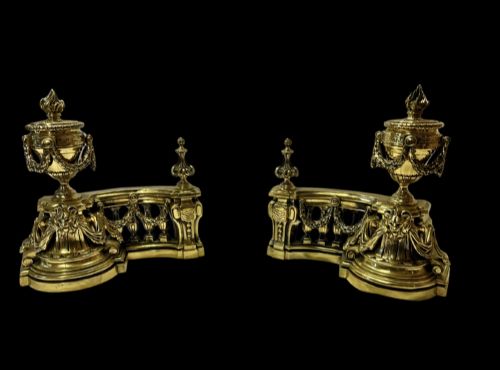
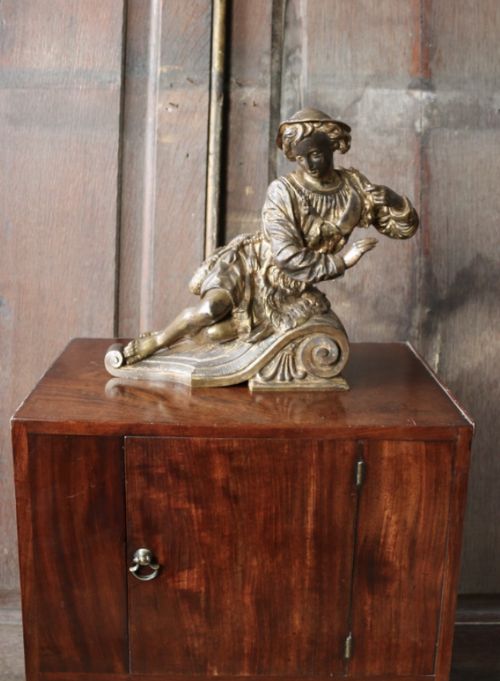


Brass Fireplace Firedogs
Brass fireplace firedogs are hearth supports crafted to hold logs above the hearth floor, bringing functional warmth and polished metal detail to a room.
Brass Fireplace Firedogs
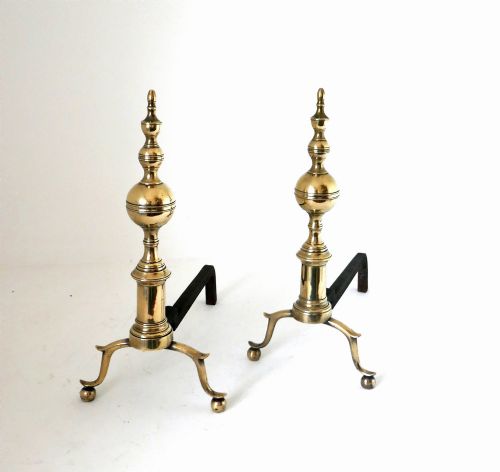
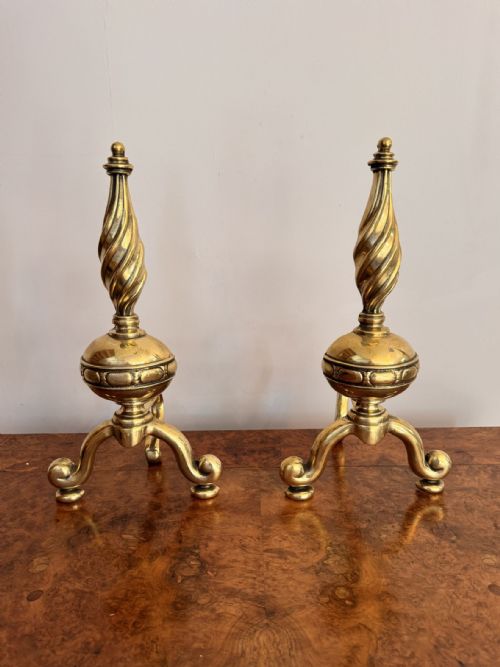
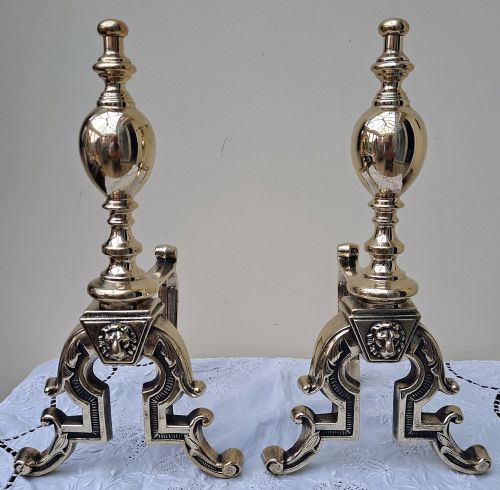
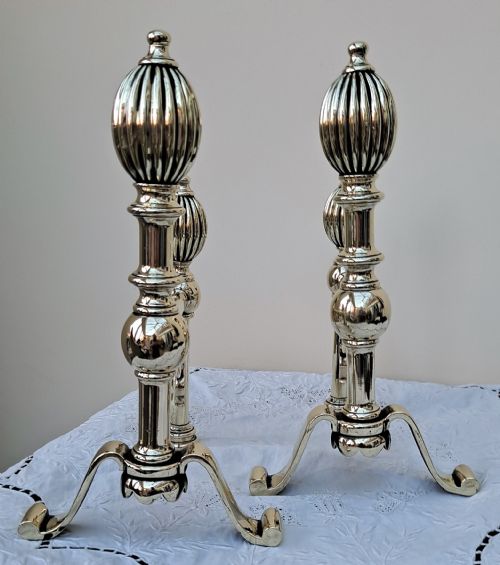
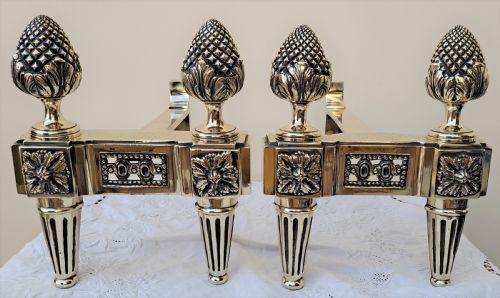
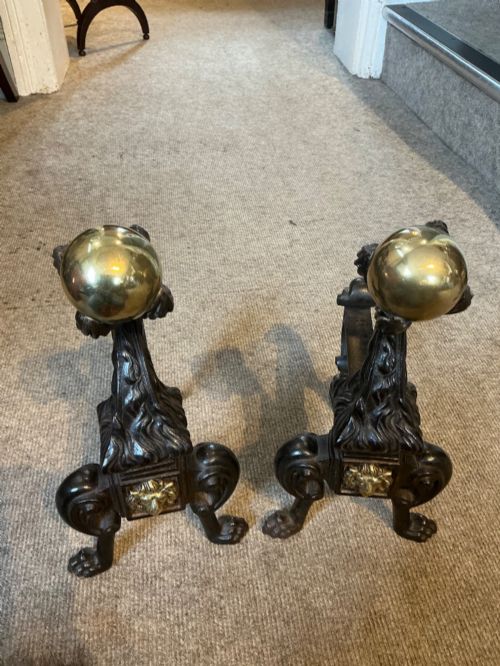
Brass fireplace firedogs, also known as andirons or chenets, serve as practical and decorative hearth furnishings designed to elevate firewood for better air circulation. These items frequently appear as paired sets alongside companion fire tools and tool rests.
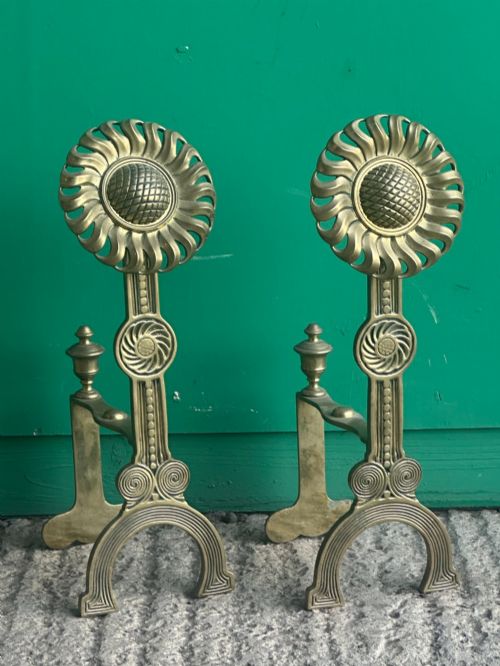
The selection ranges from late eighteenth-century American and English Georgian designs to elaborate Victorian Gothic Revival, French Rococo, and Aesthetic Movement examples. Pieces date from the eighteenth century through the nineteenth century and into the early twentieth century.
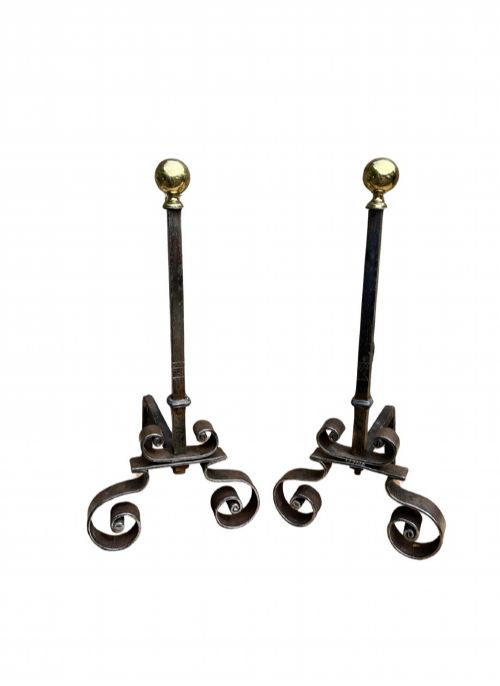
Makers and designers referenced in the period styles include Thomas Jeckyll, Christopher Dresser, and manufacturing firms such as William Tonks and James Cartland and Sons. Common configurations combine functional front brass standards with iron or cast iron support billets.
What varies in quality
The distinction between standard production and exceptional work rests upon the crispness of the casting and the depth of hand-chased detail on the brass or bronze surfaces. Substantial weight and precise alignment in paired sets indicate superior manufacturing standards.
Design sophistication separates mass-produced items from pieces executed in the manner of notable designers like Thomas Jeckyll or Christopher Dresser. The integration of secondary metals, such as wrought iron billets and ormolu mounts, further defines the grade of a hearth set.
Listings feature brass, iron, cast iron, wrought iron, ormolu, steel, and gilt bronze across eighteenth and nineteenth-century periods.
Thomas Jeckyll·William Tonks·James Cartland and Sons·Christopher Dresser
The Brass Fireplace Firedogs Glossary
- Andiron
- A horizontal metal bar raised on legs with an upright standard at the front, used to support logs in an open fireplace. They are also referred to as firedogs or chenets.
- Chenet
- The French term for an andiron or firedog, frequently associated with ornate ormolu, gilt bronze, and Rococo styling.
- Ormolu
- Gilded bronze utilised for decorative mounts and sculptural details on eighteenth and nineteenth-century hearth furnishings. It provides a rich golden lustre when polished.
- Aesthetic Movement
- A late nineteenth-century design style emphasising visual beauty over narrative subject matter, often incorporating stylized natural forms like sunflowers.
- Billet
- The horizontal iron bar extending backward from the firedog standard to support the fuel wood inside the hearth basket.
Brass Fireplace Firedogs: Frequently Asked Questions
What is the difference between firedogs and andirons?
Firedogs and andirons are simply different terms for the exact same hearth furniture designed to hold logs off the floor.
Regional preferences often dictate the terminology used, with andirons frequently appearing in English and American contexts while chenets or firedogs describe French or ornate Victorian pieces.
How were brass firedogs used in a Victorian fireplace?
Pairs of firedogs sat at the front of the hearth to cradle logs and prevent burning wood from rolling out onto the floor.
They also functioned as decorative centrepieces, often paired with matching tool rests, shovels, pokers, and tongs to complete the fireplace suite.
Can I burn real wood using antique brass firedogs?
Many antique firedogs feature sturdy cast iron or wrought iron billets specifically engineered to bear the weight and heat of burning logs.
However, buyers often evaluate whether the underlying iron bars remain robust enough for active fires or choose to utilise them primarily for decorative hearth display.
How do I identify a Victorian Gothic Revival firedog?
Victorian Gothic Revival pieces typically incorporate architectural motifs, pointed arches, and heavy cast brass or iron construction dating from the nineteenth century.
These designs contrast sharply with the lighter, sinuous floral patterns of the later Aesthetic Movement or the ornate curves of French Rococo copies.