


Brass Finial Andirons
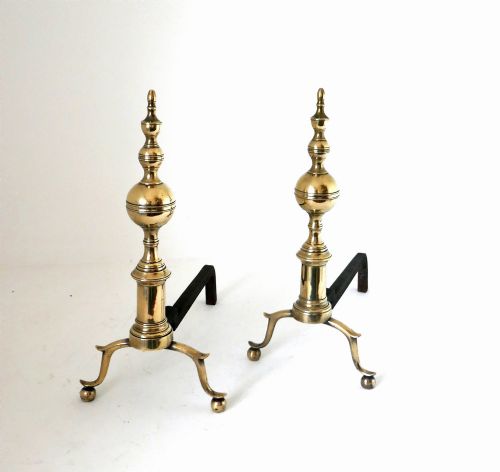
These brass finial andirons anchor the hearth with bright metal and steady weight, giving the fireplace a finished architectural line.
Brass Finial Andirons
Brass finial andirons are functional hearth supports designed to hold logs above the hearth floor for better airflow and combustion. When searching for brass finial andirons, a buyer encounters heavy pairs combining sturdy upright standards with decorative metallic terminals.
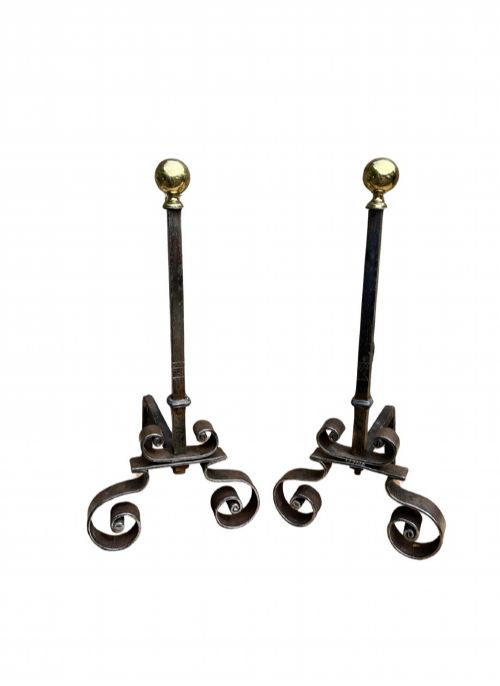
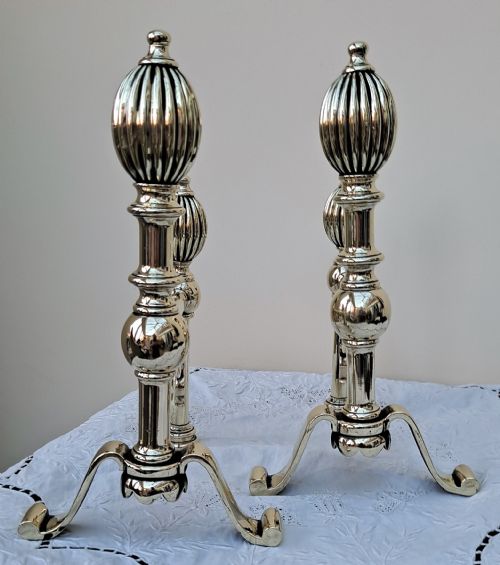
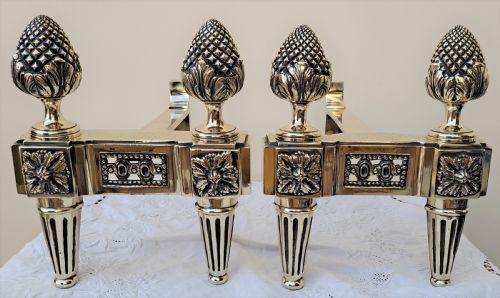
The selections available here span the eighteenth and nineteenth centuries, taking forms from Georgian symmetry to Victorian revival styles. Most examples pair bright cast or spun brass tops with robust iron or wrought iron shafts built to bear the heat.
How they were made
Maker workshops combined malleable iron for the load-bearing billets and legs with cast or polished brass for the decorative finials and fronts. This dual-metal construction ensured the piece could withstand intense hearth temperatures while presenting a polished face to the room.
Foundries utilised sand-casting techniques to shape the brass components, followed by hand-finishing and turning on lathes to achieve crisp geometric profiles. Wrought iron elements were hammered and joined to provide the structural backbone necessary for daily use.
Current listings feature pieces spanning the eighteenth century through the Victorian era, utilising combinations of brass, iron, and copper.
What varies in quality
The distinction between standard production pieces and finer examples lies in the weight of the metal and the crispness of the casting. Better pairs demonstrate thicker gauge brass with sharply defined mouldings on the finials rather than soft, blurred edges.
Proportion and structural integrity also separate grades, as superior pairs stand firmly without wobble and maintain balanced symmetry between left and right standards. The quality of the iron work, particularly the forged joints on the billets, indicates the level of craftsmanship involved.
The Brass Finial Andirons Glossary
- Andiron
- A horizontal metal support raised on legs, used to hold logs in a fireplace. They usually feature a decorative upright front.
- Finial
- A distinct decorative ornament finishing the top of an object. On andirons, this element provides the primary visual focal point.
- Billett
- The horizontal iron bar extending backward from the andiron front to support the burning wood. It takes the direct heat of the fire.
- Cast iron
- Iron poured into a mould to take complex shapes. This material provides heavy, rigid support for hearth furniture.
- Wrought iron
- Iron beaten and shaped by hand while hot. It offers high tensile strength and resilience against thermal shock.
Brass Finial Andirons: Frequently Asked Questions
How do I place andirons in the fireplace?
Place the pair inside the hearth opening with the upright finials facing forward into the room and the long billets extending toward the back wall. Leave enough space between them to accommodate your logs securely.
They should sit firmly on the hearth floor, centred beneath the flue to ensure smoke drafts upward correctly rather than spilling into the room.
Can I actually burn wood on antique andirons?
Most historic pairs are robust enough for occasional fires, provided the iron billets remain thick and structurally sound. Cast iron and wrought iron handle heat well, but excessive temperatures can stress fragile nineteenth-century joints.
For regular daily burning, many owners prefer to use a modern grate set between the andirons to protect the antique metal from direct thermal damage.
How should I clean brass finials safely?
Dust the metal regularly with a soft dry cloth to prevent soot accumulation from dulling the surface. Avoid harsh abrasive cleaners that strip away historic patina and scratch the softer brass.
If polishing is necessary, use a mild, traditional brass cream applied sparingly with a cloth, then buff gently to restore the soft golden lustre.
What is the difference between andirons and fire dogs?
The terms are largely interchangeable, though fire dog is an older, traditional name for the same hearth support. Both terms describe iron and brass structures designed to hold firewood off the hearth floor.
Regional preferences and dealer descriptions dictate which term appears on a listing, but the function and placement remain identical in practice.