


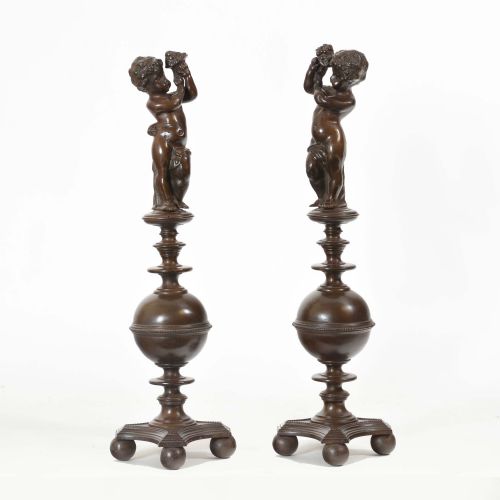


Bronze Fireplace Andirons
These bronze fireplace andirons bring monumental weight and sculptural grace to a hearth, anchoring the room with the lasting substance of nineteenth-century metalwork.
Bronze Fireplace Andirons
When you search for bronze fireplace andirons, you are looking at substantial hearth furniture designed to support logs while elevating the visual character of the fireplace. The selection centres heavily on nineteenth-century French and Italian pieces, alongside Regency and eighteenth-century examples.
Most pieces appear as matched pairs of chenets or fire dogs, frequently taking sculptural forms that combine bronze and ormolu. You will also encounter robust variations in cast iron, wrought iron, and steel paired with bronze mounts.
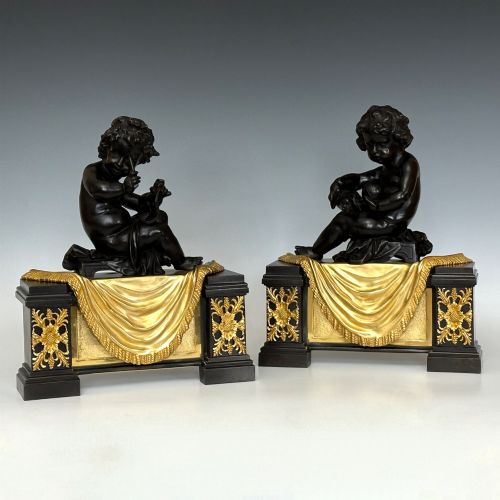
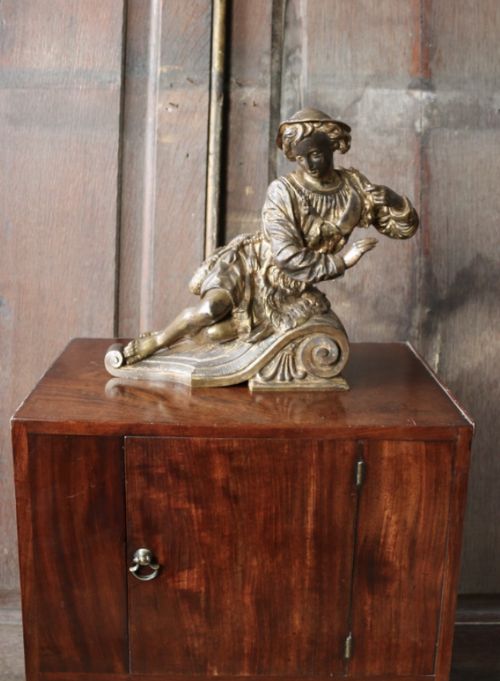
Beyond standard hearth accessories, forms occasionally incorporate figural statuary, cherubs, or monumental proportions suited to grand chimney openings. The underlying function remains practical, yet the execution leans firmly into decorative arts.
How they were made
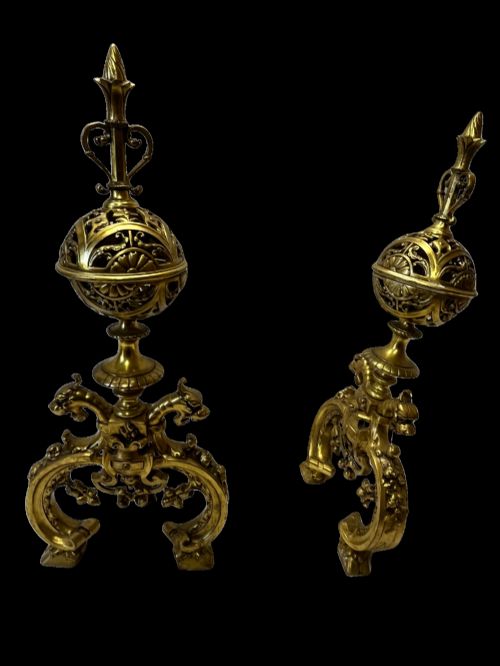
Makers utilised casting techniques for the main bodies, shaping bronze, brass, and iron into intricate figural and architectural motifs. Molten metal poured into moulds allowed for the creation of heavy, durable frames capable of enduring intense hearth heat.
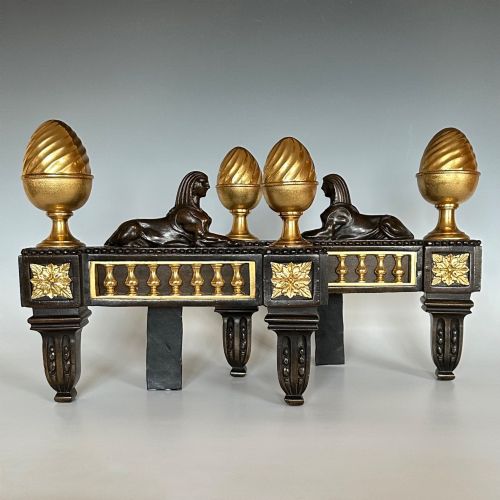
Surface finish involved fire gilding or the application of ormolu to highlight specific details against darker bronze patinas. Wrought iron and steel components were hand-hammered and forged to provide structural strength for supporting fuel wood.
Several pairs include watchful cherubs perched on the front bars, keeping a permanent, gilded eye on the kindling.
What varies in quality
The degree of chiselling and hand-finishing on the cast surfaces distinguishes standard production from exceptional studio output. Crisp definition in figural elements like cherubs or acanthus leaves points to skilled post-casting work by the bronzier.
Weight and the integration of mixed metals also signal standard versus high-end fabrication. Heavier castings combined with fire-gilded ormolu mounts rather than cold paint or modern lacquers indicate superior period construction.
The Bronze Fireplace Andirons Glossary
- Chenet
- An alternative term for an andiron, originating from French terminology for fireplace dogs. They often feature decorative fronts that remain visible when the hearth is unlit.
- Ormolu
- Gilt bronze created by applying a mixture of gold and mercury to a bronze base, then firing to drive off the mercury. This technique yields a deep, lasting golden lustre characteristic of fine French pieces.
- Fire Dog
- A heavy metal support placed within a fireplace to hold logs above the hearth floor for better airflow. The term is frequently used interchangeably with andiron.
- Patina
- The surface sheen and colour acquired by bronze and iron over decades through handling, oxidation, and age. A natural patina adds visual depth to the metal.
- Parcel Gilt
- A decorative treatment where only specific portions of an object receive gold leaf or gilding. This creates contrast against the darker bronze or iron beneath.
Bronze Fireplace Andirons: Frequently Asked Questions
What is the difference between andirons and chenets?
Andirons and chenets refer to the same functional hearth furniture, though chenets generally implies a French origin and a stronger focus on decorative front mounts. Both terms describe the heavy supports used to hold logs in an open fireplace.
In practice, British and European makers used both words interchangeably throughout the eighteenth and nineteenth centuries. The choice of name usually depends on the stylistic influence of the piece.
Can these andirons be used in a working fireplace?
Many nineteenth-century andirons are robustly constructed from cast bronze, iron, and steel, making them entirely suitable for supporting wood fires. Their substantial weight and solid metal frames withstand high hearth temperatures.
However, pieces featuring delicate ormolu mounts or fire gilding are often reserved for decorative hearth presentation to preserve their historical surface finishes. Checking the metal thickness helps determine practical utility.
How do I identify nineteenth-century French styles?
French pieces from this era frequently draw on Rococo Revival, Louis XIV, or Empire aesthetics, displaying elaborate scrollwork, mythological figures, or cherubs. The combination of chased bronze and bright ormolu is a strong indicator of French manufacture.
Makers in this tradition prioritised theatrical symmetry and sculptural depth, setting them apart from simpler utilitarian iron fire dogs. Detail in the casting offers the clearest clue to period origin.
Why are some andirons made with iron and bronze?
Combining iron and bronze served a dual purpose of structural resilience and decorative display. Wrought or cast iron provided the heavy, heat-resistant backbone required for holding heavy logs.
Bronze and ormolu mounts were then attached to the front facing part of the andiron to provide visual ornamentation. This method balanced practical engineering with the opulent style expected in formal reception rooms.