


Hearth Back Plate
These heavy cast iron hearth back plate examples protect the chimney breast and radiate warmth into the room.
Hearth Back Plate
A hearth back plate sits at the rear of an open fireplace to shield the brickwork from intense heat and throw warmth forward into the room. Most examples found here date from the Victorian period, alongside earlier Georgian and nineteenth century pieces.
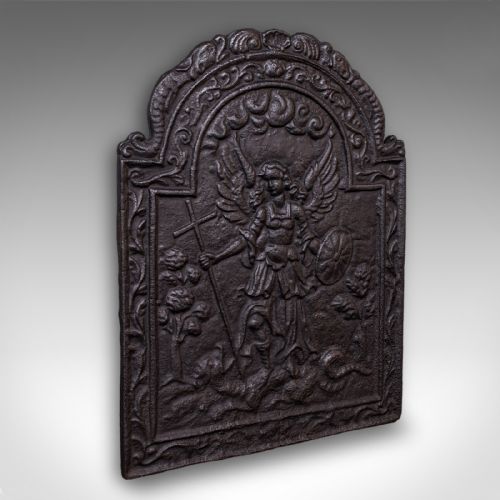
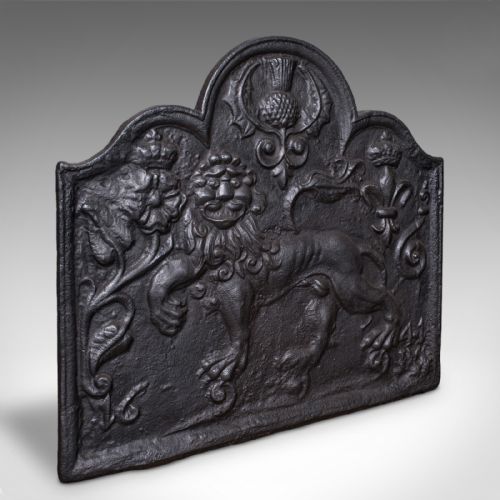
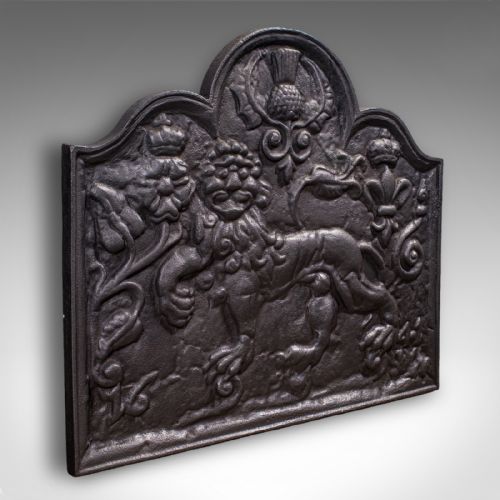
Makers shaped these panels in various styles including Neoclassical Revival, Carolean Revival, and French Baroque. Common decorative motifs feature heraldic designs, church refectory patterns, and the traditional tree of life.
Fireplace accessories of this sort serve both a practical function and a decorative role within period chimney breasts. English casting traditions dominate the selection, complemented by continental French arch top designs featuring armour and eagles.
How they were made
Foundry workers poured molten metal into sand moulds to create these sturdy cast iron panels. This traditional casting method allowed workshops to produce sharp relief decoration across the surface.
The resulting heavy plates required robust metallurgical control to withstand repeated thermal expansion in domestic and institutional hearths. Artisans finished the raw castings by hand to sharpen architectural and heraldic details.
Recorded styles span French Baroque, Carolean Revival, Neoclassical Revival, and Victorian Heraldic motifs.
What varies in quality
Depth and crispness of the cast relief define the visual hierarchy of these pieces. Finer examples display sharp architectural mouldings and well-defined figurative elements rather than shallow, softened impressions.
Substance and thickness determine the physical presence of the plate within the hearth. Heavier castings offer greater durability against extreme heat and carry deeper cultural references from Georgian and Victorian revival styles.
The Hearth Back Plate Glossary
- Fireback
- A heavy metal plate placed at the back of an open fireplace to protect the wall and reflect heat. These items often feature moulded relief scenes and heraldic emblems.
- Cast iron
- An iron-carbon alloy poured into moulds in a molten state. This material provides the primary substance for heavy hearth protection plates.
- Reflector
- An alternative term for a fireback used to describe its primary thermal function. These pieces bounce radiant heat back into the living space.
- Carolean Revival
- A decorative style echoing the arts of the mid seventeenth century reign of Charles II. Pieces in this category utilise rich scrolls and regal motifs.
- Neoclassical Revival
- An aesthetic movement drawing inspiration from classical antiquity. This style incorporates urns, swags, and balanced symmetrical framing.
Hearth Back Plate: Frequently Asked Questions
What is a hearth back plate?
A hearth back plate is a heavy iron slab positioned behind an open fire. Its purpose is to absorb heat and radiate it back into the room.
These plates also prevent the intense flames from damaging the brickwork of the chimney breast over time.
How do I install a fireback?
Most hearth back plates stand upright against the rear wall of the fireplace opening. Some larger pieces rest securely on feet or lean back at a slight angle.
Ensure the hearth floor can support the significant weight of the cast iron before placement.
Are these plates purely decorative?
While they feature intricate Victorian and Georgian relief designs, their function remains entirely practical. They were engineered to endure high temperatures and protect masonry.
Many examples incorporate religious motifs, heraldry, or natural symbols like the tree of life.
How do I date a cast iron fireback?
Dating relies on stylistic clues within the cast relief, such as Neoclassical revival swags or French baroque flourishes. Reference materials and period casting techniques help narrow the decade of production.
Most surviving examples date from the nineteenth century, though earlier Georgian forms appear occasionally.