


Antique English Fireback
An antique english fireback is a heavy cast iron plate protecting the hearth wall while radiating heat into the room.
Antique English Fireback
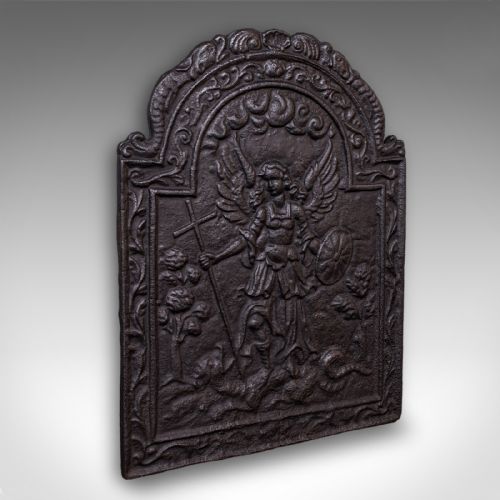
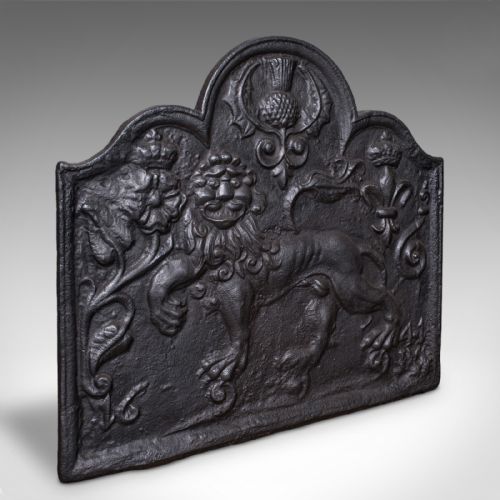
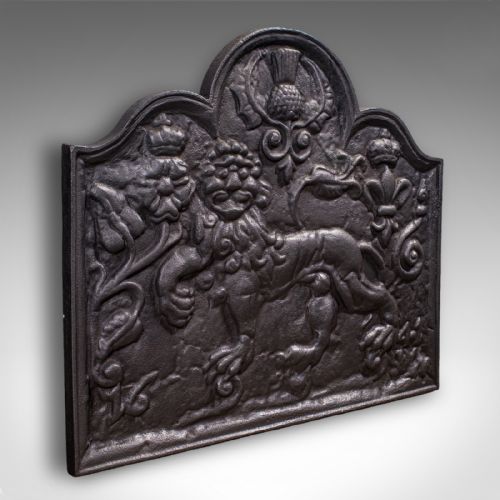
An antique english fireback is an essential hearth accessory designed to sit at the back of an open fireplace, absorbing and reflecting warmth into the room while protecting the brickwork. When you search for an antique english fireback, you encounter heavy cast iron plates dating primarily from the Victorian and Georgian periods, alongside related items such as fire baskets and andirons.
The pieces appearing on this page span several distinct stylistic revivals popular during the nineteenth and early twentieth centuries. You find examples rendered in Neoclassical Revival, Carolean Revival, Victorian Gothic, and Heraldic styles, as well as decorative church refectory pieces and tree of life motifs. Most items originate from the Victorian era, supplemented by earlier Georgian examples.
Beyond the standard flat or arched fireback, listings occasionally include fireplace reflectors and complete open hearth fire setups with grates and andirons. These functional objects serve both to improve the thermal efficiency of an open hearth and to provide a decorative focal point in a period interior. Understanding the specific design vocabulary helps you place each piece correctly within its historical context.
Judging quality and character
Quality in these iron plates rests upon the crispness of the cast relief work and the thickness of the metal. Superior examples display sharply defined heraldic details, clean botanical lines, and deep sculptural modeling that survives years of exposure to soot and heat.
The weight and integrity of the casting matter significantly, as heavier plates retain structural stability and resist cracking under thermal stress. The finesse of the revival style - whether Neoclassical or Carolean - distinguishes standard utility pieces from more ambitious decorative works.
A tree of life motif brings literal foliage right into the hearth, saving your logs from feeling lonely.
The Antique English Fireback Glossary
- Fireback
- A heavy iron plate placed at the rear of an open fireplace to protect the wall and reflect heat. They often feature decorative relief moulding.
- Cast iron
- An iron-carbon alloy poured into a mould while molten to create solid objects. It forms the primary material for these hearth plates due to its heat retention.
- Wrought iron
- Tough, malleable iron beaten into shape by hand, often utilised in hearth accessories like andirons and fire baskets.
- Relief
- Sculptural projection from a flat background surface. Fireback designs rely on this technique to create pictorial scenes and heraldic crests.
- Andirons
- Horizontal fire dogs supporting logs in an open fireplace. They frequently accompany firebacks and fire baskets in hearth arrangements.
Antique English Fireback: Frequently Asked Questions
What is a fireback used for?
A fireback sits against the rear wall of an open fireplace to shield the masonry from direct heat damage. It also absorbs thermal energy during a burn and radiates that heat back into the room long after the flames subside.
Beyond its protective and thermal functions, the decorative relief cast into the iron provides an ornate focal point for the hearth. Historically, these plates helped improve the overall efficiency of open coal and wood fires.
How do I install a fireback?
Firebacks are heavy iron plates designed to stand upright against the back wall of an open fireplace hearth. Many pieces balance on feet or lean securely at a slight backward angle against the brickwork.
Because of their substantial weight, ensure the hearth floor is level and stable before placement. Some setups utilise supporting hearth bars or andirons positioned immediately in front to keep the plate secure.
Are these pieces made of cast iron?
The vast majority of pieces listed are formed from cast iron, which provides the necessary density and thermal mass for hearth use. This material withstands high temperatures without warping and holds heat effectively.
Associated items such as fire baskets and andirons may incorporate wrought iron for specific structural components. The distinct casting textures visible on the surface indicate traditional sand-molding techniques.
How do I date an iron fireback?
Dating relies on stylistic clues, such as whether a piece exhibits Georgian proportions or Victorian Gothic and Neoclassical revival motifs. Makers often incorporated specific historical revival styles that correspond to nineteenth-century manufacturing periods.
Physical characteristics, including the texture of the iron and the depth of the cast relief, also assist in determining age. Comparing the design elements to documented archive pieces helps narrow down the probable era of manufacture.