


Victorian Fireplace Back
These heavy iron shields sit at the hearth behind the flame, turning Victorian fireplace back designs into practical room heaters.
Victorian Fireplace Back
A victorian fireplace back sits against the rear brickwork of a hearth, catching and radiating heat back into the room while protecting the masonry from intense coal or wood fires. When you search this phrase, you find heavy metal plates designed specifically to absorb thermal energy and project it outward into the living space.
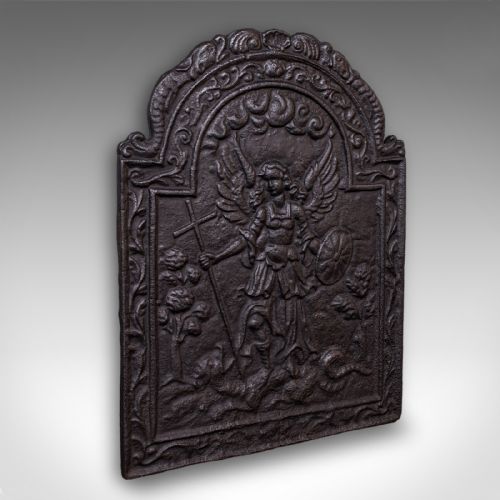
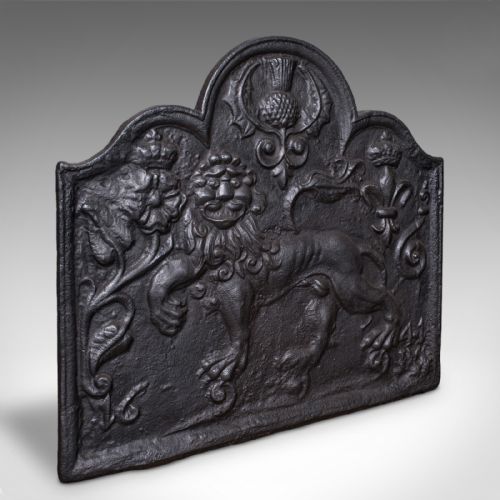
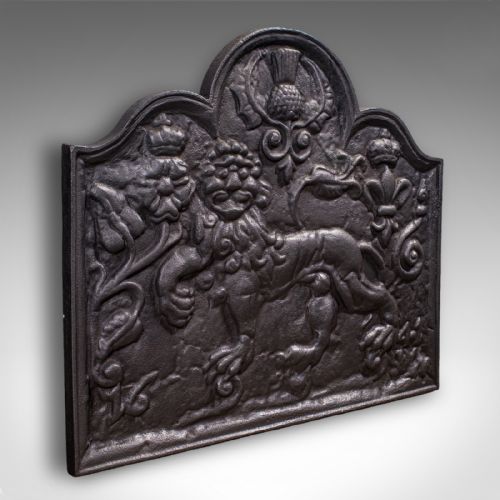
The pieces you meet most often on this page are cast iron firebacks dating from the nineteenth century, frequently styled with relief motifs such as the Tree of Life or heraldic emblems. English examples dominate the selection, often taking the role of a fireplace reflector behind an open hearth or a matching grate.
Beyond standard flat or arched iron plates, the wider category encompasses related hearth furniture, including complete grates, fenders, and occasional companion pieces like spill holders. These heavier ironwork items served both a functional role in coal management and a decorative purpose within the Victorian interior scheme.
Materials and Casting
Foundries manufactured these firebacks primarily in cast iron, pouring molten metal into sand moulds to achieve crisp relief decoration. This dense material withstands repeated thermal expansion and contraction while holding intricate surface details like coats of arms and botanical patterns.
Stylistic revivals heavily influenced production, leading ironfounders to incorporate Neoclassical, Carolean, and Gothic motifs into the mould designs. Artisans finished the raw castings with protective black coatings to prevent oxidation in the damp chimney environment.
The listings show cast iron as the dominant material, supplemented by occasional ceramic flat back figures, brass accents, and oak framing.
Casting Depth and Proportion
Quality in a victorian fireplace back rests primarily upon the crispness and depth of the cast relief work. Superior pieces display sharp, undercut foliage or heraldic details, whereas inferior examples present soft, muddy edges resulting from worn or poorly struck moulds.
Weight and thickness dictate the structural integrity and heat retention of the plate. Heavier, thicker iron castings resist cracking under thermal stress far better than thin, utilitarian alternatives produced for smaller domestic grates.
The Victorian Fireplace Back Glossary
- Fireback
- A heavy metal plate placed at the back of an open hearth to protect the wall and reflect heat into the room. These plates often feature moulded coats of arms or symbolic trees.
- Grate
- A metal basket or frame holding coal or wood within the fireplace opening. Grates frequently pair directly with a matching iron fireback.
- Fender
- A low metal guard placed on the hearth in front of the fireplace to contain rolling embers. They are commonly forged from iron or brass to match the surrounding fire furniture.
- Relief
- Raised ornamentation standing out from the flat background plane of the iron casting. In Victorian pieces, this technique creates depth in heraldic and botanical scenes.
Victorian Fireplace Back: Frequently Asked Questions
What does a fire back actually do?
A fire back acts as a thermal barrier, absorbing heat from the burning logs or coal during the fire and slowly releasing it long after the flames die down. This simple mechanism doubles the radiant efficiency of an open hearth.
At the same time, the heavy iron plate shields the fragile brickwork of the chimney breast from direct, destructive thermal shock. Without this protection, intense Victorian coal fires would rapidly crack the mortar and masonry behind the grate.
How do I fit one into my hearth?
Most firebacks are heavy enough to stand unsupported against the rear brickwork of the fireplace opening, tilted slightly backward for stability. Some setups utilise small iron feet or mounting brackets to hold the plate securely in place.
You must measure the width and height of your firebox carefully before purchasing, ensuring adequate clearance around the edges for airflow and safe installation behind your specific grate.
Are these pieces safe for modern fires?
Original nineteenth-century cast iron plates handle standard wood-burning and gas fires very well, provided they are free from deep structural fractures. The dense metal is engineered precisely for high-temperature service.
However, you should inspect older iron for hidden hairline cracks before lighting large fires, as rapid temperature changes can cause compromised metal to split further under thermal stress.
How do I clean and maintain cast iron?
Routine maintenance requires only a soft brush or dry cloth to remove loose soot and ash accumulation from the surface of the relief decoration. Avoid using harsh chemical cleaners that strip the protective dark finish.
Applying a light coat of grate polish or black lead periodically helps preserve the dark iron patina and protects the metal from rust during humid summer months when the fireplace is not in use.