


Decorative Cast Iron Hearth
These decorative cast iron hearth pieces bring warmth and weight to a room, offering genuine period character for a working fireplace.
Decorative Cast Iron Hearth
A decorative cast iron hearth encompasses functional fireside metalwork designed to protect and outfit the fireplace, ranging from heavy relief firebacks and grates to fire baskets and fenders. When looking for a decorative cast iron hearth, buyers encounter items built to stand the heat and anchor the room visually.
The selections span several centuries, with Victorian examples appearing most frequently alongside Georgian pieces, 17th-century style items, and occasional earlier architectural survivals. Forms vary from simple register grates and spark guards to figural doorstops and ornate armorial firebacks.
Materials and Casting Methods
The primary material is cast iron, often poured into sand or open moulds to create thick, heat-retaining panels and grates with deep relief decoration. Wrought iron and steel provide tougher structural support for fenders, fire baskets, and moving parts.
Makers integrated brass elements for decorative contrast on fire baskets and fire iron sets, while timber and steel mesh appeared on specific screens and accessories. These metals were left with natural dark finishes or occasionally painted depending on the era and domestic function.
Listings span periods from the 15th century to the 1920s, featuring cast iron, wrought iron, brass, and steel mesh.
Judging Quality in Fireside Ironwork
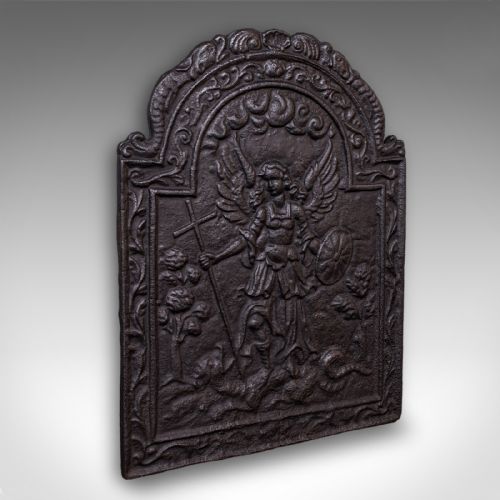
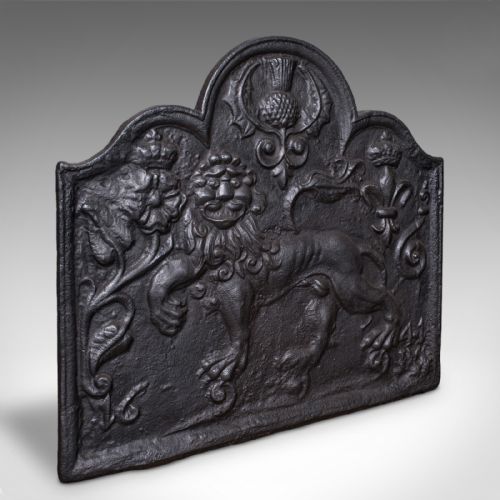
Quality rests in the crispness of the casting and the depth of the relief work, where sharp armorial details or figures show superior foundry skill. Thicker, heavier iron plates indicate better durability and more substantial mass for heat reflection.
Design ambition separates standard utility grates from exceptional pieces, such as those featuring Gothic Revival tracery or complex figural subjects. Original matched components, like a complete set of fire irons or an integrated fender and grate, elevate the integrity of the ensemble.
The Decorative Cast Iron Hearth Glossary
- Fireback
- A heavy metal plate placed at the back of an open fireplace to reflect heat into the room and protect the masonry wall. They often feature relief mouldings, dates, or armorial crests.
- Register Grate
- A fireplace insert featuring a moveable flap or valve to control the draught and regulate smoke up the chimney. These units combine the grate and surround into a single fitted iron assembly.
- Fire Basket
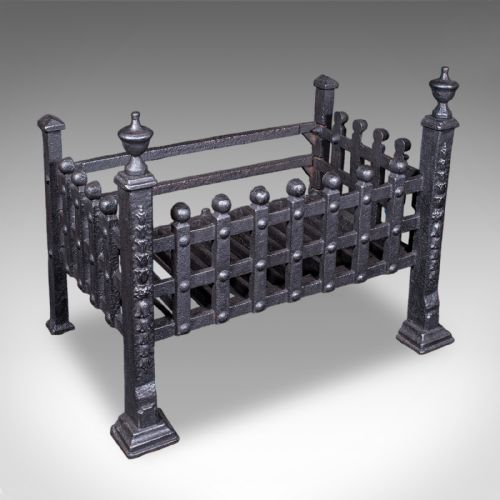
- An open metal container raised on legs to hold coal or wood logs inside a hearth. They frequently incorporate brass detailing and sit within larger fireplace openings.
- Fender
- A low metal guard placed on the floor around the hearth to contain stray embers and ash. They are constructed from iron, steel, or brass to match the surrounding fireside furniture.
- Spark Guard
- A protective screen made of metal mesh and iron framing designed to catch flying embers from an open fire. They became common in the 20th century as domestic safety standards shifted.
Decorative Cast Iron Hearth: Frequently Asked Questions
What is a fireback used for?
A fireback sits against the rear wall of an open fireplace to absorb and radiate heat back into the living space. It also shields the original brickwork from intense flames and degradation.
Heavier examples distribute thermal energy effectively and prevent the fireplace masonry from crumbling under continuous high temperatures.
How do I clean cast iron hearth items?
Regular maintenance involves brushing away soot and ash with a soft bristle brush rather than using harsh liquid cleaners. A light application of grate polish or oil helps maintain the dark finish.
Avoid soaking iron pieces in water, as moisture causes oxidation and pitting on unprotected surfaces.
Can these grates burn real wood?
Most traditional cast iron grates and fire baskets are built to handle solid fuels like wood or coal. However, checking for thermal stress cracks or structural repairs is essential before lighting an active fire.
Heavier Victorian and Georgian grates generally withstand high heat well when seasoned properly.
How do I date an iron fireback?
Dating relies on stylistic clues, casting techniques, and any raised dates or maker marks cast directly into the iron surface. Gothic revival, Victorian, and earlier 17th-century styles each display distinct decorative motifs.
Thicker, sand-cast panels with simpler armorial designs often point towards earlier craftsmanship, while crisp, machine-finished patterns align with the late 19th century.