


Cast Iron Hearth Reflector
A cast iron hearth reflector stands at the back of a fireplace to throw heat forward into the room.
Cast Iron Hearth Reflector
A cast iron hearth reflector protects the masonry of the chimney back while radiating warmth outward. These heavy plates sit directly against the rear wall of the fireplace, catching the fire's glow and reflecting it back into the living space.
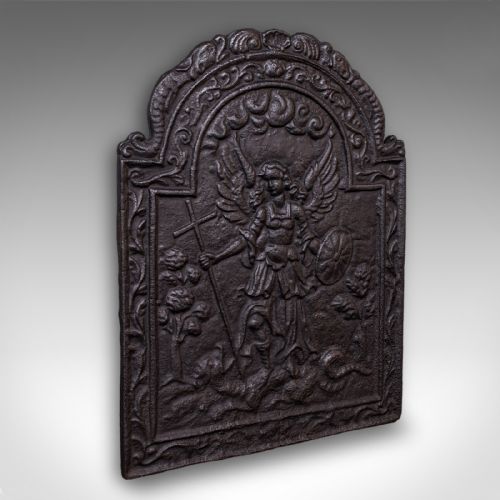
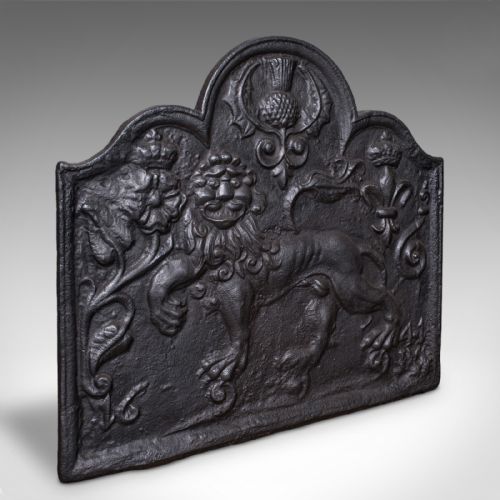
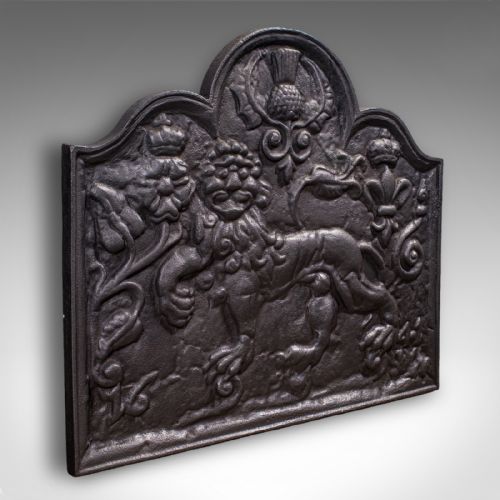
The pieces listed here span the Georgian and Victorian periods, with the vast majority hailing from the Victorian era. You encounter forms encompassing church refectory designs, tree of life motifs, and heraldic panels.
Makers drew on various revivalist vocabularies to decorate the metal. Neoclassical Revival, Carolean Revival, and Victorian Gothic styles dominate the available selection.
How they were made
Foundries produced these heavy plates by pouring molten metal into sand moulds or open beds. The process allowed artisans to cast thick iron sections capable of withstanding intense, repeated heat without warping.
Surface decoration was achieved directly through the casting process. Relief panels, heraldic crests, and botanical motifs like the tree of life were carved into the original pattern before pressing into the foundry sand.
The listings on this site exclusively feature cast iron materials across Georgian and Victorian periods.
What varies in quality
The crispness of the cast relief dictates much of the visual appeal. Plates with deeply struck patterns and sharp, well-defined edges demonstrate superior foundry work compared to softer, worn impressions.
Thickness and weight distinguish utility castings from decorative statements. Heavier plates offer a more substantial presence in the hearth and hold heat longer after the fire dies down.
The Cast Iron Hearth Reflector Glossary
- Cast iron
- An iron-carbon alloy poured into a mould to form heavy plates. It retains heat exceptionally well in fireplace settings.
- Fireback
- A heavy metal plate placed at the back of a fireplace. It protects the wall and radiates warmth into the room.
- Relief
- Sculptural projection from a flat background. Founders used this technique to create pictorial scenes on iron plates.
- Neoclassical Revival
- A design style drawing on classical Greek and Roman motifs. It appears frequently on nineteenth-century hearth plates.
Cast Iron Hearth Reflector: Frequently Asked Questions
How do I install a hearth reflector?
These heavy iron plates simply stand upright against the rear brickwork of the fireplace opening. Their own weight keeps them stable against the back wall.
Ensure the hearth floor is level and clear of ash before placing the plate into position behind the grate.
Can I use these with a modern fire?
Most of these plates were designed for traditional solid fuel hearths. They tolerate high temperatures from wood or coal fires.
Check the dimensions of your fireplace opening carefully to ensure the heavy iron plate fits the space safely.
How do I clean cast iron reflectors?
Remove loose soot and ash with a soft brush during routine maintenance. Avoid harsh chemical cleaners that strip the protective dark finish.
Apply a light coat of grate polish or oil periodically to maintain the deep iron colour and prevent surface rust.
How do I date a fireback?
Stylistic clues such as Gothic or Neoclassical Revival motifs point towards nineteenth-century production. Foundry marks and the sharpness of the relief work also help narrow down the period.
Georgian examples tend toward simpler, heavier proportions, while Victorian pieces often embrace eclectic revivalist decoration.