


Antique Iron Fire Plate
An antique iron fire plate radiates warmth into the room while protecting the masonry behind the hearth.
Antique Iron Fire Plate
An antique iron fire plate, also referred to in listings as a fireback or fireplace reflector, stands against the back wall of a hearth to absorb and project heat into the living space. These heavy iron slabs protect the brickwork from the direct intensity of open coal and wood fires.
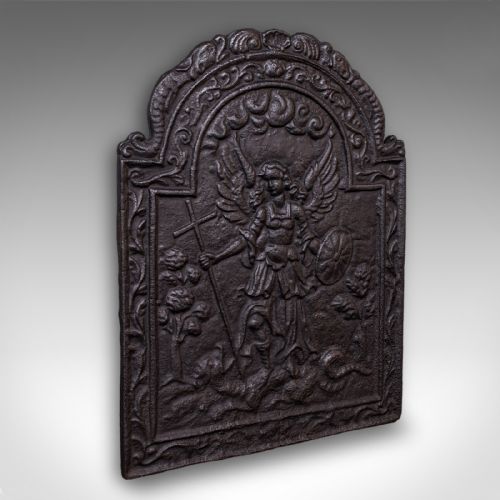
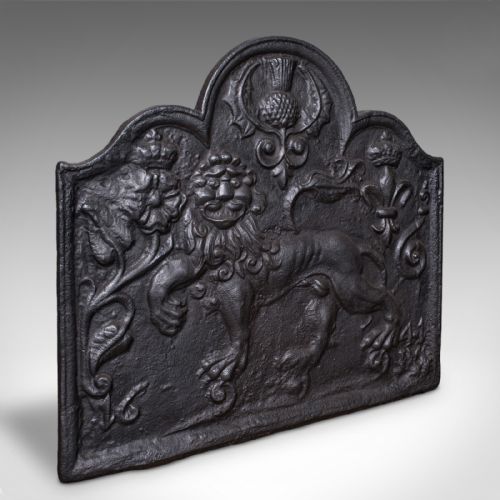
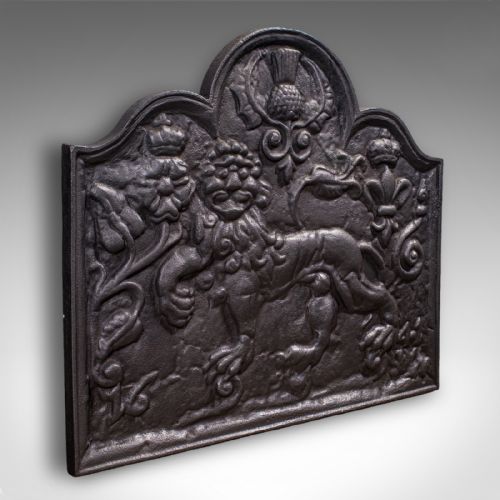
The examples gathered here span the Georgian and Victorian eras, alongside pieces attributed to the nineteenth century, including designs influenced by Gothic, Neoclassical, and Carolean revival styles. Buyers frequently encounter rectangular and arch-top formats intended to fit various fireplace openings.
English origins dominate the current selection, complemented by occasional French works featuring distinct heraldic, armorial, or tree of life motifs. Each heavy plate serves both a practical thermal purpose and a decorative function within the chimney breast.
Materials and casting methods
Every piece recorded in the archive and current listings consists entirely of cast iron, chosen for its durability and capacity to retain thermal energy. Molten iron was poured into sand or open-face moulds to capture relief patterns before cooling into heavy, rigid plates.
Surface ornamentation relies on casting relief, yielding crisp details such as eagles, armour, and heraldic crests that emerge directly from the iron face. These relief elements vary from simple geometric borders to elaborate pictorial scenes characteristic of nineteenth-century revivalism.
Cast iron eagles stare sternly from French arch-top plates, guarding the hearth against drafts.
Distinctions in craftsmanship and form
The distinction between standard examples and superior plates rests upon the depth and definition of the cast relief work. Finely modelled pieces display sharp, clean lines in motifs such as foliage, human figures, and coats of arms, whereas lesser plates present softer or shallower impressions.
Weight and thickness further differentiate the selection, with heavier iron plates offering greater thermal mass and structural presence within the fireplace. The sophistication of the stylistic revival, ranging from restrained Georgian proportion to exuberant Victorian and French Baroque ornamentation, governs the visual impact of each piece.
The Antique Iron Fire Plate Glossary
- Fireback
- A heavy metal plate placed at the back of an open fireplace to reflect heat forward and protect the masonry. These items are sometimes designated as fire plates or hearth plates in historical records.
- Cast Iron
- An iron-carbon alloy poured into a mould in a molten state to create solid, heavy objects. This material withstands extreme hearth temperatures without melting or warping easily.
- Relief
- Sculptural projection from a flat background surface. Iron fire plates utilise this technique to form raised decorative scenes and borders.
- Neoclassical Revival
- A nineteenth-century design movement drawing inspiration from classical Greek and Roman architecture and art. Plates in this style feature symmetrical ornamentation and classical motifs.
- Carolean Revival
- A nineteenth-century style emulating the aesthetics of the mid-seventeenth-century reign of Charles II. Such pieces incorporate ornate scrollwork and rich textural detailing.
Antique Iron Fire Plate: Frequently Asked Questions
How do I install an iron fire plate?
The heavy plate simply stands upright against the rear brickwork of the fireplace opening, supported by its own weight and sometimes tilted slightly backward for stability. Ensure the hearth floor is level and cleared of debris before positioning the iron.
Because these plates radiate stored heat long after the fire dies down, proper placement ensures maximum thermal efficiency in the room.
Can I use these fire plates with a working fire?
These cast iron plates are specifically constructed to endure high temperatures and direct flames behind an open hearth fire. Their original purpose is to absorb and reflect heat forward while shielding the chimney structure from thermal shock.
Routine maintenance involves brushing away soot and applying a protective grate polish or oil during warmer months to prevent surface oxidation.
What is the difference between a fireback and a fire plate?
The terms are largely interchangeable within historical and modern listings, both denoting heavy iron slabs placed behind hearth fires. Some nineteenth-century records specifically apply the plate designation to flat or reflector-type variants.
Regardless of the exact terminology used by makers, both forms serve the dual purpose of heat reflection and decorative hearth enhancement.
How do I date an antique iron fire plate?
Dating relies upon stylistic clues such as Gothic, Neoclassical, or Carolean revival motifs, alongside the casting characteristics typical of Georgian and Victorian foundries. Heavier, simpler plates often associate with earlier manufacturing periods, while ornate pictorial reliefs frequently point to the nineteenth century.
Examining the crispness of the cast details and the composition of the iron helps distinguish nineteenth-century revival work from earlier precedents.