


Antique Fireplace Back Plate
These heavy iron antique fireplace back plate examples protect the hearth masonry while radiating vital warmth back into the room.
Antique Fireplace Back Plate
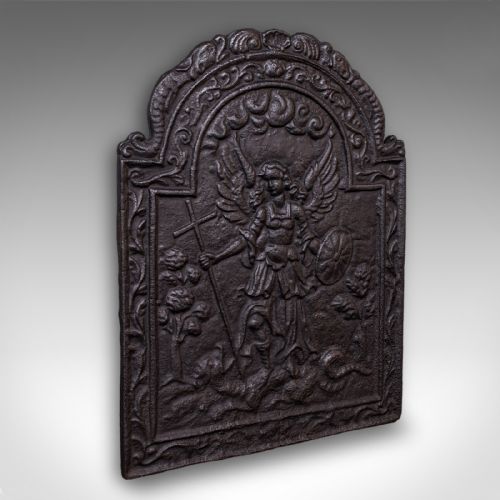
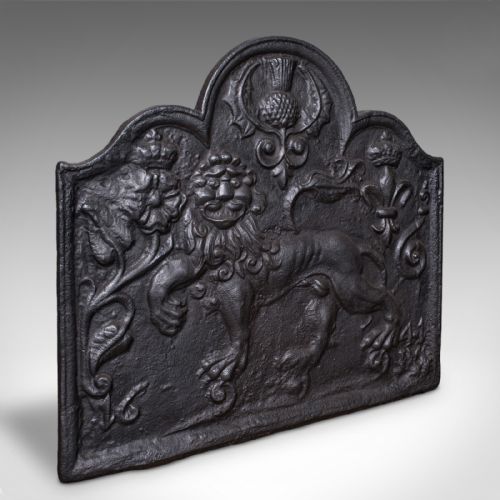
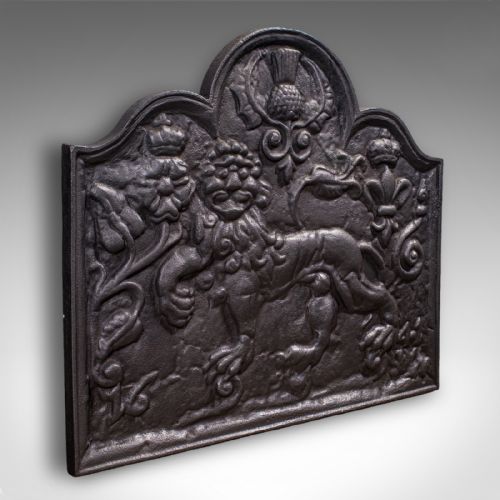
An antique fireplace back plate stands upright against the rear brickwork of a hearth, serving both a decorative and a practical purpose. These heavy iron plates shield the masonry from intense heat while reflecting warmth back into the room.
Most examples encountered here originate from the Victorian period, alongside earlier Georgian items and nineteenth-century French pieces. Forms range from simple rectangular plates to arched designs incorporating relief decoration.
Materials and construction
Every piece in the record is formed from cast iron, poured into sand moulds to create solid, heavy plates that withstand decades of intense heat. This durable metal permits deep relief casting without losing structural integrity.
Moulds utilise traditional foundry methods, resulting in substantial iron thickness designed to absorb and slowly radiate thermal energy long after the fire dies down.
Some Victorian ironfounders cast sturdy firebacks with trees of life so the hearth could bloom even in winter.
Judging quality and depth of cast
Quality rests in the crispness of the relief casting and the thickness of the iron plate. Finer examples display sharp detailing in motifs such as heraldic crests, neoclassical urns, or the tree of life.
Weight and structural proportion also separate standard utilitarian plates from superior decorative specimens. Plates intended primarily for display often exhibit elaborate framing, arched tops, and complex mythological or historical scenes.
The Antique Fireplace Back Plate Glossary
- Fireback
- A heavy metal plate placed at the back of an open hearth to protect the wall and reflect heat. They often feature cast ornamentation.
- Cast iron
- An iron-carbon alloy poured into a mould while molten. This material forms the durable body of every piece recorded here.
- Relief
- Sculptural projection from a flat background surface. This technique creates the pictorial designs seen on the face of the plates.
- Neoclassical revival
- A stylistic movement drawing inspiration from classical antiquity. Pieces in this style often incorporate urns, swags, and symmetrical motifs.
- Carolean revival
- A style reviving seventeenth-century British decorative arts. Plates bearing this label echo the ornate tastes of the Restoration period.
Antique Fireplace Back Plate: Frequently Asked Questions
What is an antique fireplace back plate used for?
These plates sit against the back wall of an open fireplace to protect the masonry from cracking under extreme heat. Beyond protection, the dense iron absorbs thermal energy and radiates warmth outward into the room.
They also serve a decorative function, transforming a dark recess into a focal point with heraldic, floral, or pictorial cast designs.
How do I install a heavy cast iron fireback?
A heavy fireback stands upright inside the hearth, usually supported by the rear brickwork and sometimes angled slightly backward for stability. Small feet or cast iron supporting brackets can help secure heavier plates safely in place.
Because of their substantial weight, ensure the hearth floor is level and capable of supporting the load before positioning the plate.
How can I tell the period of a fireback?
Dating relies on the stylistic motifs cast into the iron, such as Victorian Gothic elements, neoclassical urns, or Carolean scrollwork. The crispness of the casting and the recorded manufacturing era also provide reliable chronological markers.
Earlier pieces from around seventeen hundred tend to feature simpler, heavier utilitarian forms, whereas nineteenth-century examples often showcase elaborate decorative revivals.