


English Fireplace Reflector
An English fireplace reflector is a heavy iron fireback or textile screen designed to throw warmth back into a room.
English Fireplace Reflector
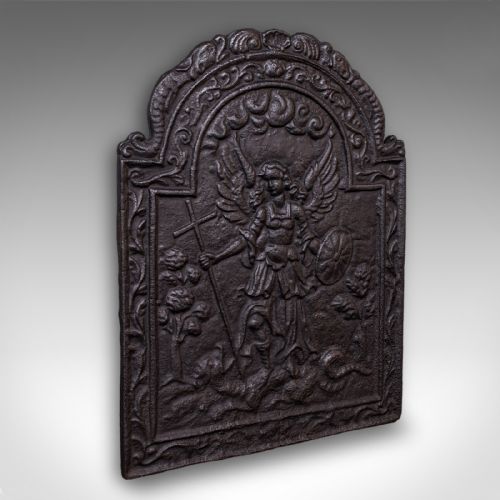
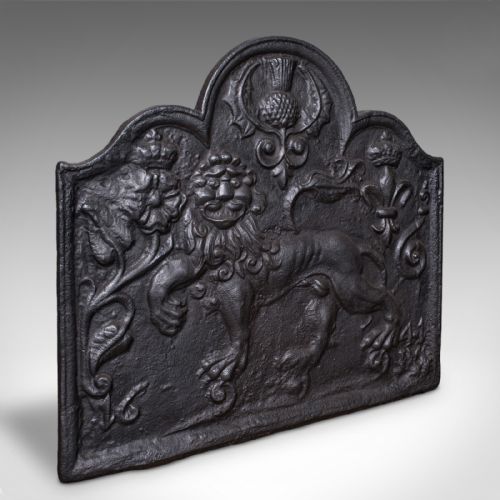
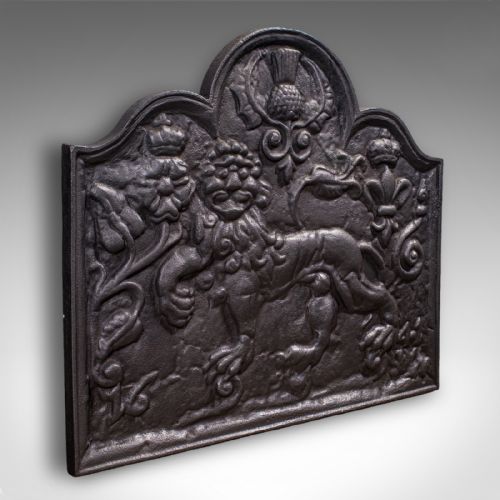
An English fireplace reflector most commonly appears as a cast iron fire back placed at the rear of a hearth. These heavy iron plates absorb heat from the flames and radiate it forward into the room long after the fire dies down.
The pieces on this page span the Victorian and Georgian periods, incorporating styles such as Neoclassical Revival and Carolean Revival alongside church refectory designs. Alongside iron fire backs, buyers occasionally encounter early Victorian pole screens featuring embroidered textile panels.
Tree of life motifs, heraldic designs, and relief-moulded ornamentation frequently adorn these heavy iron slabs. They serve both a practical thermal purpose and a decorative function within traditional fireplace settings.
Materials and construction
The vast majority of English fireplace reflectors are cast in durable iron, chosen for its ability to withstand intense heat and retain warmth. Makers poured molten metal into sand moulds to create deep relief designs such as heraldic emblems, church scenes, and botanical motifs.
Textile variants rely on mahogany stands paired with embroidered panels stretched across wooden frames. These lighter pieces functioned as movable fire screens to shield occupants from radiant heat rather than sitting directly within the hearth.
Listings span the Victorian and Georgian periods, featuring cast iron and textile materials configured primarily as fire backs and fire screens.
Quality and craftsmanship
Quality in cast iron fireplace reflectors depends upon the crispness of the relief moulding and the depth of the casting. Finer examples display sharp, well-defined details in their heraldic or pictorial scenes, whereas lower grades show softened edges and pitting from worn moulds.
Weight and thickness also distinguish heavier, substantial hearth pieces from lighter utility castings. Older Georgian and early Victorian ironwork typically demonstrates greater substance and depth of material.
The English Fireplace Reflector Glossary
- Fire back
- A heavy plate of cast iron placed against the back wall of a fireplace. It protects the brickwork and reflects heat into the room.
- Pole screen
- A freestanding wooden stand holding an adjustable vertical panel used to shield the face from fireplace heat. These often feature embroidered textiles.
- Relief
- A sculptural technique where figures or patterns project from a flat background. Iron fire backs utilise this method to create textured pictorial scenes.
- Neoclassical Revival
- An architectural and decorative style drawing inspiration from classical antiquity. Pieces in this style incorporate symmetrical classical motifs.
- Carolean Revival
- A design movement reviving the ornate styles of the mid seventeenth century. Such items feature rich, scrollwork ornamentation.
English Fireplace Reflector: Frequently Asked Questions
What does a fireplace reflector do?
A fireplace reflector absorbs heat from the fire and pushes it forward into the living space. This improves the overall warmth and efficiency of an open hearth.
Iron fire backs also protect the masonry at the back of the fireplace from direct flame damage. Over time, they become thermal masses that continue releasing heat after the fire burns low.
How do I install a cast iron fire back?
Cast iron fire backs simply stand upright against the rear wall of the hearth. Their considerable weight usually keeps them stable without requiring permanent fixings.
Ensure the hearth floor is level and clear of ash before placing the heavy iron plate into position. Some larger pieces may lean against the brickwork for added security.
Are these pieces suitable for active fires?
Heavy cast iron fire backs are specifically designed to withstand the intense heat of an active wood or coal fire. Their robust metal construction handles thermal expansion and direct flames.
Textile fire screens, however, are decorative furnishings meant to be placed at a distance from the hearth rather than inside it.
How do I date an antique fire back?
Dating relies upon stylistic clues such as Neoclassical or Carolean revival motifs, alongside the crispness of the cast iron relief. Victorian and Georgian pieces often feature distinct decorative borders and maker or foundry characteristics.
Heavier, thicker iron slabs frequently point towards earlier Georgian production, while ornate Victorian examples display diverse historical revival styles.