
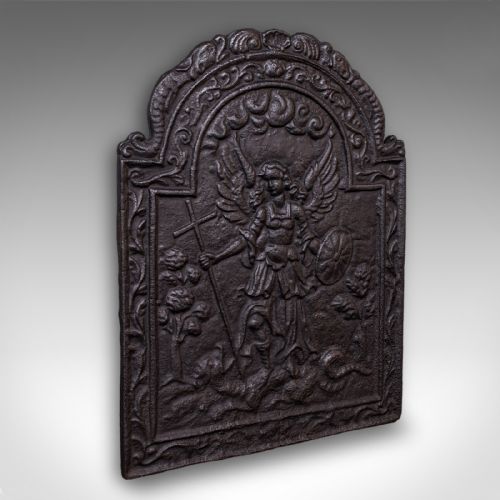
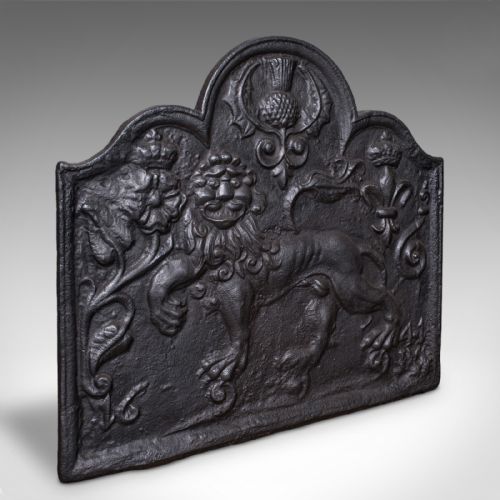
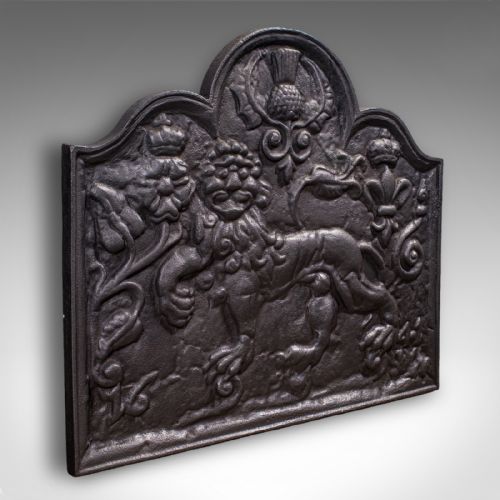


Cast Iron Hearth Back
A cast iron hearth back radiates heat into the room while protecting the masonry behind the flames.
Cast Iron Hearth Back
When you search for a cast iron hearth back, you encounter heavy plates designed to sit at the rear of an open fireplace. The pieces recorded here span the Victorian period, the nineteenth century, and the Georgian era, alongside occasional revival and twentieth-century examples.
The common form is a heavy rectangular or arch-topped plate, sometimes found paired with fire baskets, grates, or andirons. Many examples on this page double as fireplace reflectors designed to throw warmth forward into the room.
How they were made
The primary material across these listings is cast iron, frequently worked into heavy plates with occasional wrought iron components or brass elements. Foundries poured molten iron into sand moulds to produce deep relief panels featuring heraldic, botanical, or architectural motifs.
Many items show the marks of sand casting, where patterns were pressed into foundry beds before pouring. Secondary metalwork on grates and fire baskets combines cast elements with forged wrought iron bars.
Listings combine cast iron with wrought iron and brass across Victorian, Georgian, and twentieth-century periods.
What varies in quality
Quality in these hearth plates rests upon the crispness of the cast relief and the thickness of the metal. Superior examples display sharp details in heraldry, figures, or floral patterns without the softening typical of worn moulds.
Weight and structural integrity also separate standard plates from exceptional ones. Denser iron castings resist thermal shock better and maintain cleaner edges along the arch tops and borders.
The Cast Iron Hearth Back Glossary
- Cast iron
- An iron-carbon alloy poured into moulds while molten to form rigid, heavy plates. This material forms the body of nearly every piece recorded in the archive.
- Fireback
- A heavy metal plate placed against the rear wall of a fireplace. It protects the brickwork and radiates heat outward.
- Fire basket
- A self-contained metal grate holding burning fuel inside the hearth. Some examples include an integrated back plate.
- Reflector
- A polished or positioned metal plate designed to bounce radiant heat back into the room. Several Victorian listings describe this specific function.
- Relief
- Raised ornamentation standing out from the flat background plane of the iron plate. Foundries achieved this effect by carving patterns into the initial mould.
Cast Iron Hearth Back: Frequently Asked Questions
How do I install a cast iron hearth back?
A hearth back simply stands upright against the rear brickwork of an open fireplace, supported by its own heavy weight. Many fit snugly behind existing fire baskets or grates without requiring permanent fixings.
Ensure the hearth floor is level and clear of debris before positioning the plate. The weight of the iron keeps the piece secure against the thermal draft.
Can I use a vintage fireback with a modern fire?
These iron plates work effectively behind both traditional wood-burning fires and modern gas baskets. The primary purpose is to absorb and radiate heat while shielding the masonry.
Check the dimensions of your opening carefully to ensure adequate clearance around the edges. Heavy cast iron handles high temperatures without losing structural integrity.
How do I clean soot from cast iron?
Remove loose ash and soot with a dry stiff brush before applying any cleaning solutions. Avoid harsh chemical detergents that can pit or discolour the historic iron surface.
A light application of traditional grate polish or black lead helps maintain the dark finish. Buff the dry metal gently with a soft cloth to restore an even sheen.