


Victorian Iron Hearth Reflector
These Victorian iron hearth reflector pieces capture heat within the room while bringing solid period character to an active fireplace.
Victorian Iron Hearth Reflector
A Victorian iron hearth reflector sits at the back of a fireplace recess to radiate warmth forward into the room while protecting the masonry behind. When searching for a Victorian iron hearth reflector, buyers encounter robust cast iron firebacks and related fireplace screens designed for nineteenth-century grates.
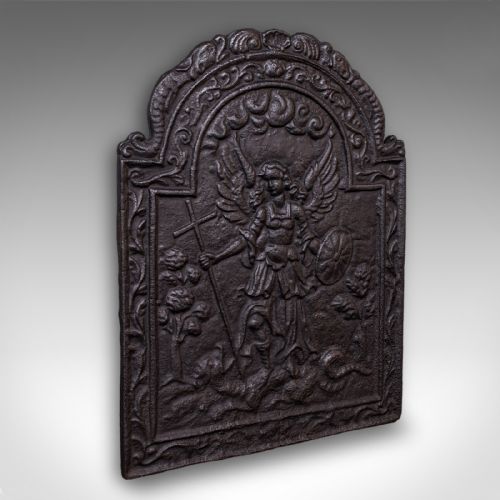
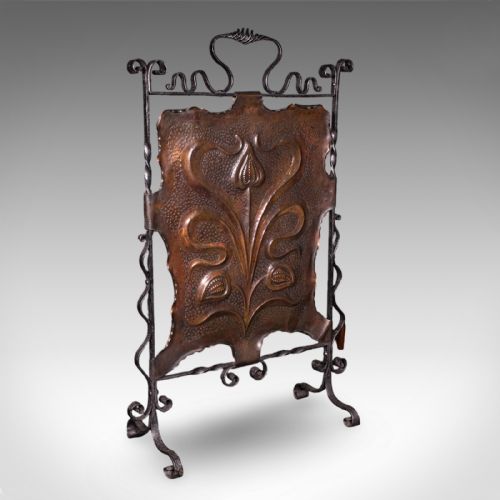
The examples gathered here span English and French origins from the Victorian era, running from early Victorian periods through to late Victorian and 1900 examples. Forms vary from simple church refectory pieces and heavy decorative fire backs to specific copper fire screens used in similar hearth settings.
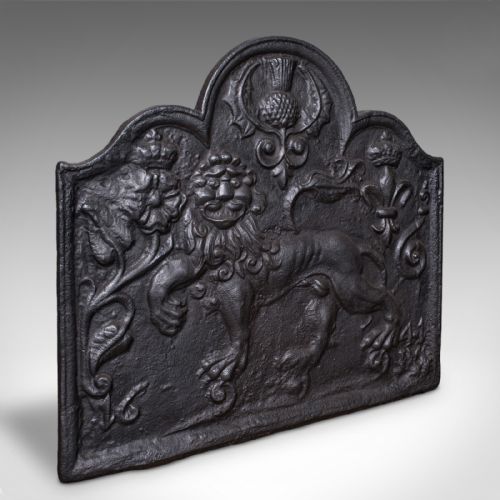
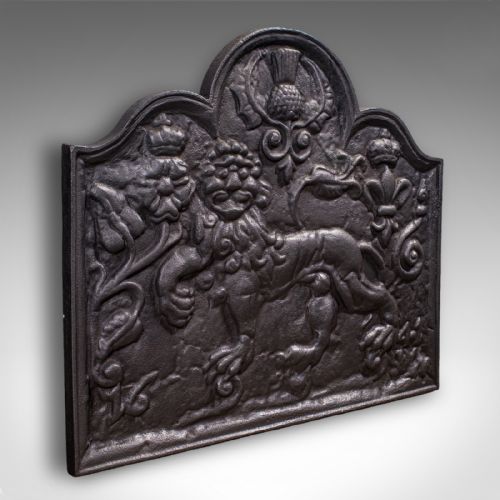
Design vocabulary on these pieces reaches across several revival styles documented in the listings. Pieces appear in standard Victorian formats alongside Victorian and Gothic, Victorian Heraldic, Art Nouveau, Neoclassical Revival, and Carolean Revival expressions.
Materials and construction methods
Foundries utilised heavy cast iron as the primary medium for these fireplace accessories, allowing makers to pour molten metal into detailed relief moulds. This heavy metal construction endures intense hearth temperatures while retaining and throwing heat long after the fire dies down.
Certain pieces incorporate wrought iron elements alongside copper, particularly in items classified as fire screens rather than traditional fire backs. Surface decoration relies entirely on the cast relief work rather than applied finishes, showing motifs such as the Tree of Life and heraldic designs.
Listings feature items spanning the Victorian era, including early Victorian, late Victorian, and dated pieces from 1880 to 1900.
Assessing quality in hearth reflectors
Quality rests in the crispness and depth of the cast relief work rather than mere size or weight. Sharp detailing on motifs like heraldry or the Tree of Life separates standard utilitarian items from finer decorative examples produced by skilled Victorian foundries.
The integrity of the iron plate dictates structural worth, where uniform thickness and clean edges without heavy corrosion denote superior initial casting and subsequent care. Stylistic execution also plays a part, with cohesive Neoclassical Revival or Carolean Revival designs showing greater design ambition than plain utility backs.
The Victorian Iron Hearth Reflector Glossary
- Fireback
- A heavy metal plate placed against the back wall of a fireplace. It protects the brickwork and reflects heat back into the room.
- Relief
- Sculptural projection from a flat background surface. Victorian iron firebacks utilised this technique to create pictorial scenes and heraldic motifs.
- Cast iron
- Iron alloy poured into a mould in a molten state. This material forms the durable core of most nineteenth-century hearth reflectors.
- Refectory
- A term applied to large communal dining halls in monasteries or schools. In the context of these listings, it describes a heavy, architectural style of fire back.
Victorian Iron Hearth Reflector: Frequently Asked Questions
How do you install a fire back?
A heavy iron fire back simply stands upright against the rear brickwork of the fireplace recess, often tilted slightly backward for stability. Its own weight keeps it firmly in place behind the hearth.
Before placement, ensure the hearth and back wall are clear of debris so the plate sits evenly against the masonry without rocking.
What is the purpose of a hearth reflector?
These metal plates serve the dual purpose of protecting the fireplace masonry from direct flame damage and absorbing heat to radiate it back into the living space.
By bouncing thermal energy forward, they increase the overall heating efficiency of an open coal or wood fire.
Can I use an antique fire back with a modern fire?
Cast iron fire backs withstand high temperatures and suit traditional wood-burning or coal-effect hearths alike, provided the dimensions fit the firebox safely.
Measure the width and height of your recess carefully to ensure adequate clearance around the iron plate before positioning it.
How do I clean a cast iron fire back?
Remove loose soot and ash with a stiff brush, avoiding harsh chemical cleaners that might strip the historic surface of the metal.
A light application of grate polish or natural oil can help maintain the dark tone of the iron over time.