
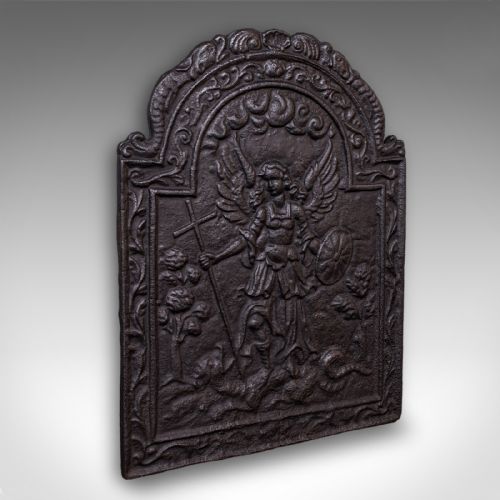
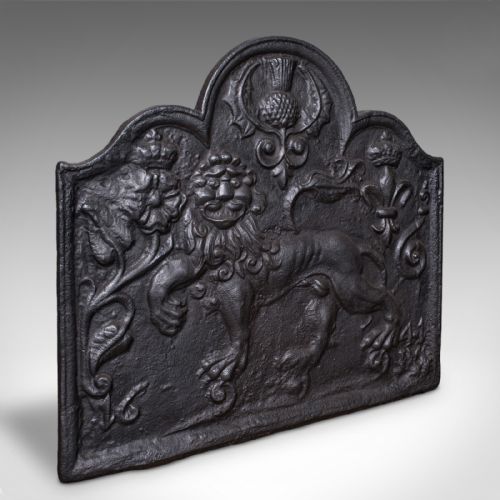
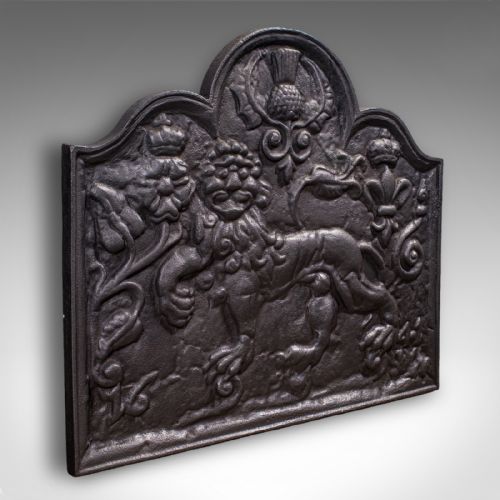


Black Iron Fireplace Plate
These heavy black iron fireplace plate pieces, often called firebacks, protect masonry and radiate heat into the room.
Black Iron Fireplace Plate
A black iron fireplace plate serves as a heavy defensive shield placed against the rear wall of a hearth. These items prevent intense heat from damaging the brickwork while throwing warmth back into the living space.
Most examples found here date from the Victorian period, alongside Georgian and nineteenth-century pieces. English designs dominate the selection, appearing alongside continental forms such as French arch top variants.
Makers shaped these plates in various styles including Neoclassical Revival, Carolean Revival, and Gothic. Common motifs feature heraldic symbols, armour, eagles, and the traditional tree of life.
How they were made
Foundries produced these objects entirely in cast iron, pouring molten metal into sand moulds prepared with wooden patterns or carved reliefs. This technique allowed smiths to achieve deep pictorial scenes and crisp borders across heavy iron plates.
The finishing process left surfaces with a durable dark metal texture designed to withstand sustained heat. Artisans integrated decorative arches, ecclesiastical references, and relief panels directly into the primary casting.
Listings feature cast iron firebacks spanning the Victorian, Georgian, and nineteenth-century periods, created in English and French workshops.
What varies in quality
Quality rests in the depth of the casting and the crispness of the relief work. Finer plates display sharp contours on motifs like heraldry and foliage, whereas simpler examples show softer edges from worn moulds.
Weight and thickness separate utilitarian plates from decorative ones intended for formal reception rooms. Heavier iron specimens provide greater thermal mass and more substantial architectural presence.
The Black Iron Fireplace Plate Glossary
- Fireback
- A heavy iron plate placed at the back of a fireplace. It protects the wall and radiates heat forward.
- Cast iron
- Iron alloy poured into a mould in a molten state. This material forms the primary substance of all listed firebacks.
- Relief
- Sculptural projection from a flat background. Makers utilised this technique to create pictorial scenes on iron plates.
- Arch top
- A curved upper framing profile. French examples frequently employ this shape alongside decorative motifs.
Black Iron Fireplace Plate: Frequently Asked Questions
What is a black iron fireplace plate?
A black iron fireplace plate is a heavy cast iron slab positioned at the back of a hearth. Its purpose is to shield the brickwork from direct flames and radiate heat outward.
Most surviving examples date from the Victorian and Georgian eras. They often feature decorative relief work including heraldry and classical motifs.
How do you install a fireback?
Firebacks stand upright against the rear wall of the fireplace opening. They generally rest on the hearth floor, supported by the angle of the brickwork or dedicated feet.
Because these iron plates are exceptionally heavy, they remain stable under their own weight. Proper positioning ensures they safely absorb and reflect heat.
How do you clean cast iron firebacks?
Cleaning involves removing soot and ash with a stiff brush and warm soapy water. Avoid harsh chemical cleaners that can strip the dark metal finish.
Applying a light coat of stove blacking or grate polish helps maintain the deep colour. Regular maintenance prevents surface rust from forming in damp conditions.
Can these plates be used in active fires?
These plates were specifically designed to withstand intense heat behind burning wood or coal. Cast iron handles high temperatures without losing structural integrity.
Modern usage follows the same principle as historical application. The iron absorbs thermal energy during a fire and continues to release warmth long after the flames subside.