


English Iron Fireback
An english iron fireback protects the hearth and radiates warmth back into the room, combining practical utility with lasting decorative presence.
English Iron Fireback
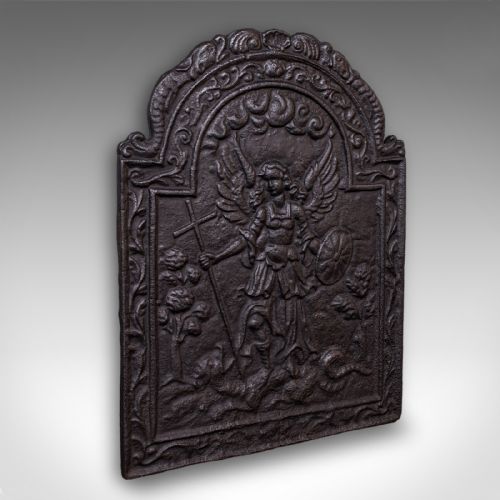
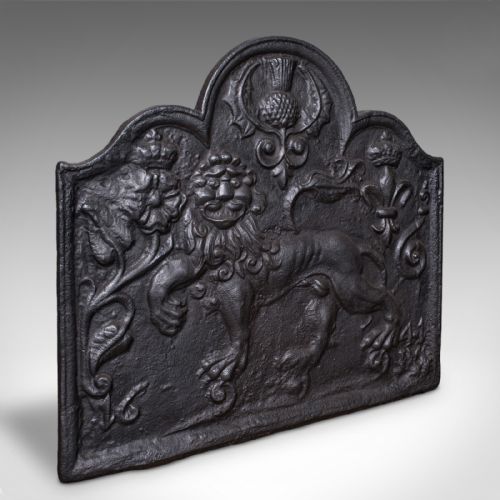
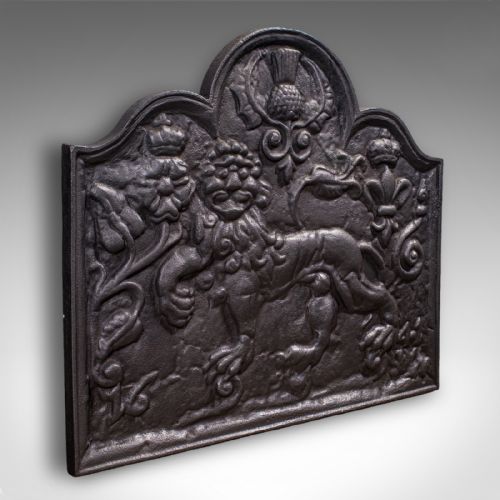
An english iron fireback is a heavy plate placed at the back of an open hearth to protect the masonry from intense heat. These pieces also serve to reflect warmth back into the living space, making them both functional installations and decorative focal points for a fireplace.
The selections available on this page date primarily from the Victorian period, with occasional Georgian examples. Forms include straightforward firebacks alongside fireplace reflectors and integrated fire baskets with andirons.
Makers drew on several historical revivals for inspiration, producing designs in Neoclassical Revival, Carolean Revival, and Victorian Heraldic styles. Tree of life motifs and church refectory patterns also appear within the evidence.
Materials and Manufacture
The pieces recorded in the evidence are constructed from cast iron and wrought iron. Cast iron dominates the output, allowing makers to pour molten metal into moulds to achieve detailed relief panels and decorative surfaces.
Heavier examples provide substantial thermal mass for open hearth use. The metalwork relies on straightforward foundry techniques suited to producing robust hearth furniture.
Some hearth plates feature sturdy tree of life designs, bringing a touch of the outdoors straight into the chimney breast.
Assessing Quality
Quality in these heavy iron plates rests upon the crispness of the cast relief work and the thickness of the metal. Finer examples display sharp detailing in motifs such as heraldry or botanical subjects.
Stylistic ambition also separates standard utility pieces from more elaborate revival designs. Pieces exhibiting detailed Neoclassical or Carolean revival ornament demonstrate greater attention to decorative design.
The English Iron Fireback Glossary
- Fireback
- A heavy metal plate placed at the rear of a fireplace. It shields the wall from extreme heat and throws warmth forward into the room.
- Cast iron
- Iron melted and poured into a mould to shape it. This material allows for the creation of textured relief patterns on hearth plates.
- Andirons
- Horizontal bars or supports used in pairs to hold logs in an open fireplace. They frequently accompany fire baskets and hearth furniture.
- Neoclassical Revival
- A style drawing upon classical Greek and Roman forms. This aesthetic appears across various Victorian decorative ironwork pieces.
English Iron Fireback: Frequently Asked Questions
What is an english iron fireback used for?
These heavy plates sit against the rear wall of an open hearth to absorb and reflect heat into the room. They also protect the brickwork from the direct impact of flames.
Beyond practical protection, they introduce a distinct focal point to a fireplace setting through their cast designs and period styling.
How do I know if a fireback is Victorian?
Victorian pieces often incorporate revival styles such as Neoclassical or Carolean motifs, alongside heraldic designs and tree of life patterns. The evidence shows these heavily feature cast iron construction.
Examining the depth and style of the relief work helps connect a piece to nineteenth-century production methods and aesthetic preferences.
Can I use an antique fireback in a modern fireplace?
These plates are designed to withstand high temperatures and fit against the rear of an open hearth. Ensuring proper measurements and secure placement is essential before lighting fires.
They function effectively in traditional open masonry fireplaces, providing both thermal reflection and historical character.
What is the difference between cast iron and wrought iron?
Cast iron is poured into moulds while molten, which enables makers to create detailed relief patterns and heavy plates. Wrought iron is worked and shaped by hand.
The majority of hearth plates utilise cast iron for its ability to hold intricate decorative designs in high relief.