


Victorian Fireplace Reflector
These Victorian fireplace reflector pieces direct hearth warmth into the room while protecting the wall behind the grate.
Victorian Fireplace Reflector
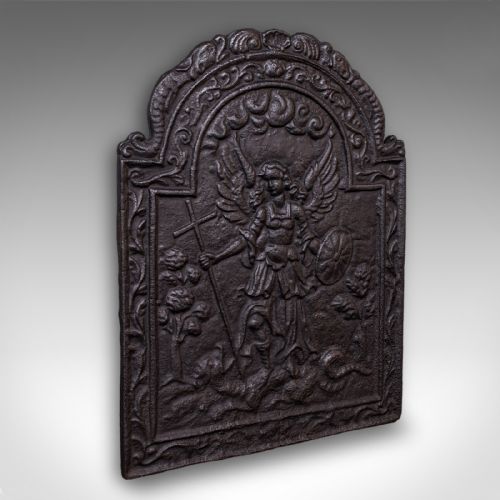
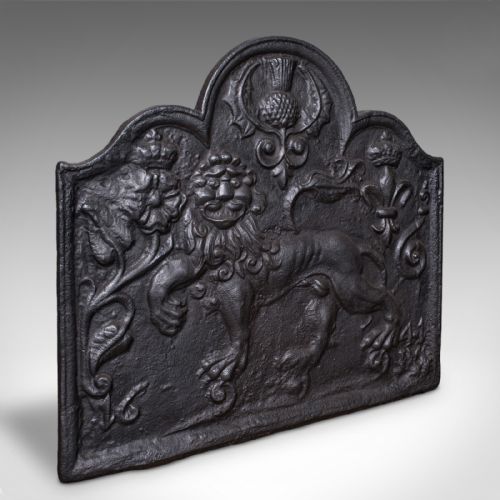
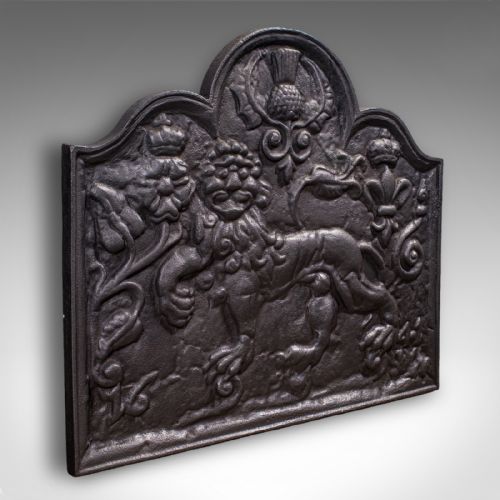
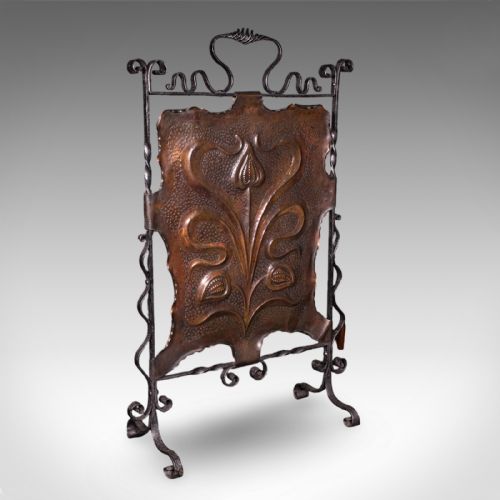
A victorian fireplace reflector takes the form of heavy cast iron firebacks, copper fire screens, and wooden pole screens with embroidered textile panels. These items sit within the hearth or stand independently before the opening.
The pieces appearing here belong entirely to the Victorian period, spanning early, late, and transitional phases. English examples dominate the selection, alongside occasional French copper work.
How they were made
Makers utilised cast iron for heavy firebacks, pouring molten metal into sand or loam moulds to create deep relief designs. Wrought iron and copper provided the framework and reflective surfaces for screens.
Mahogany frames held delicate textile panels worked in needlework and embroidery. Stylistic touches draw upon Neoclassical revival, Gothic, and Art Nouveau motifs.
Some Victorian ironmasters cast branching trees of life into the hearth ironwork to bring the forest indoors.
What varies in quality
Quality rests upon the crispness of the cast relief and the depth of the ironwork. Finer pieces show sharp, well-defined church, heraldic, or tree of life imagery rather than soft, worn edges.
The choice of material also dictates distinction, moving from utilitarian cast iron firebacks to decorative French copper art nouveau fire screens and detailed embroidered pole screens.
The Victorian Fireplace Reflector Glossary
- Fireback
- A heavy metal plate placed at the back of an open hearth to reflect heat forward and protect the masonry. These frequently display moulded heraldic or pictorial designs.
- Pole screen
- A standing firescreen featuring an adjustable panel mounted on a vertical wooden pole to shield the face from radiant heat. Early Victorian examples often use embroidered textile panels.
- Relief
- Sculptural projection from a flat background surface. Iron firebacks rely on this technique to depict trees, coats of arms, and architectural motifs.
- Cast iron
- An iron-carbon alloy poured into moulds while molten. This material forms the primary substance for heavy Victorian firebacks.
- Art Nouveau
- A decorative style characterised by flowing, organic lines and natural forms. It appears on French copper fire screens from the period.
Victorian Fireplace Reflector: Frequently Asked Questions
What is a fireplace reflector used for?
A fireplace reflector projects radiant heat back out into the room rather than letting it escape into the chimney breast. Heavy iron firebacks absorb warmth while the fire burns and continue to emit it long after the flames die down.
Screens and textile panels additionally served to shield occupants' faces from the intense glare and heat of an open coal fire. They positioned easily around the hearth to manage both warmth and comfort in the Victorian parlour.
How do I tell early Victorian from late Victorian pieces?
Early Victorian pieces often lean towards Carolean revival styles or utilise delicate needlework mounted on wooden poles. The craftsmanship reflects transitional craft methods handed down from earlier decades.
Late Victorian examples frequently embrace heavier cast iron construction and distinct aesthetic movements like Art Nouveau. The decorative motifs shift from traditional heraldry towards stylised natural forms.
Are these reflectors safe to use in modern fireplaces?
Iron firebacks function safely in active wood-burning or coal hearths provided they fit the dimensions of the firebox correctly. Their original purpose remains entirely practical alongside decorative display.
Copper and textile screens require more care and usually function best as decorative room accessories rather than direct hearth barriers. Modern placement depends entirely on whether the piece is cast iron or fabric.
Why are some reflectors made of copper instead of iron?
Copper offered a bright, reflective surface that bounced flickering firelight around a dim Victorian room. These materials appeared more often on movable firescreens rather than heavy fixed firebacks.
Iron excelled at enduring intense direct heat at the rear of the hearth. Copper served a dual purpose of light reflection and decorative ornamentation closer to the room.