


Antique Iron Hearth Plate
An antique iron hearth plate stands at the back of a chimney to throw heat into the room and protect the masonry, bringing both function and presence to a hearth.
Antique Iron Hearth Plate
An antique iron hearth plate functions as a heavy protective barrier against intense flames while radiating warmth forward into the room. Buyers searching this phrase will find substantial cast iron panels designed to anchor the fireplace.
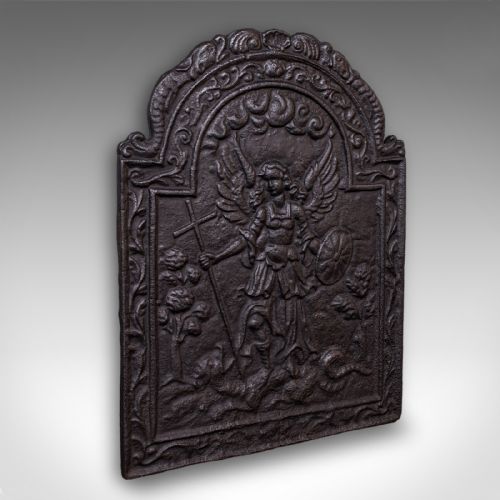
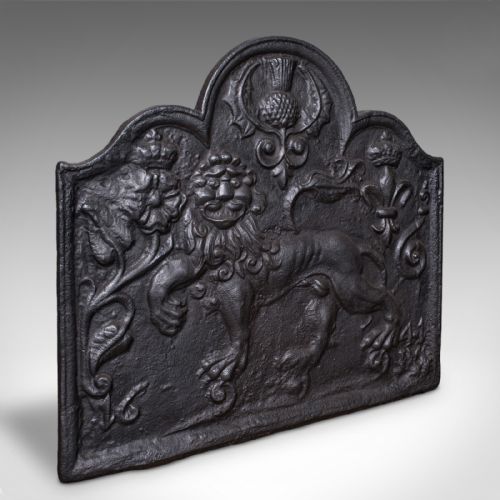
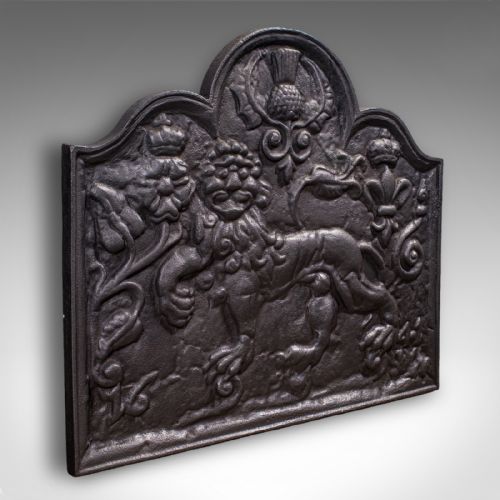
The pieces listed on this page span several distinct periods, with Victorian examples appearing most frequently alongside pieces from the seventeenth and nineteenth centuries. Stylistic variations include Neoclassical Revival, Carolean Revival, French Baroque, and Victorian Heraldic designs.
Common decorative motifs found across these fireplace accessories include church refectories, trees of life, armour and eagles, and figures of horse and rider. Forms are predominantly rectangular or feature arched tops to fit standard hearth openings.
Materials and construction methods
Every piece recorded in the evidence is fashioned entirely from cast iron, utilising the traditional foundry techniques of the period. Molten metal was poured into open sand moulds impressed with carved wooden patterns or relief master plates.
This casting process allowed founders to achieve deep surface relief and sharp detailing, from heraldic crests to architectural motifs. The resulting heavy iron plates possess the thermal mass required to absorb and slowly release fire heat.
Listings span periods from seventeen hundred through the nineteenth century, uniting cast iron materials with Victorian, Baroque, and Neoclassical Revival styles.
Distinguishing quality in cast iron plates
Quality in these plates rests upon the crispness of the cast relief and the structural integrity of the heavy iron. Finer examples display sharply defined imagery and balanced proportions rather than muddy or shallow casting details.
The weight and thickness of the iron plate also dictate its substance, with heavier specimens offering greater durability and more substantial presence within the chimney breast.
The Antique Iron Hearth Plate Glossary
- Cast iron
- A strong, heavy alloy of iron and carbon poured into moulds while molten. It forms the sole material foundation for these heavy hearth plates.
- Fireback
- A heavy iron plate placed at the rear of an open fireplace. It protects the brickwork and reflects heat back into the living space.
- Neoclassical Revival
- A style drawing inspiration from classical antiquity, featuring symmetrical motifs and formal architectural elements. This aesthetic appears frequently among Victorian hearth plates.
- Carolean Revival
- A decorative style echoing the ornate furnishings of the mid seventeenth century. Pieces in this manner often display rich ornamentation and scrolling details.
- Relief
- Sculptural projection from a flat background surface. Foundries utilised this technique to render figures, trees, and heraldry on the iron plates.
Antique Iron Hearth Plate: Frequently Asked Questions
What is an iron hearth plate used for?
These heavy iron plates sit against the back wall of an open fireplace to absorb and project heat outward into the room. They also shield the masonry from intense, direct flames.
Over centuries of use, they became decorative focal points within the hearth, displaying elaborate coats of arms, pictorial scenes, and architectural revivals.
How do I date an iron fireback?
Dating relies heavily on stylistic clues such as revival motifs, lettering styles, and specific pictorial subjects like seventeenth-century horsemen or Victorian heraldry. Examining the casting technique and the wear of the iron provides further context.
Most surviving examples date from the Victorian era through to the seventeenth century, each bearing the distinct aesthetic markers of its period.
Are these plates heavy to install?
These pieces consist of solid cast iron and possess considerable weight designed to keep them stable against a chimney back. Handling requires care and often two people to position them safely.
Once in place within the hearth, their mass keeps them secure without the need for complex permanent fixings.
Can I use an antique fireback with a modern fire?
These historical iron plates suit traditional open hearths where they perform their original function of heat reflection and masonry protection. They withstand high temperatures well due to their heavy iron construction.
Care should be taken to ensure the hearth dimensions and weight capacity match the specific plate chosen for the fireplace.