



Heavy Iron Andirons
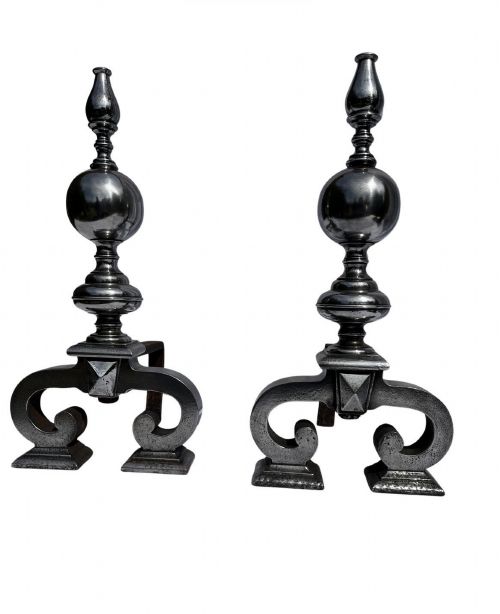
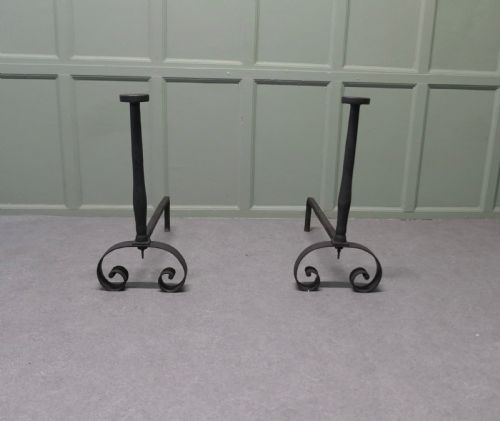
Heavy iron andirons are substantial hearth supports designed to elevate logs for better airflow, bringing robust utility and period character to an open fireplace.
Heavy Iron Andirons
Heavy iron andirons serve as foundational hearth supports within open fireplaces, designed to hold logs clear of the hearth floor to improve combustion and airflow. When searching for heavy iron andirons, a buyer encounters robust pieces meant to bear the weight of substantial fuel wood in large chimneys.
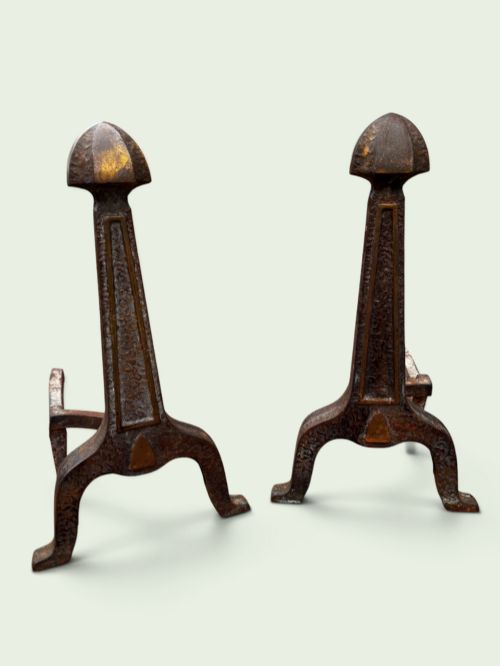
The selections span multiple eras, with the nineteenth century heavily represented alongside earlier Tudor and Elizabethan influences and later Victorian interpretations. Forms range from utilitarian cast iron dogs to monumental pairs incorporating brass elements, fire baskets, and grates.
Origin variations include English and French examples, often appearing alongside companion pieces such as fire backs and hearth sets. These items function both as practical fireplace equipment and as structural focal points within inglenook settings.
How they were made
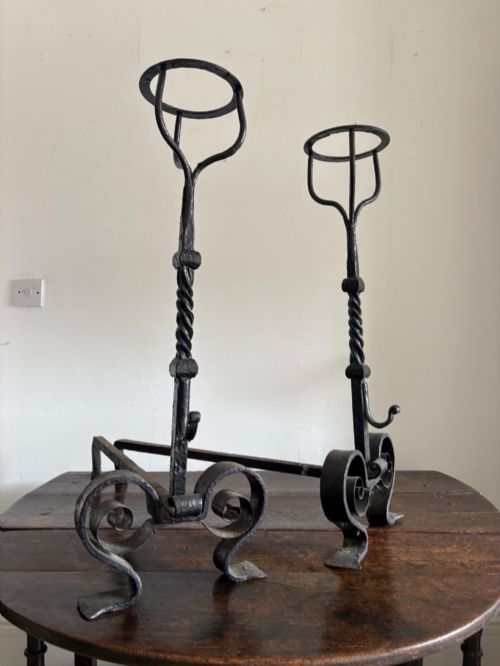
Construction relies primarily on cast iron and wrought iron, utilised for their ability to withstand intense hearth heat without structural failure. Master founders poured molten metal into sand moulds to create detailed cast forms, while blacksmiths shaped wrought iron by hand at the anvil.
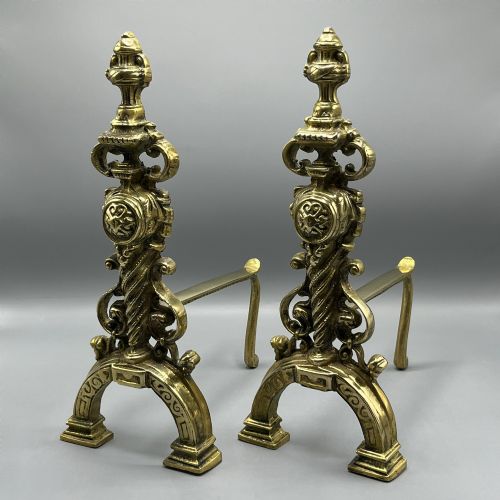
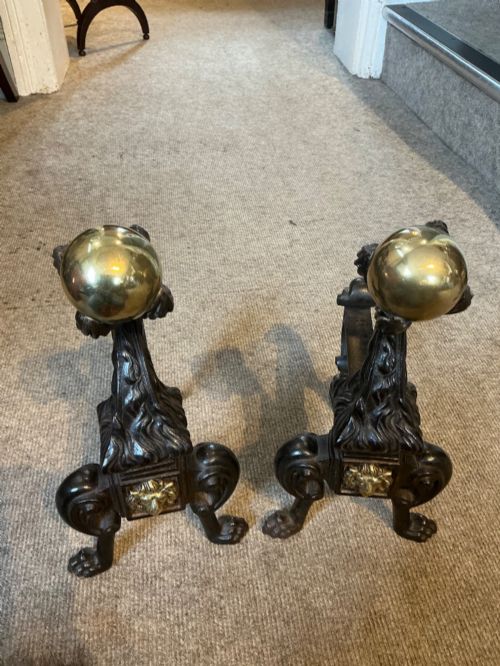
Many pairs combine iron bodies with solid brass or bronze accents, providing visual contrast between dark metal and polished highlights. Components such as billets and standards were joined securely through riveting, heavy bolting, or forge-welding to support massive logs safely.
Listings feature sixteenth-century cast iron examples alongside nineteenth-century Victorian pieces, showcasing enduring traditions in hearth equipment.
What varies in quality
Quality rests in the proportional balance, the crispness of the cast or forged details, and the integrity of the original construction. Superior pairs demonstrate substantial metal thickness and weight, ensuring stability when loaded with heavy timber.
Artistry in design separates standard utility pieces from exceptional examples, particularly where decorative motifs show deliberate hand-finishing rather than flat, mass-produced surfaces. The preservation of original matching components, such as integrated grates or coordinated fire backs, elevates the standing of a pair.
The Heavy Iron Andirons Glossary
- Andiron
- A horizontal metal support raised on legs, used in pairs to hold logs in an open fireplace. Also known historically as a fire dog.
- Fire dog
- An alternative term for an andiron, originating from the animal-like forms often modelled on the front standards. These uprights stop logs from rolling forward onto the hearth floor.
- Fire basket
- A metal grate designed to hold coal or wood, frequently paired with or set between andirons within larger hearth arrangements. This unit concentrates the fuel centrally.
- Fire back
- A heavy iron plate placed against the rear wall of a fireplace to protect the masonry and reflect heat back into the room. They frequently accompany heavy iron andirons in deep inglenooks.
- Inglenook
- A large, recessed fireplace alcove designed to accommodate seating alongside the hearth fire. Heavy iron andirons were essential for heating these expansive spaces.
Heavy Iron Andirons: Frequently Asked Questions
How do I choose the right size for my fireplace?
Measure the depth and width of your hearth opening carefully before selecting a pair. Heavy iron andirons must fit comfortably within the space while leaving adequate clearance around the sides for safe airflow.
Consider the scale of your chimney breast as well. Monumental pairs require large inglenook settings, whereas standard nineteenth-century variants suit more conventional domestic hearths.
Can these andirons be used in a working fireplace?
Most heavy iron andirons are constructed from durable cast or wrought iron designed specifically to endure high temperatures. They function effectively in active wood-burning hearths.
Inspect the metal for deep structural cracks or excessive thinning from past corrosion before lighting a fire. Solid construction ensures they safely support heavy logs during use.
How do I clean and maintain iron and brass?
Remove accumulated soot and ash regularly using a soft brush and dry cloth. Avoid harsh chemical cleaners that strip the historic surface patina.
Apply a light microcrystalline wax to iron surfaces to protect against moisture and rust. Polish brass accents gently with a non-abrasive cloth to maintain their lustre without damaging the surrounding metal.
What is the difference between andirons and fire baskets?
Andirons consist of two separate upright standards designed to hold logs horizontally across parallel bars. They allow air to circulate freely beneath the burning wood.
Fire baskets form a single integrated container unit for holding fuel, which may sit upon or incorporate andiron supports. Baskets are particularly useful when burning smaller logs or coal.