



French Iron Hearth Dogs
These French iron hearth dogs anchor an open fire with unmistakable continental weight, bringing functional form and centuries of foundry skill to the hearth.
French Iron Hearth Dogs
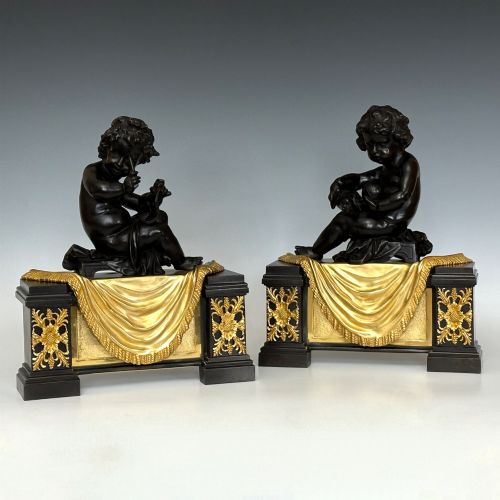
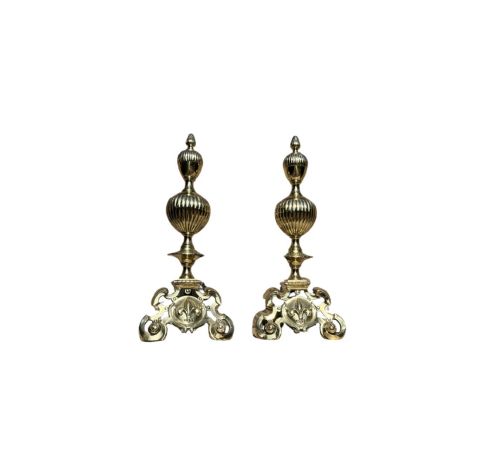
When you search for french iron hearth dogs, you are looking at substantial metal supports designed to hold logs above the hearth floor for better airflow and combustion. The examples met on this page span the nineteenth century, including pieces dated across the 1850s, 1860s, 1870s, 1880s, and 1900, alongside broader designations of the nineteenth century and Georgian periods.
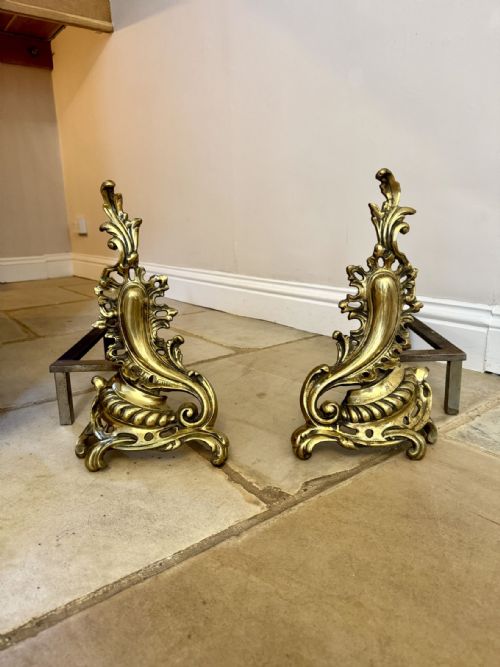
The forms appear under various historical denominations such as andirons, chenets, and fire dogs, sometimes accompanied by matching fenders or fire grates. Stylistically, the selection encompasses French Rococo, French Empire, French Country, French Provincial, Louis XVI, Victorian Neo-Classical, and French Rococo Revival idioms.
Originating predominantly from France, these heavy metal accessories range from simple utility pieces to ornate decorative objects. You will frequently encounter matched pairs designed to sit symmetrically on either side of the fireplace opening.
Materials and construction
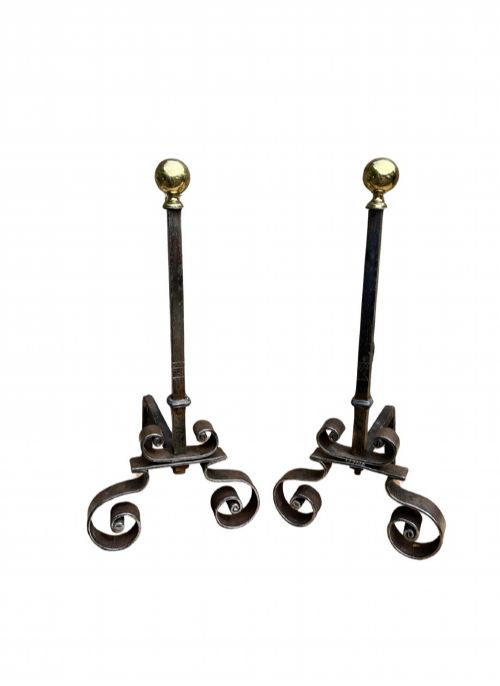
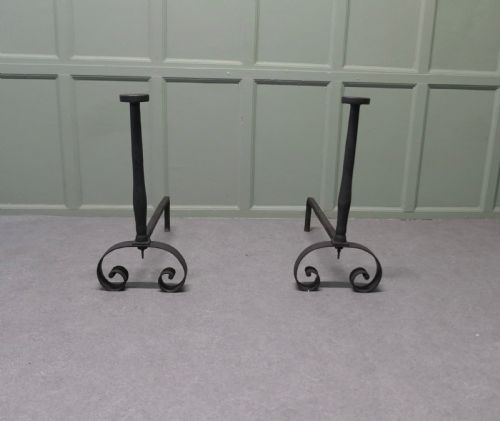
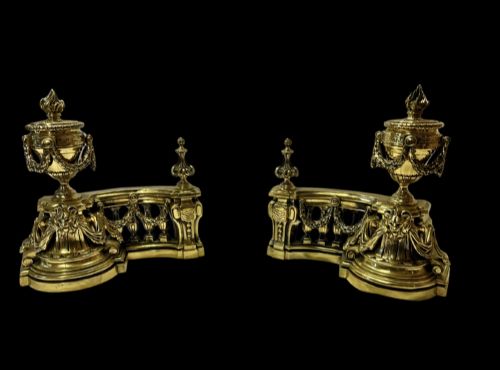
The construction relies heavily on durable metals, predominantly cast iron and wrought iron, frequently combined with brass, bronze, ormolu, gilt bronze, and gilt brass. Wrought iron pieces demonstrate the work of the blacksmith through hammered and shaped bars, whilst cast iron and bronze examples reveal the precision of mould-casting.
Surface ornamentation incorporates fire-gilding, parcel-gilding, and polished brass mounts secured to iron bodies. These varied manufacturing techniques allowed makers to produce both robust utilitarian supports and intricately detailed decorative frontpieces.
French Rococo, Empire, and Provincial styles dominate the decorative vocabulary of these hearth accessories.
Evaluating quality and execution
Quality reveals itself in the crispness of the casting or the precise hand-forging of the ironwork, where finer pieces display sharp relief and well-defined figural details like cherubs. Weight is a primary indicator of substance, with heavier grades of iron and thicker bronze or ormolu mounts demonstrating superior material deployment.
The integration of decorative elements separates standard production from exceptional work, particularly in how securely cast brass or ormolu mounts are fitted to the main iron structure. Surface finishing, from chased bronze details to carefully proportioned scrollwork, dictates the visual presence of the object on the hearth.
The French Iron Hearth Dogs Glossary
- Andiron
- A metal support for holding logs in a fireplace, typically featuring a horizontal bar and an upright decorative front. They allow air to circulate underneath the wood for a cleaner burn.
- Chenet
- The French term for an andiron, often used specifically to describe decorative metal supports featuring cast or chased ornament on the front pillar. These objects originated as ornamental firedogs in grand salons.
- Ormolu
- Finely ground high-carat gold mercury-gilded to a bronze base, historically utilised on high-status French hearth furnishings. This technique imparts a rich, lasting golden sheen to decorative mounts.
- Fender
- A low metal guard placed around the hearth to contain ash and sparks, frequently catalogued alongside fire dogs in nineteenth-century interiors. They complement the design of the andirons.
- Rococo
- An ornate artistic style characterised by asymmetrical scrolls, shell motifs, and exuberant curves, prominent in many nineteenth-century French hearth designs. This aesthetic prioritises fluid, organic movement over rigid symmetry.
French Iron Hearth Dogs: Frequently Asked Questions
What is the difference between andirons and chenets?
Andirons and chenets are functionally the same object, serving as metal supports for burning logs in an open hearth. The term chenet is specifically French, whilst andiron is the common English designation.
In practice, items labelled as chenets often display more ornate cast bronze or ormolu decoration on the upright frontpiece. Both terms appear interchangeably in historical inventories and modern listings.
How were french iron hearth dogs used?
These pieces sat inside the fireplace opening to elevate firewood off the floor of the hearth. Raising the logs permitted air to circulate beneath the fuel, which improved combustion and reduced smoke.
The decorative front standards remained visible in the room even when the fireplace was unlit, serving a purely ornamental function during warmer months.
How do I date an antique fire dog?
Dating relies on stylistic clues, manufacturing marks, and the combination of metals used in the construction. Pieces from the mid-nineteenth century often show specific revival styles like Rococo Revival or Empire, whilst earlier Georgian examples display distinct restraint.
Physical examination of the ironwork, casting seams, and fixing methods provides further evidence of the period of manufacture.
Can these fire dogs be used in a working fireplace?
Many iron and brass fire dogs remain robust enough to support logs in an active hearth. Wrought and cast iron components withstand high temperatures effectively.
Care should be taken with fragile ormolu or gilt bronze mounts, which can be sensitive to excessive heat if positioned too close to an intense fire.