


German Porcelain Statue
When you search for a german porcelain statue, you are looking at centuries of European kiln craft, from Rococo figures to Art Deco dancers.
German Porcelain Statue
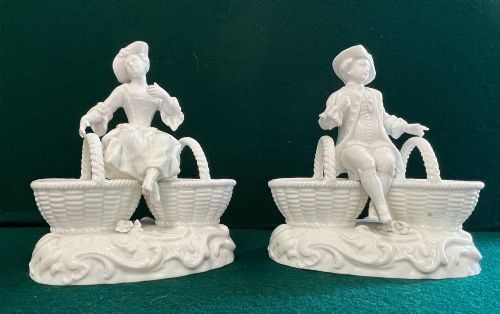
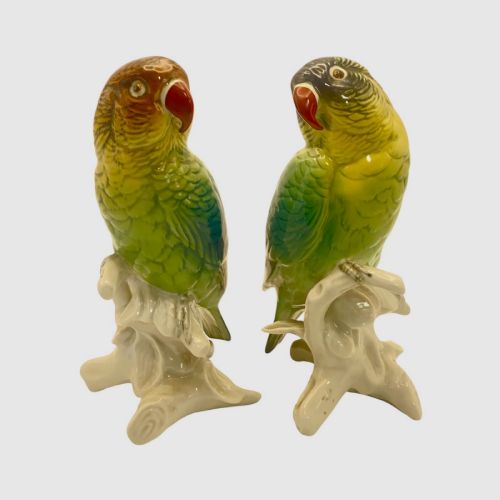
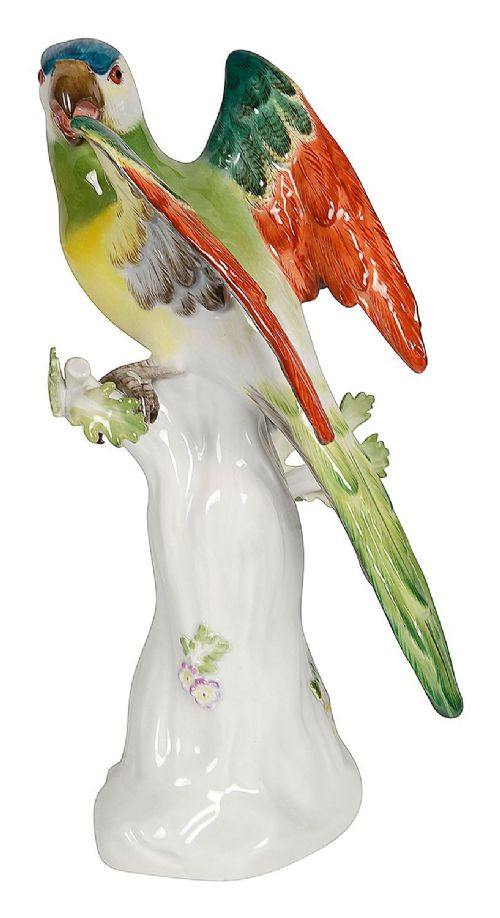
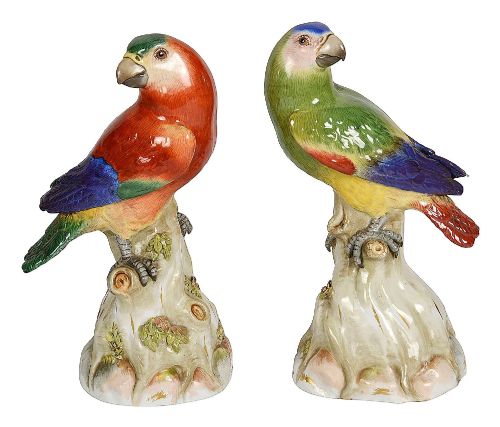
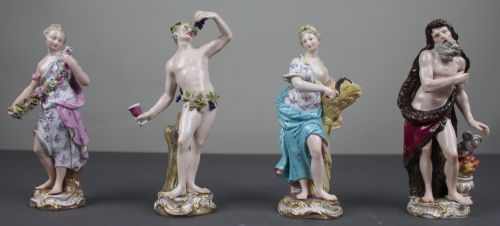
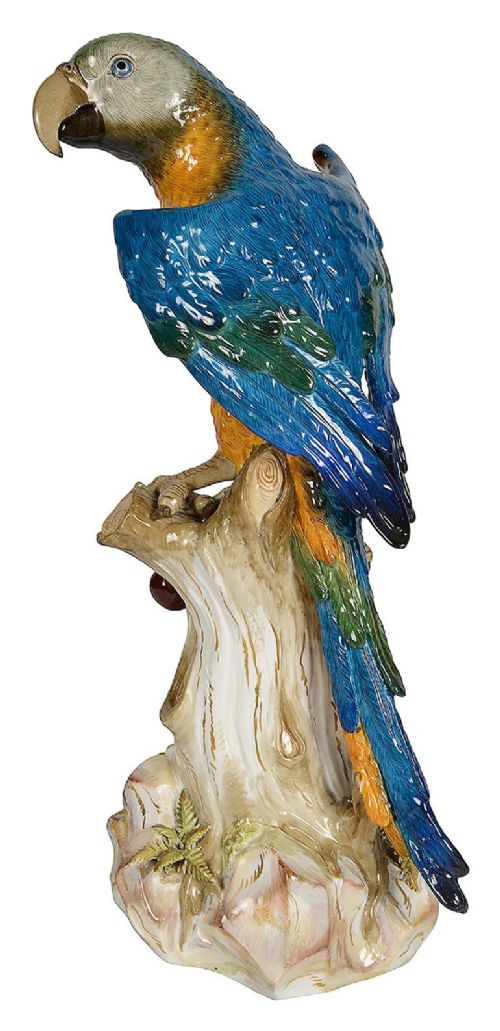
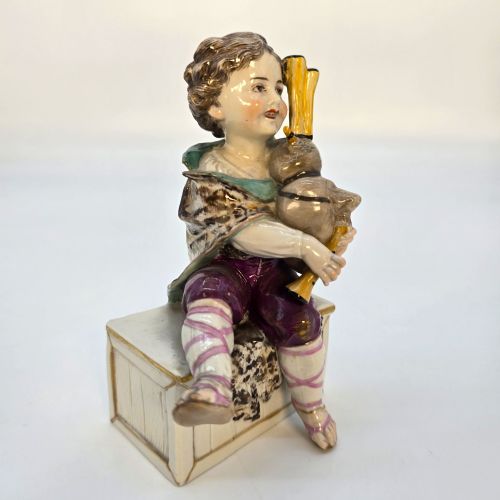
A german porcelain statue encompasses a wide range of sculptural forms, from eighteenth century allegorical groups to nineteenth century animal studies and twentieth century dancers. The pieces on this page lean heavily towards Meissen and Volkstedt figures, along with pairs of birds, musicians, and figures depicting the seasons or harvesters.
Makers such as Meissen, Volkstedt, Nymphenburg, and Rosenthal dominate the production recorded here, spanning periods from the seventeen hundreds through to the Art Deco era. Buyers encounter both single shelf figures and large pairs, modelled as animals, mythological subjects, or everyday characters.
The sculptural styles reflect their respective decades, shifting from ornate Rococo revival curves and Neoclassical symmetry to clean modernist lines. Forms vary from small tabletop figurines to substantial fifty centimetre centrepieces.
Materials and technique
Hard-paste porcelain forms the core material for these figures, fired at high temperatures to achieve a dense, durable body. Glaze and enamel provide the coloured surfaces, while gold leaf is often applied to highlight decorative details.
Bisque porcelain appears in unglazed forms, particularly in piano babies and nineteenth century figures where a matte finish highlights the modelled detail. Hand-painting is common across the nineteenth and twentieth century pieces, bringing individual expression to faces, garments, and naturalistic bases.
German Porcelain Statue Retail Price Guide 2026
Typical asking prices for german porcelain statue among the pieces listed under this phrase on Sellingantiques today, from the lower quarter to the upper quarter. They describe what is for sale here now, not the wider market.
Piano babies sit on nineteenth century instrument ledges, presumably to judge the pianist's tempo with silent ceramic disapproval.
Judging quality
The application of enamel and gold leaf marks a clear division in standard. Precision in the brushwork and depth of colour separate standard production factory pieces from master modeller output.
Meissen·Karl Ens·Nymphenburg·Volkstedt Rudolstadt Factory·Triebner Ens & Eckert·Richard Eckert·Limbach·Rosenthal·C. G. Schierholz·KPM·Theo Voss·Dressel Kister & Cie·Carl Thieme·Gotthelf Greiner·Helena Wolfsohn·Sitzendorf·Ludwigsburg·Frankenthal
The German Porcelain Statue Glossary
- Hard-paste porcelain
- A durable ceramic compound made from kaolin and petuntse, fired at high temperatures. It provides the strong, vitrified body typical of traditional European figure production.
- Bisque porcelain
- Un-glazed porcelain fired once to leave a matte, porous surface resembling white marble. This finish is frequently found on nineteenth century piano babies and allegorical groups.
- Blanc-de-chine
- A French term for white porcelain without enamel colour, used for monochrome figures. It highlights the purity of the ceramic body and the precision of the sculptural form.
- Enamel
- Vitreous pigments applied over the glaze and fired again to fuse with the surface. These colours deliver the vibrant reds, blues, and greens seen on nineteenth century figures.
- Allegorical figure
- A sculptural representation of an abstract idea, season, or virtue, such as autumn or the four seasons. These subjects were popular across eighteenth and nineteenth century German factories.
German Porcelain Statue: Frequently Asked Questions
What is the difference between bisque and glazed porcelain?
Glazed porcelain has a shiny, vitrified surface created by a liquid glass coating fired at high heat. Bisque porcelain is left unglazed, resulting in a matte, chalky texture.
Bisque was often chosen when makers wanted to emphasise fine sculptural details without the softening effect of a glossy glaze.
How should I clean antique porcelain figures?
Dust figures gently with a soft, dry brush to prevent accumulation in crevices and delicate painted areas. Avoid harsh chemical cleaners or soaking, particularly on pieces with overglaze enamels or gold leaf.
For more stubborn grime, use a slightly damp cloth with mild soap, testing a hidden area first.
Are German porcelain birds and animals common?
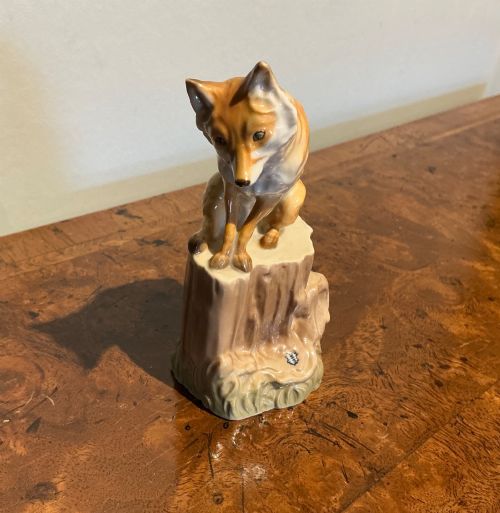
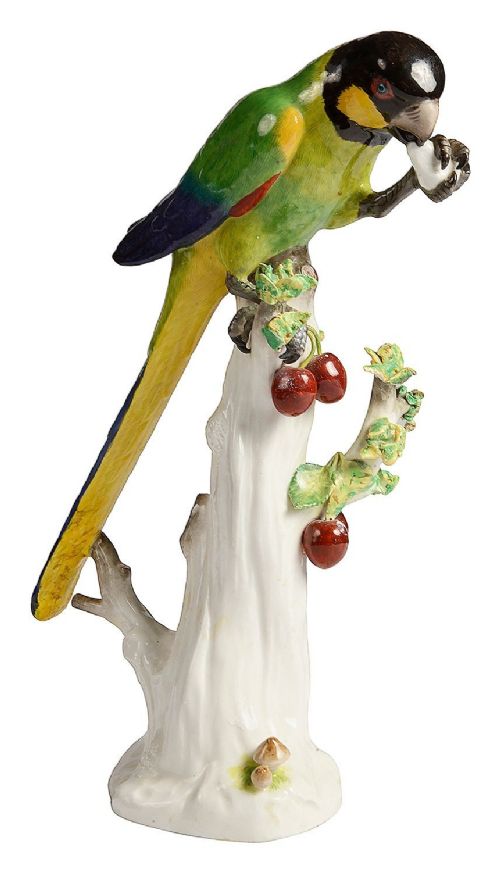
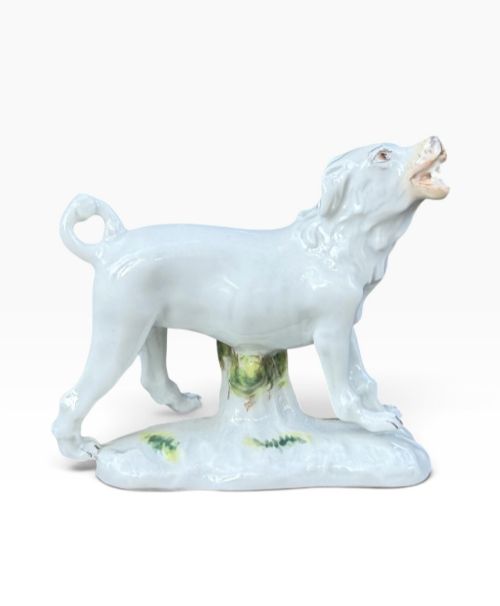
Parrots, dogs, leopards, and hoopoes appear frequently across nineteenth and twentieth century production. Factories like Meissen and Volkstedt specialised in naturalistic animal studies modelled from life.
These subjects often match the size and decorative intent of human figurines from the same era.