




Georgian Silver Tablespoons
Georgian silver tablespoons are substantial dining implements that bring period weight and brightness to the table.
Georgian Silver Tablespoons
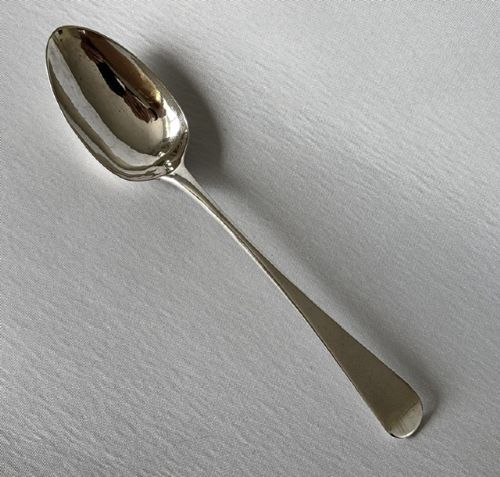
Georgian silver tablespoons encompass flatware produced during the eighteenth and early nineteenth centuries, covering reigns from Queen Anne through to George III and beyond. These items function primarily as serving implements or historic table cutlery rather than modern soup spoons.
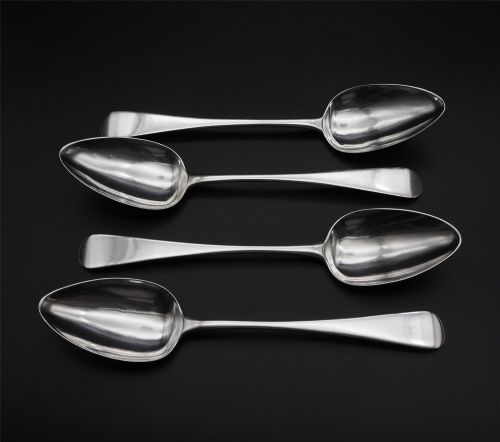
The pieces appearing on this page range from single spoons to matched sets of six or twelve, reflecting various domestic scales. Provincial English, Scottish and Irish examples sit alongside London-hallmarked pieces, showing distinct regional manufacturing traits.
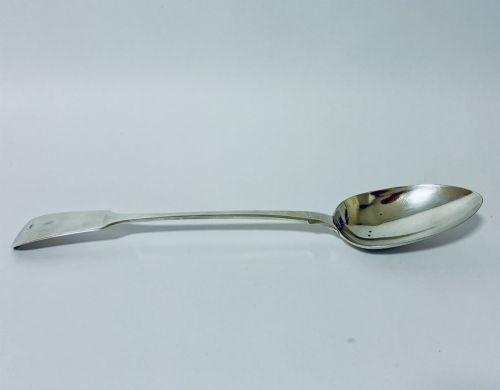
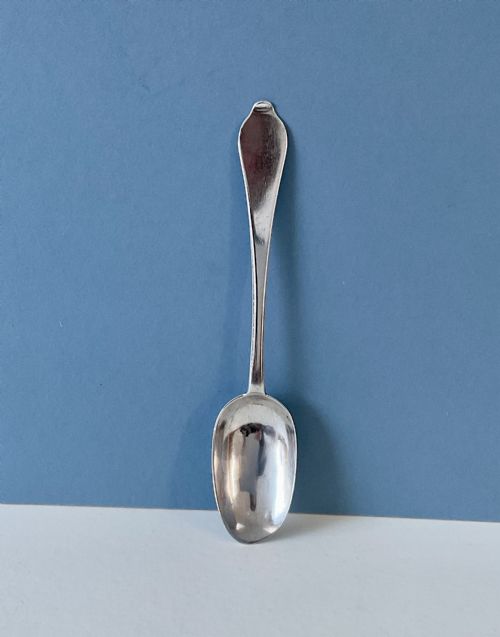
Early variants include dognose patterns and rat tail bowls originating in the late seventeenth and early eighteenth centuries. Later nineteenth-century manifestations introduce handles such as the Kings pattern.
Materials and construction
Silversmiths utilised sterling silver and higher-purity Britannia silver, hammering and shaping the metal from ingots into bowls and handles. Punches struck directly into the silver recorded hallmarks, town marks, date letters and maker's marks.
Rat tail attachments reinforced the joint where the stem met the bowl on early seventeenth and eighteenth-century examples. Later styles incorporated cast handles joined to hammered bowls or formed the entire utensil through specialised pressing and shaping techniques.
Georgian Silver Tablespoons Retail Price Guide 2026
Typical asking prices for georgian silver tablespoons among the pieces listed under this phrase on Sellingantiques today, from the lower quarter to the upper quarter. They describe what is for sale here now, not the wider market.
Materials documented across the inventory comprise sterling silver, Britannia silver and standard silver across various regional styles.
Quality factors
The crispness of the hallmark punches and the survival of original bowl shape determine baseline desirability. Excessive polishing over centuries wears down hallmarks and thins the silver at the bowl tip.
Makers of note, distinct provincial origins such as Scottish Inverness or Exeter, and complete matched sets elevate pieces above standard single items. Early seventeenth-century survivals demonstrate superior technical scarcity compared to later nineteenth-century production.
Peter & Jonathan Bateman·James Tookey·Isaac Davenport·R Grey for Edmonstone·James Tait·Richard Rae·Jabez DANIELL
The Georgian Silver Tablespoons Glossary
- Hallmark
- A series of official marks stamped on precious metals to guarantee purity and origin. These typically include the maker's mark, standard mark, town mark and date letter.
- Rat tail
- A dorsal ridge running down the back of a spoon bowl from the handle base. This feature provided structural reinforcement during early manufacturing periods.
- Dognose
- An early flatware handle shape featuring a notched, upturned terminal resembling a dog's nose. This style gained popularity during the late seventeenth and early eighteenth centuries.
- Provincial
- Items manufactured outside of London, bearing local assay office or maker symbols. Scottish and regional English towns produced distinct provincial variations.
- Britannia silver
- A higher standard of silver alloy containing ninety-five point eight percent pure silver. Legislation mandated this composition for a strict period during the early eighteenth century.
Georgian Silver Tablespoons: Frequently Asked Questions
How do I date a Georgian silver tablespoon?
Assay office letters stamped into the silver correspond to specific recording years for each town. Maker marks alongside monarch profiles further narrow the production window.
Style shifts also indicate era, moving from early rat tail dognose forms toward streamlined eighteenth-century Old English patterns.
Were these spoons used for eating soup?
These large implements served primarily for dishing food from communal bowls to individual plates. Dining customs of the period positioned them centrally on the table.
Over subsequent generations, their domestic role shifted toward serving vegetables, sauces and main dishes.
How should I clean antique silver?
Warm water, mild soap and a soft cloth remove everyday oils without abrasion. Dedicated silver dips strip original patination and should be avoided.
Gentle handling preserves the crispness of maker stamps and the historic surface texture accumulated over centuries.
What is the difference between sterling and Britannia silver?
Britannia silver contains a higher proportion of pure silver per thousand parts than standard sterling. Parliament required this elevated standard briefly in the early eighteenth century.
Items from this restricted window carry distinct seated Britannia hallmarks rather than the traditional leopard head.
Can I use antique spoons for daily dining?
Substantial silver gauge allows for gentle handling during modern meals, though historic wear requires mindfulness. Frequent washing accelerates the softening of engraved crests and hallmarks.
Many collectors prefer displaying matched sets or reserving them for special dining occasions.