
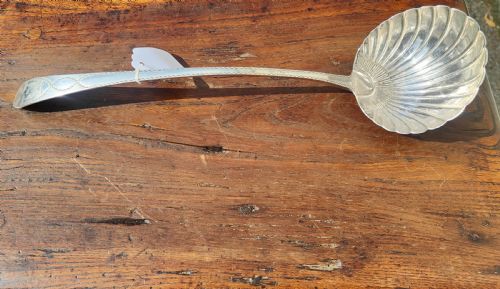
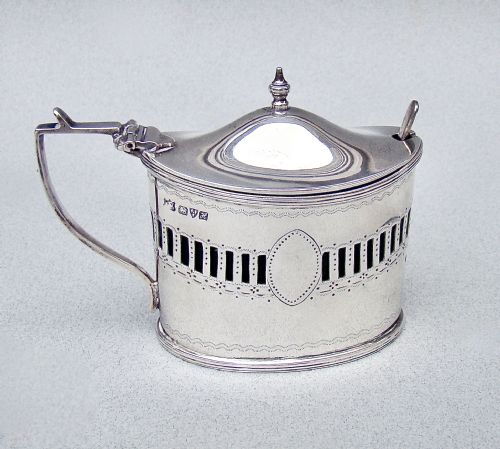
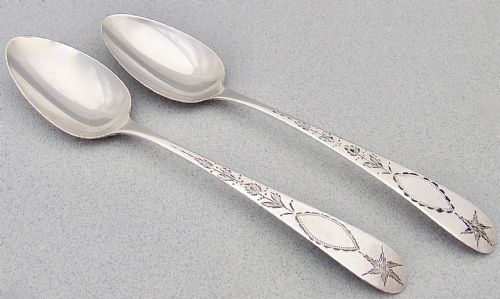
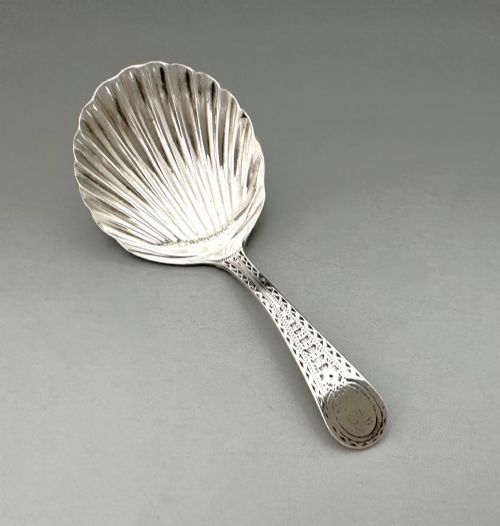
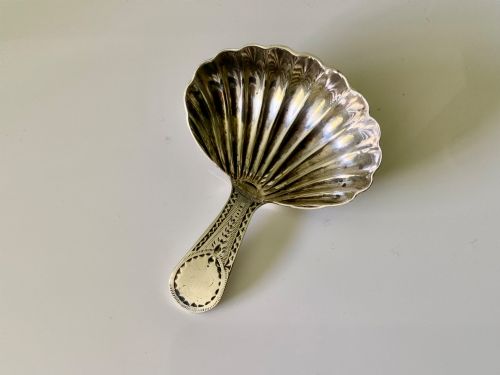
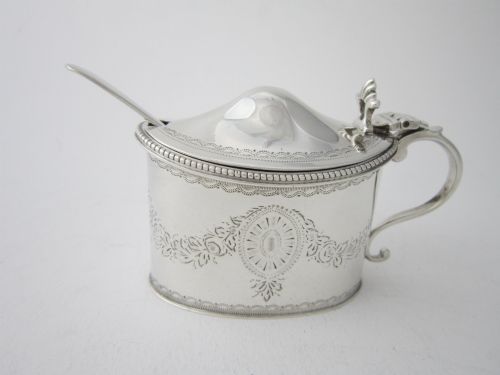
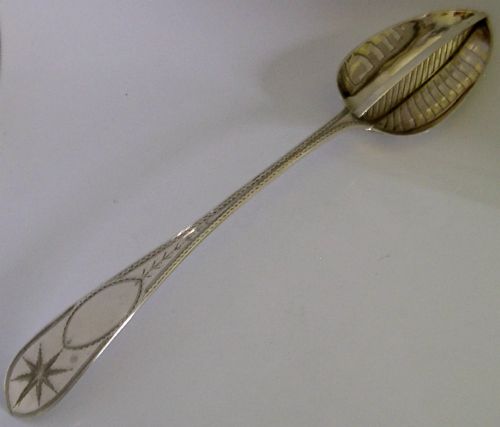
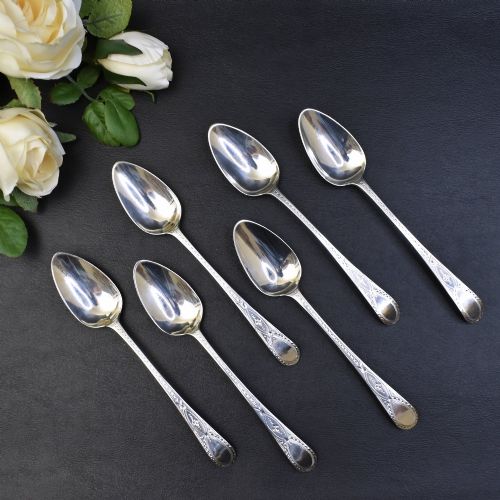
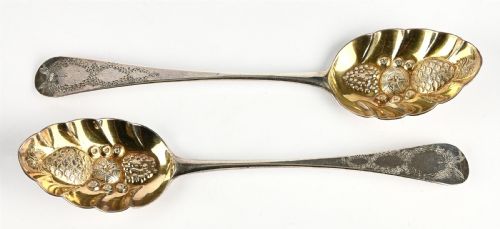


Bright Cut Silver Spoons
Bright cut silver spoons bring delicate, hand-engraved geometric borders to the table, offering a refined Georgian and Victorian aesthetic that collectors treasure.
Identifying bright cut silver spoons
When you search for bright cut silver spoons, you encounter small serving pieces, teaspoons, and tablespoons originating primarily from the Georgian and Victorian periods. These pieces showcase meticulous faceted engraving that catches the light from various angles.
Makers such as the Batemans frequently appear alongside provincial silversmiths, offering collectors distinct regional stylistic choices. The forms range from standard teaspoons to berry spoons and preserve spoons, reflecting diverse dining customs of the eighteenth and nineteenth centuries.
Materials and construction
Silversmiths forged these implements from solid sterling silver or applied gold gilt highlights over silver bases, whilst later Victorian examples occasionally utilise silver plate or electroplated nickel silver. The metal provides a stable, ductile canvas capable of holding crisp, angular chisel marks without fracturing.
The characteristic bright cut decoration relies on flat-bottomed gouges and gravers that slice small facets into the silver surface at precise angles. This technique relies entirely on steady hand-cut precision rather than casting, ensuring each border pattern possesses subtle individual variations.
Retail Price Guide 2026
Typical UK retail prices for bright cut silver spoons, calculated from the Sellingantiques database of over a million retail prices indexed since 2003. This retail price guide relies exclusively on Sellingantiques data; no external sources or auction records are used, so the figures do not describe the wider market.
Distinguishing quality
Quality resides in the crispness and depth of the faceted engraving, where superior pieces maintain sharp, reflective geometric incisions that have not been softened by decades of polishing. The crispness of the border work directly reflects the skill of the original silversmith's hand.
The integrity of the original hallmarks and the retention of a balanced, substantial gauge of silver separate exceptional sets from worn examples. Complete sets sharing uniform maker marks and assay dates command greater interest than assembled groups.
Peter and Anne Bateman·Hester Bateman·George Adams·Richard Ferris
The Bright Cut Silver Spoons Glossary
- Bright cut
- An engraving technique using faceted cuts made with a sharp graver to create a sparkling, geometric border pattern. This method was widely used on silver flatware during the Georgian era.
- Sterling silver
- A silver alloy containing 92.5 percent pure silver and 7.5 percent other metals, usually copper, to increase durability. Most antique British spoons are struck with the lion passant to indicate this standard.
- Hallmark
- An official stamp applied by an assay office indicating the purity of the metal, the year of manufacture, and the maker's mark. These marks allow precise dating of British silver.
- Old English pattern
- A traditional eighteenth-century flatware design featuring a downward-curving stem end and a central ridge on the reverse. It serves as a common profile for bright cut tablespoons.
- Berry spoon
- A large serving spoon, often dating from the Georgian period, retrofitted later in the Victorian era with chased and embossed fruit motifs surrounding bright cut stems. They were designed for serving soft fruits.
Frequently Asked Questions
How do I clean bright cut silver spoons?
Clean these spoons gently using a soft cloth and specialist silver polish to avoid abrading the shallow faceted engravings. Aggressive scrubbing or chemical dips can permanently flatten the crisp geometric details.
Store the spoons in a tarnish-resistant cloth or velvet-lined case when not in use. Regular, gentle maintenance preserves the reflective quality of the hand-cut borders.
Are these spoons suitable for daily use?
Solid sterling silver spoons from the Georgian and Victorian periods remain durable enough for occasional dining use. However, centuries of gentle wear mean many collectors prefer to display them or reserve them for special occasions.
Silver-plated variations offer an alternative for those who wish to use similar forms with less concern over historic metal wear. Care must be taken to hand wash all antique cutlery rather than placing them in modern dishwashers.
How do I identify the date of a spoon?
Check the reverse of the stem for the series of stamped hallmarks, which typically include a maker's mark, a purity standard mark, an assay office symbol, and a date letter. British assay offices in London, Dublin, Newcastle, and Exeter used distinct alphabetical cycles.
Matching these stamped date letters against standard hallmarking charts reveals the exact year of assay. Provincial pieces often display distinct regional variations in their maker stamps.