


Silver Tea Spoons Set
These silver tea spoons set gatherings bring together matched tablespoons and smaller measures for the table, offering both utility and history.
Understanding the Silver Tea Spoons Set
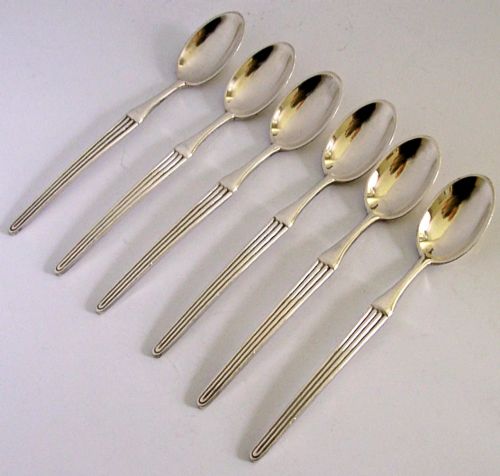
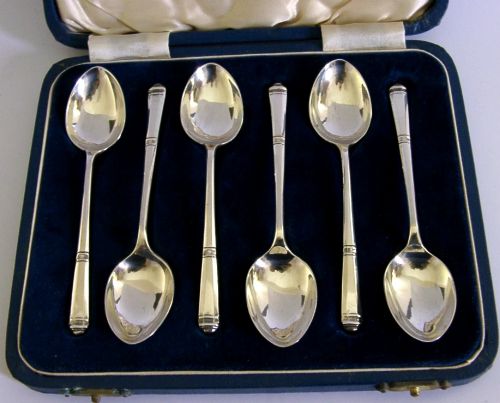
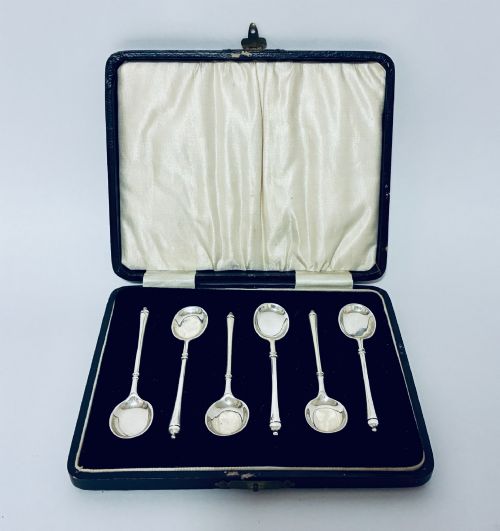
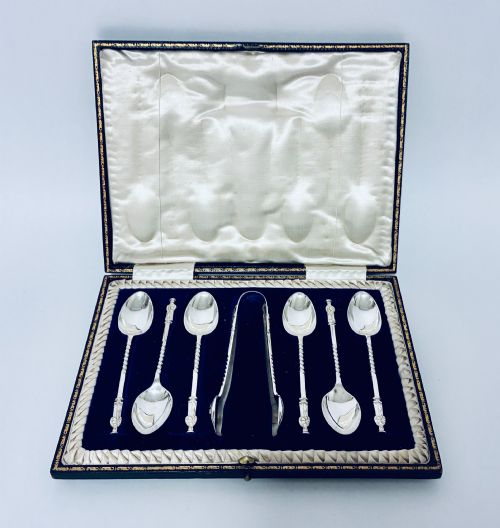
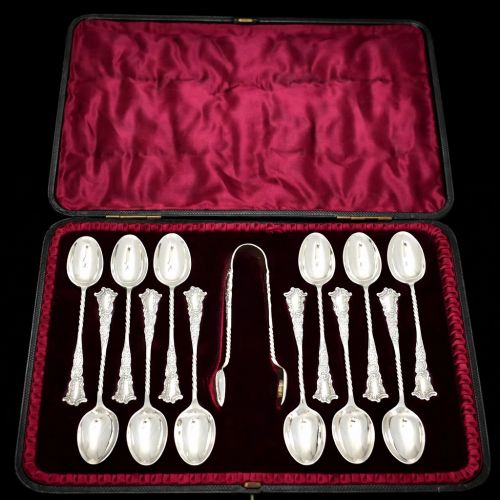
A silver tea spoons set comprises grouped table cutlery designed for daily service or formal display, spanning Georgian origins through to Art Deco production. The pieces found here range from compact four-piece groupings to full sets of twelve, frequently accompanied by matching sugar tongs, strainers, or fitted presentation boxes lined in velvet and leatherette.
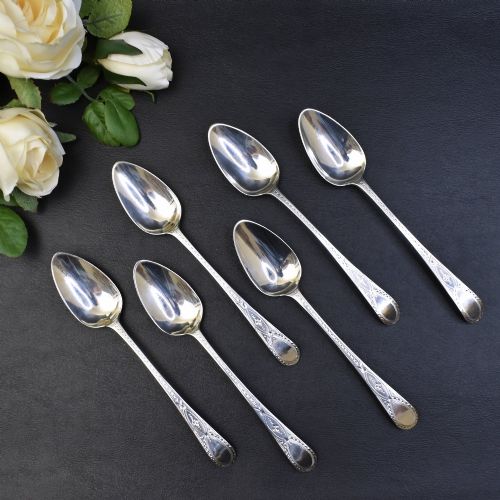
Georgian examples often display delicate bright-cut engraving or distinct regional Scottish provincial marks from makers in Perth, Aberdeen, and Dundee. Later twentieth-century iterations lean towards the geometric lines of Art Deco design, incorporating colourful enamel work or cast pyramid tops alongside standard sterling silver construction.
Buyers will encounter both matched services created in a single workshop and assembled sets united by period style or regional provenance. The inclusion of original fitted boxes adds considerable interest for those seeking complete groupings as originally retailed.
Materials and Making
The primary material across these pieces is sterling silver, shaped through traditional silversmithing techniques including hammering, casting, and hand-engraving. Regional provincial silversmiths utilised local assay standards, while later twentieth-century makers applied colourful vitreous enamel surfaces to the handles of Art Deco items.
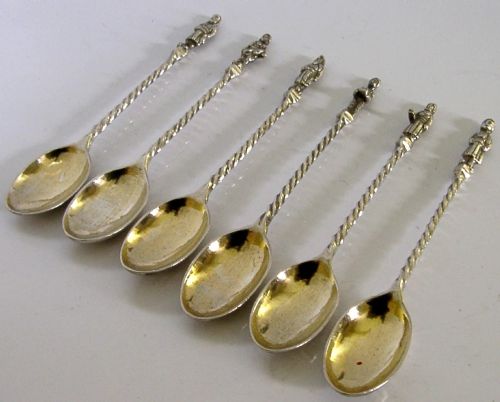
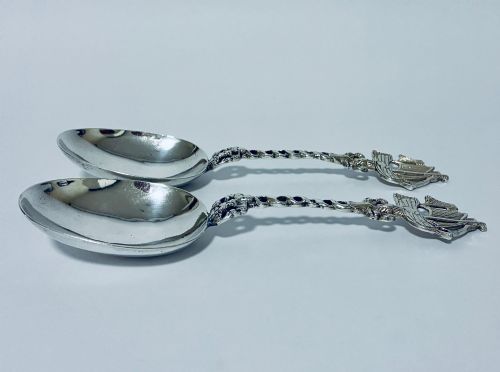
Finishing methods varied from simple polished bowls to intricate bright-cut engraving, engine-turned patterns, and cast figural finials depicting hunting animals or lion motifs. Many sets were completed with auxiliary items such as sugar tongs or strainers, housed within protective presentation cases covered in leatherette and lined with velvet.
Retail Price Guide 2026
Typical UK retail prices for silver tea spoons set, calculated from the Sellingantiques database of over a million retail prices indexed since 2003. This retail price guide relies exclusively on Sellingantiques data; no external sources or auction records are used, so the figures do not describe the wider market.
Hunting animal finials peer out from the tea table.
Judging Quality and Distinction
The distinction between ordinary and exceptional sets rests upon the crispness of the original chasing, the integrity of any applied enamel, and the completeness of the matching group. Early Georgian bright-cut work relies on the precision of the hand-engraving, which should remain sharp and unrubbed across the stem.
Maker attribution elevates certain pieces, particularly when bearing the marks of notable silversmiths or regional Scottish provincial makers. The presence of a matching, undamaged presentation box and ancillary pieces like tongs or strainers further separates standard utility cutlery from highly collectible cabinet sets.
Hester Bateman·Georg Jensen·Amy Sandheim·William Eley II·Lee and Wigfull
The Silver Tea Spoons Set Glossary
- Bright-cut
- A form of hand-engraving utilising faceted cuts to create a sparkling, reflective pattern on the surface of the silver. This technique is frequently observed on Georgian examples.
- Provincial silver
- Silverware made outside the major assay towns such as London or Sheffield, often bearing unique maker marks from Scottish or regional English towns.
- Engine-turned
- A mechanical decoration method producing precise geometric patterns of fine lines etched into the metal. This finish appears predominantly on later Art Deco pieces.
- Tongs
- Small gripping implements designed for sugar lumps, commonly included alongside teaspoons in boxed presentation sets.
- Enamel
- Vitreous glass paste fused to the metal surface through firing, providing vibrant colour contrasts particularly characteristic of Art Deco pieces.
Frequently Asked Questions
What periods do these spoons cover?
The available selection spans from the late eighteenth century through the Georgian and Victorian eras, extending into early twentieth-century Art Deco and modernist styles.
Most sets date from the Georgian period up to the 1940s, encompassing regional Scottish provincial work and twentieth-century factory production.
Are original boxes usually included?
Many sets retain their original fitted presentation boxes, often lined in velvet or leatherette, which were designed specifically to house the spoons and accompanying sugar tongs.
Boxed examples are particularly sought after by collectors for their completeness and the protection they offer the silver over time.
How do I identify Scottish provincial spoons?
Scottish provincial pieces display unique maker marks and town stamps from areas such as Perth, Aberdeen, and Dundee, rather than standard assay office hallmarks.
These regional marks reflect the work of independent silversmiths operating outside the main regulated city assay offices.
What auxiliary pieces come with them?
Larger services frequently include matching sugar tongs, tea strainers, or sugar sifters housed alongside the teaspoons within the fitted case.
These additional implements match the decorative style and silver standard of the main spoons.