



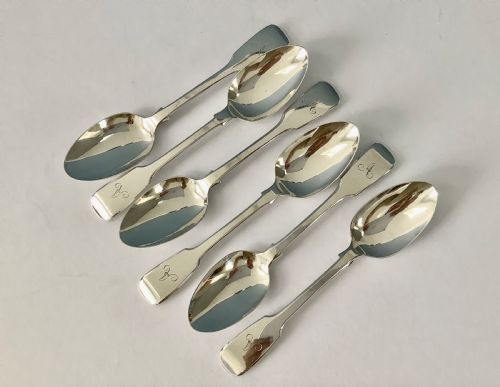
Silver Tea Set Accessory
A silver tea set accessory completes a formal table, offering essential service items from sugar bowls to strainers in sterling silver and plate.
Silver Tea Set Accessory
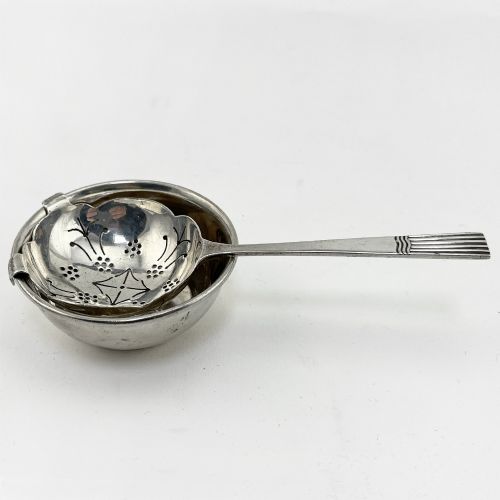
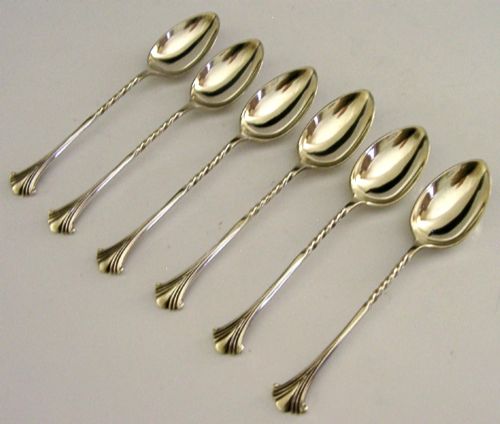
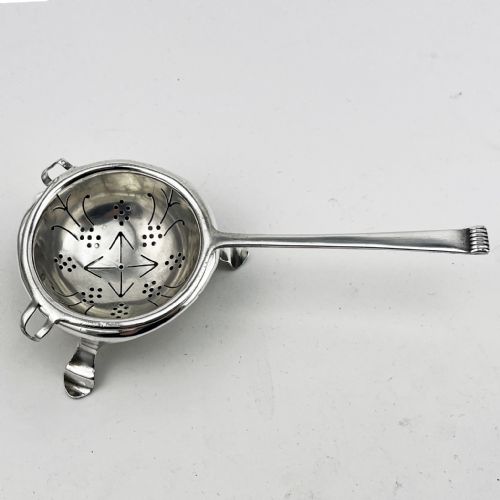
A silver tea set accessory encompasses the smaller serving pieces and complementary vessels that accompany a teapot, including sugar bowls, cream jugs, tongs, strainers, and specialised spoons. These items range from cased presentation sets to individual spoons and handled butter knives intended for the dining table.
The selections span multiple eras, offering Victorian silver strawberry sets, Georgian teaspoons, Edwardian steel and mother of pearl knives, and Art Deco solid silver and Bakelite bridge spoons. Buyers encounter sterling silver alongside silver plate and Sheffield plate.
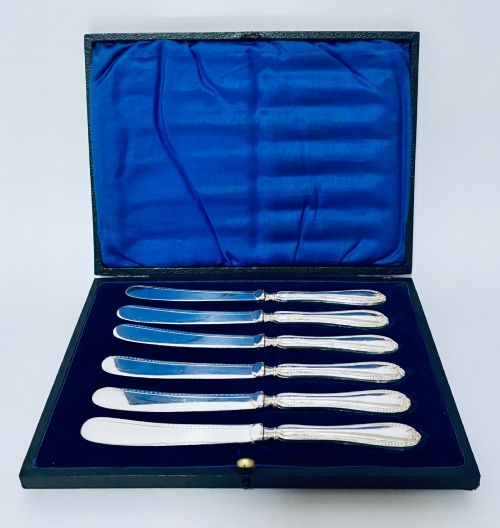
Sets frequently pair sugar bowls with matching cream jugs or sifter spoons, often housed in fitted cases lined with velvet, silk, or leather. Functional items like tea strainers and butter knives appear alongside decorative and practical flatware.
Materials and construction methods
Makers utilised sterling silver, silver plate, and Sheffield plate as the primary metallic foundations for these tea wares, frequently applying gold gilt to the interiors of bowls and jugs. Handles incorporate materials such as mother of pearl, Bakelite, and steel.
Fitted presentation boxes employ protective linings of velvet, silk, and leather to secure cased sets of spoons, tongs, and knives. Metals are shaped, cast, and engraved according to Georgian, Victorian, Edwardian, and Art Deco stylistic conventions.
Silver Tea Set Accessory Retail Price Guide 2026
Typical asking prices for silver tea set accessory among the pieces listed under this phrase on Sellingantiques today, from the lower quarter to the upper quarter. They describe what is for sale here now, not the wider market.
Bridge spoons bring a touch of card-playing history to the tea table, complete with their own designated slots in period cases.
Distinguishing quality in tea accessories
Quality rests upon the weight of the metal, the crispness of the chasing or engraving, and the preservation of any original fitted case. Sterling silver examples demonstrate different standards of manufacture compared to silver plate or Sheffield plate.
The integrity of secondary materials such as mother of pearl handles, Bakelite inserts, and velvet or silk case linings influences the overall preservation of cased sets like sugar and sifter combinations or bridge spoons.
P A W Bateman·Mappin & Webb
The Silver Tea Set Accessory Glossary
- Sterling silver
- A silver alloy containing 92.5 percent pure silver by mass and 7.5 percent other metals, usually copper. This standard alloy provides durability while maintaining a bright metallic lustre.
- Sheffield plate
- An early form of silver plating produced by fusing a sheet of silver to a thicker base of copper. This technique predates modern electroplating methods.
- Silver plate
- Base metal coated with a thin layer of silver through electroplating. This process offered a more accessible alternative to solid sterling items.
- Gold gilt
- A thin layer of gold applied to the interior surfaces of silver bowls and jugs. This application prevents tarnishing from acidic contents like cream and sugar.
- Bakelite
- An early early synthetic plastic used for handles on flatware during the Art Deco period. It provides a durable, heat-resistant grip with a distinctive smooth finish.
Silver Tea Set Accessory: Frequently Asked Questions
What is included in a tea set accessory?
A tea set accessory includes smaller supplementary items designed for service alongside a teapot, such as sugar bowls, cream jugs, strainers, and tongs.
Buyers also encounter cased sets of teaspoons, butter knives, and specialised sifter spoons intended for formal dining.
How are cased tea sets stored?
Cased sets are typically housed in fitted boxes lined with protective materials like velvet, silk, or leather to prevent scratching during storage.
Keeping the accessories inside their original cases helps preserve the silver and secondary components like mother of pearl or Bakelite.
How do I identify the period of a piece?
Periods are identified through stylistic cues such as Georgian engraving, Victorian ornamentation, Edwardian materials, or Art Deco geometric lines.
Makers' marks and assay office stamps, when present on the silver, provide more precise dates of manufacture.