




George III Silver Cutlery
George iii silver cutlery brings Georgian dining tables to life with sterling silver spoons, forks and serving pieces.
George III Silver Cutlery
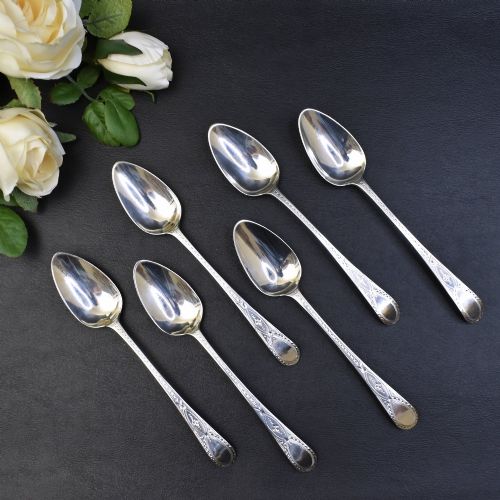
George iii silver cutlery encompasses tableware from the Georgian era, spanning the late eighteenth century and the early nineteenth century. Buyers searching for george iii silver cutlery encounter flatware such as teaspoons, tablespoons, table forks, basting spoons and sugar nips.
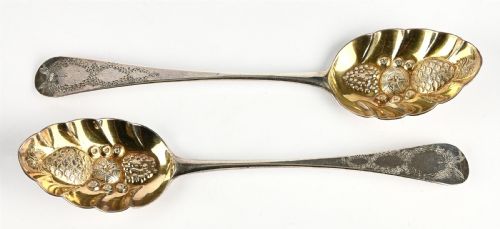
The pieces on this page include fitted canteens, berry spoons, salad servers and marrow scoops alongside specialised items like sugar tongs and cutlery boxes. London, provincial English, Scottish and Irish workshops all contributed to the output of this period.
How they were made
Silversmiths of the Georgian period worked primarily in sterling silver, employing techniques such as bright-cut engraving and forming distinct patterns like Hanoverian and Old English. Certain items feature gold gilt highlights to enhance the silver surface.
Cased sets and boxes relied on cabinet-makers using mahogany, often fitted with velvet linings and solid silver mounts to house the cutlery securely.
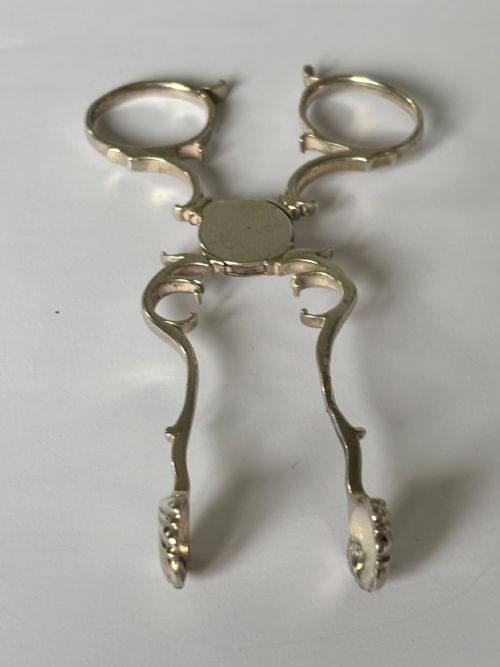
Scissors double as sugar nips, proving eighteenth-century tea drinkers took their sweetness with absolute tactical precision.
What varies in quality
Quality in george iii silver cutlery rests upon the crispness of the maker marks, the depth of bright-cut engraving and the preservation of original form. Pieces retaining clear hallmarks and strong structural integrity command greater appreciation.
The accompanying storage vessels, such as bow front mahogany cutlery boxes with solid silver mounts, vary according to the quality of the timber, the richness of the patina and the retention of fitted interior elements.
peter & Anne Bateman·Thomas Tookey·P A W Bateman·Alexander Henderson
The George III Silver Cutlery Glossary
- Bright-cut
- An engraving technique utilising faceted cuts to create a geometric design that catches the light. It appears frequently on spoons and teaspoons from the period.
- Hanoverian pattern
- A traditional flatware style featuring a central ridge down the stem and a upturned terminal. This pattern dates back earlier than the reign but remained in production.
- Old English pattern
- A rounded flatware handle design with a downward-curving terminal introduced during the eighteenth century. It forms the basis for many tablespoons and forks in this category.
- Basting spoon
- A large spoon designed for serving juices or gravy during a meal. Provincial and Scottish makers produced notable examples during the Georgian era.
- Sugar nips
- Scissors-like implements used for cutting or serving sugar lumps before the widespread adoption of refined cube sugar. They often feature delicate pierced decoration.
George III Silver Cutlery: Frequently Asked Questions
What pieces are in a silver canteen?
A large silver canteen contains settings for multiple people, incorporating forks, spoons and serving pieces designed for formal dining.
These collections often arrive housed within fitted wooden cases lined with materials like velvet to protect the silver elements.
How do I identify Georgian silver spoons?
Georgian spoons bear hallmarks that indicate the assay office, the year of manufacture and the silversmith responsible.
Stylistic markers such as bright-cut engraving, Hanoverian stems and Old English terminals also point directly to this period.
What are provincial silver spoons?
Provincial silver spoons originate from makers working outside major centres like London, operating in regions such as Scotland, Ireland or provincial England.
These pieces display distinct local assay marks and regional variations in design and execution.