


Solid Silver Serving Set
A solid silver serving set brings proper weight and traditional grace to the table, whether you need spoons, forks, or fish servers.
Solid Silver Serving Set
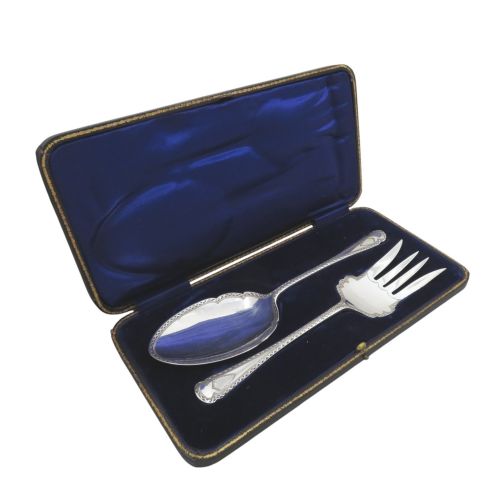
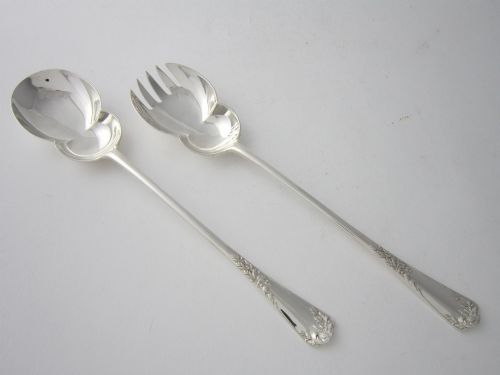
When you search for a solid silver serving set, you are looking at matched or paired utensils designed for the dining table, including serving spoons, salad servers, fish servers, and cake forks. These pieces appear across various periods, most notably the Georgian, Victorian, and Edwardian eras, often accompanied by their original fitted presentation cases lined with silk, satin, or velvet.
The configurations vary from pairs of berry spoons and gravy spoons to larger canteens for twelve persons and sets of tablespoons. Origins span English workshops alongside Dutch Regional and Danish makers, providing a distinct range of historical forms for the dining room.
What varies in quality
The distinction between standard examples and the finest pieces lies in the substance of the metal and the crispness of the workmanship. Heavier gauges of silver provide a more substantial feel in the hand, while deeply struck hallmarks and sharply defined decorative patterns indicate superior craftsmanship.
The survival of fitted cases lined with silk or velvet and the integrity of natural handle materials like stag antler also influence the overall standing of a set.
Listings feature items spanning the Georgian era through to the Art Deco period, incorporating sterling silver, vermeil, wood, and leatherette cases.
J Ladyman·Walter and John Barnard
The Solid Silver Serving Set Glossary
- Sterling silver
- An alloy containing a high proportion of pure silver combined with other metals to ensure durability for tableware. This standard is frequently denoted by traditional British assay office hallmarks.
- Vermeil
- A layer of gold applied over sterling silver. This technique provides a rich two-tone appearance on select serving utensils.
- Queens pattern
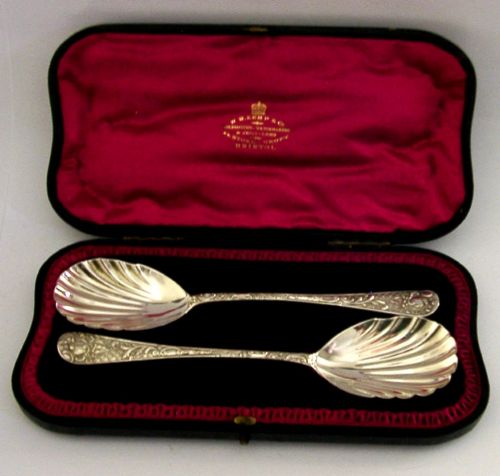
- A decorative relief design featuring shell and floral motifs along the handle edges. It was a popular ornate choice during the Victorian period.
- Old English pattern
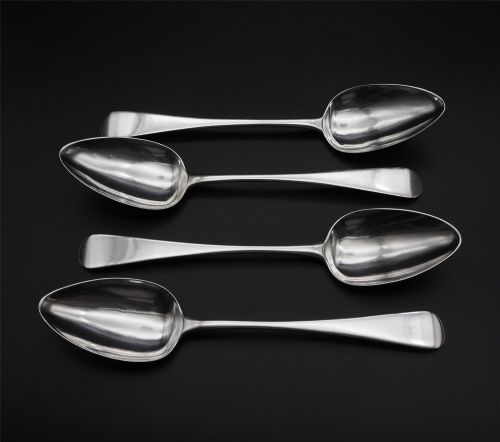
- A traditional handle design with a downward-curving tip, commonly seen on Georgian tablespoons and serving pieces.
- Dognose
- An early eighteenth-century spoon style characterised by a central ridge down the stem and a rounded terminal, also known as a rat-tail spoon.
Solid Silver Serving Set: Frequently Asked Questions
What is included in a silver serving set?
A serving set typically comprises pairs of spoons, salad servers with wooden or silver bowls, fish servers, or larger collections of tablespoons and dessert forks.
Many of these sets were originally retailed in fitted boxes lined in satin, silk, or velvet to protect the pieces between formal meals.
How do I date an antique silver set?
Dating relies on the assay office hallmarks stamped directly onto the silver, which indicate the exact year of manufacture, the maker's mark, and the town.
Stylistic indicators such as the elongated shape of George III pieces, the ornamentation of Victorian Queens pattern items, or the clean lines of Art Deco sets also point to specific eras.
Are cased silver sets intended for daily use?
While robust enough for dining, cased sets from the Georgian, Victorian, and Edwardian periods were often reserved for special occasions and formal dining.
Living with them today involves regular, gentle cleaning to maintain the silver without wearing down the engraved crests or patterned details.
What distinguishes salad servers from standard spoons?
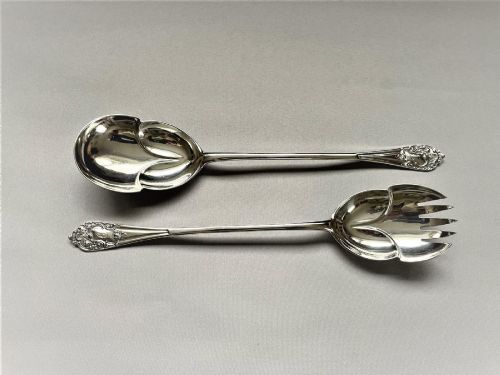
Salad servers usually consist of a large matched fork and spoon, sometimes featuring specialised bowls or handles made from materials like stag antler.
They are proportioned specifically for tossing and serving greens at the table rather than for individual portions.