


Silver Salad Servers
Silver salad servers bring paired forks and spoons of sterling or plate to the table, designed to toss and serve greens with formal grace.
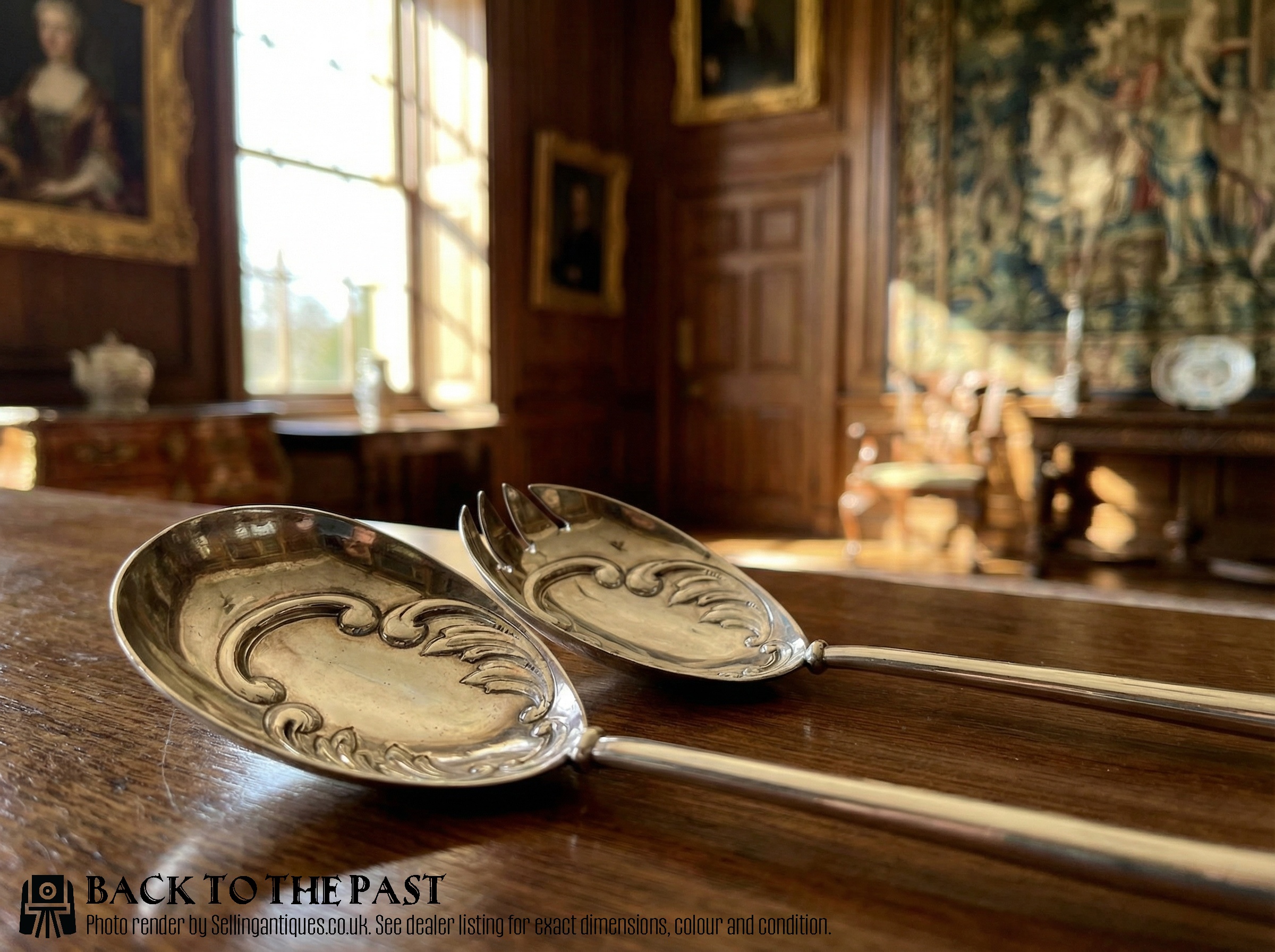
Silver Salad Servers
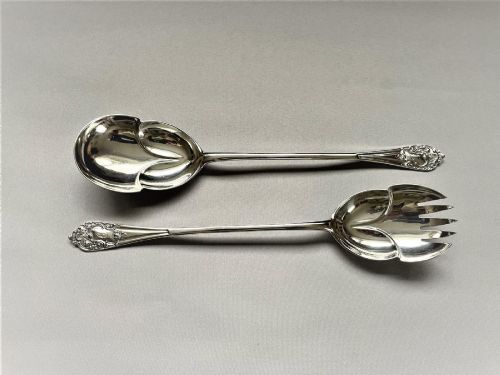
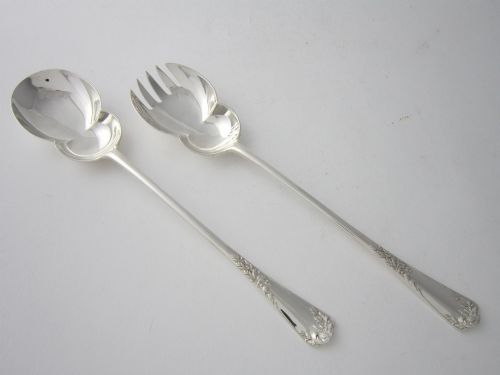
Silver salad servers comprise a matching fork and spoon intended for serving greens, often found paired with ceramic, glass or wooden bowls. The phrase encompasses simple nineteenth-century pairs as well as elaborate twentieth-century boxed sets.
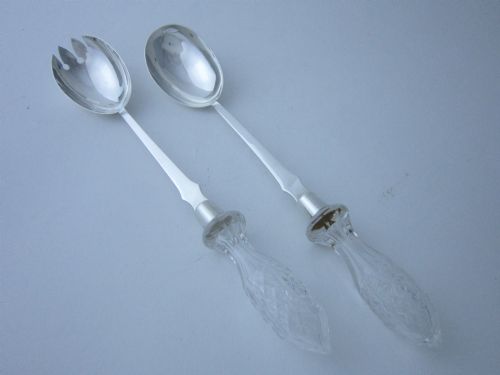
Edwardian and Victorian examples dominate the available selection, frequently rendered in sterling silver with hallmarks from major assay offices such as Chester and London. Alongside all-metal designs, pieces incorporating crystal handles, horn or wood appear regularly.
Regional variations span English Arts and Crafts interpretations, continental European silver-gilt pieces, and occasional imported Asian items. Collectors encounter both utilitarian tools and heavily ornamented sets originally retailed for wedding gifts.
Materials and construction
Silversmiths utilised sterling silver, silver plate and occasionally silver gilt, shaping the bowls and tines through hammering, pressing and casting. Handles often featured distinct decorative motifs including ribbon and reed patterns, Onslow designs, or hand-beaten Arts and Crafts textures.
Many historical sets integrate non-metallic elements like cut crystal, glass, ebony or horn to provide a contrasting grip against the metal shafts. Where ceramics or stoneware bowls accompany the servers, materials like majolica or Doulton Lambeth salt-glaze ground the ensemble in traditional nineteenth-century pottery techniques.
The archive shows a strong representation of Edwardian and Victorian sterling silver servers, frequently accompanied by cut crystal or ceramic bowls.
Evaluating craftsmanship and distinction
Quality rests upon the gauge of the silver and the crispness of the handle ornamentation, where thicker metal resists bending during use. Superior sets display clear, unrubbed hallmarks and balanced proportions between the serving end and the grip.
Design ambition separates standard factory output from notable workshop pieces, particularly in Arts and Crafts or Art Nouveau examples featuring hand-beaten surfaces or specialised enamel work. The integration of auxiliary materials like glass or horn demands secure mounting and clean joins to be considered fine work.
Georg Jensen·Frank Butler·Wang Hing·Gorham·Hukin & Heath·John Grinsell & Sons·William Hutton & Sons·Thomas Prime & Son
The Silver Salad Servers Glossary
- Sterling silver
- An alloy consisting of 92.5 percent silver by mass, representing the standard for quality British tableware. Most antique servers carry hallmarks confirming this composition.
- Silver plate
- A base metal substrate coated with a thin layer of pure silver, offering the appearance of solid metal at a lower cost. Plated items frequently appear in nineteenth and twentieth-century service sets.
- Silver gilt
- Sterling silver that has been coated with a thin layer of gold on the surface, often applied to the interior bowls of spoons to prevent tarnishing from acidic salad dressings.
- Hallmark
- A series of official marks stamped into precious metal items indicating the maker, assay office, standard of purity, and year of manufacture. These symbols provide the primary means of dating British pieces.
Silver Salad Servers: Frequently Asked Questions
How do I clean antique silver salad servers?
Wash the pieces by hand in warm soapy water immediately after use, avoiding harsh abrasives or prolonged soaking that might damage organic handles like horn or ebony.
Dry them thoroughly with a soft cloth to prevent water spots and store them away from rubber or damp environments to slow down tarnishing.
Were these always sold in presentation cases?
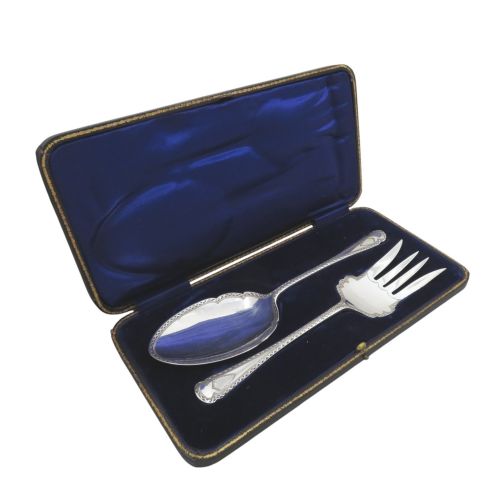
Many Edwardian and Victorian sets were retailed in fitted velvet or leatherette boxes, particularly those intended as wedding gifts or high-end dining accessories.
However, plenty of functional pairs were sold loose or alongside matching ceramic bowls without dedicated storage containers.
Can I use antique salad servers for daily dining?
Solid sterling silver and sturdy silver plate withstand regular use provided acidic dressings are rinsed off promptly after the meal.
Pieces incorporating fragile elements like delicate enamel, cut crystal handles or horn require more careful handling and hand washing rather than machine cleaning.
How do I identify the date of a silver set?
Inspect the metal for a set of stamped hallmarks, which typically include a date letter corresponding to the specific year and assay office of testing.
Stylistic cues such as heavy Victorian embossing or clean Arts and Crafts beating also help narrow down the decade of manufacture.