
Antique Serving Utensils
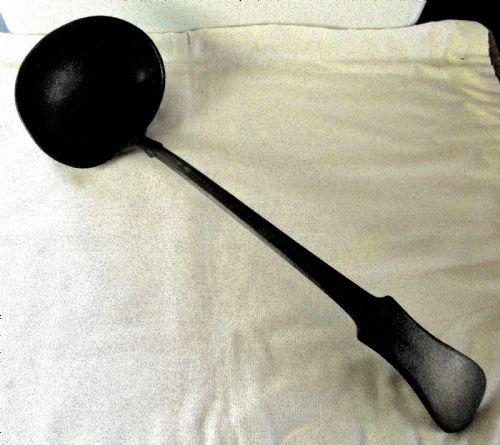
These antique serving utensils span the Georgian, Victorian, and Edwardian eras, offering solid silver and pewter forms designed to grace formal dining tables.
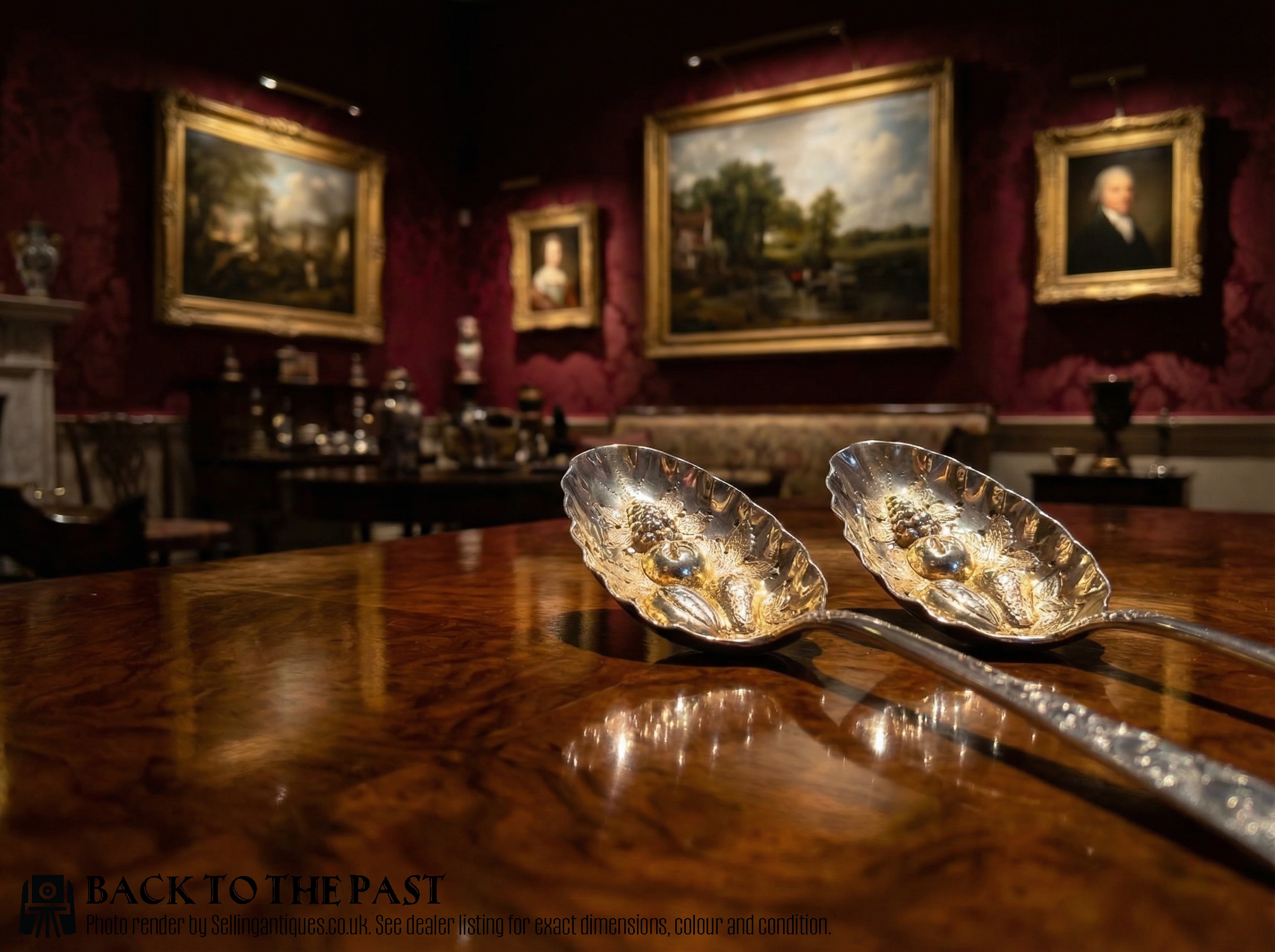
Antique Serving Utensils
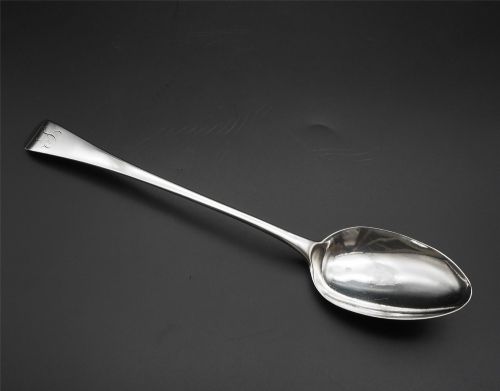
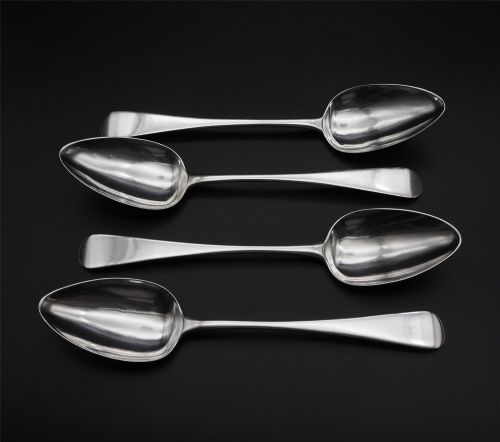
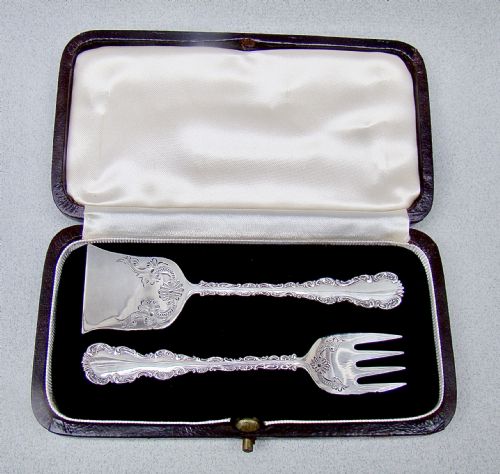
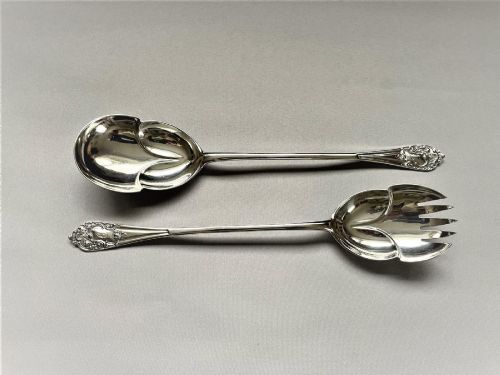
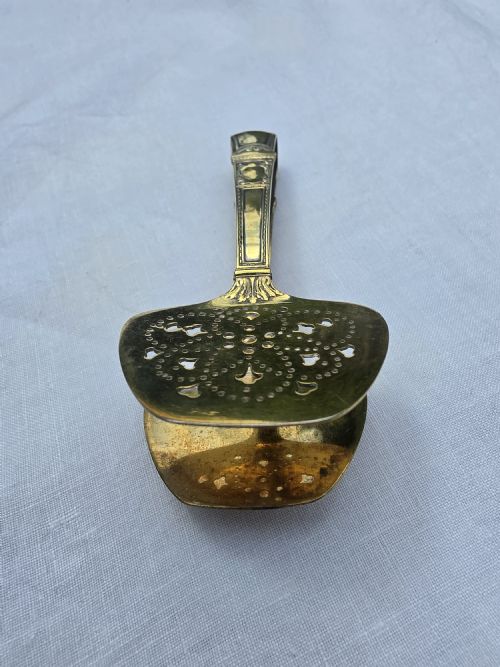
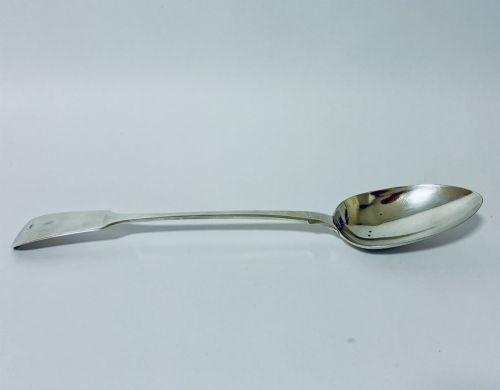
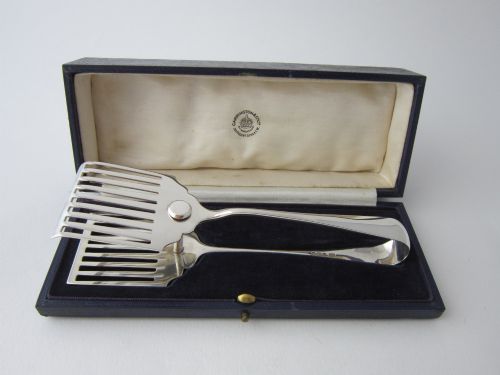
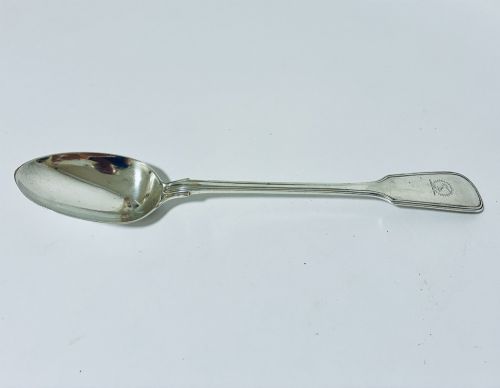
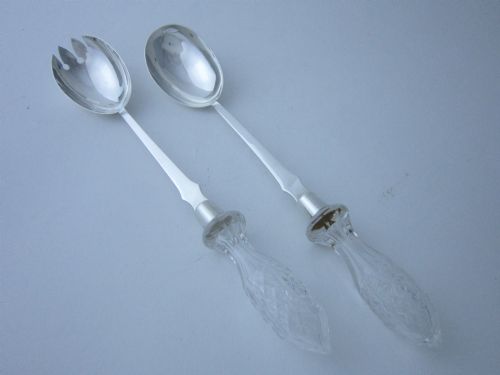
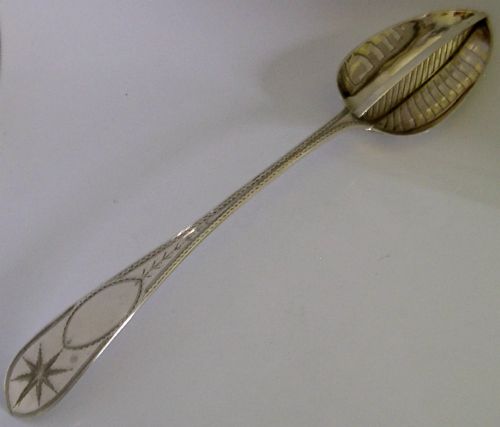
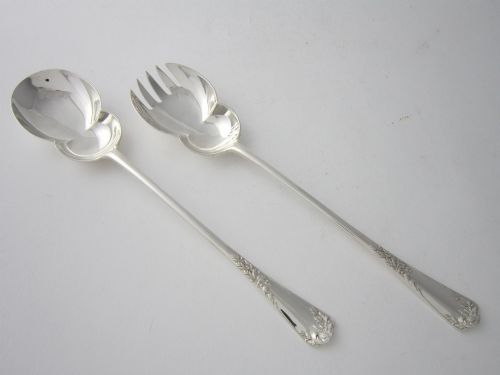
The most common pieces on this page are silver serving spoons and salad servers originating from the nineteenth and early twentieth centuries. These utensils reflect the domestic habits of their respective periods, ranging from large heavy basting spoons to cased sardine servers.
Materials and Construction
Makers utilised sterling silver, silver plate, and pewter, often combining metal bowls and blades with organic elements like mother of pearl handles, glass inserts, or fitted cases lined in velvet, silk, leather, and satin.
Techniques relied on traditional silversmithing methods such as casting, hammering, piercing, and engraving to produce handles featuring crests, floral motifs, or fiddle patterns alongside functional bowls and prongs.
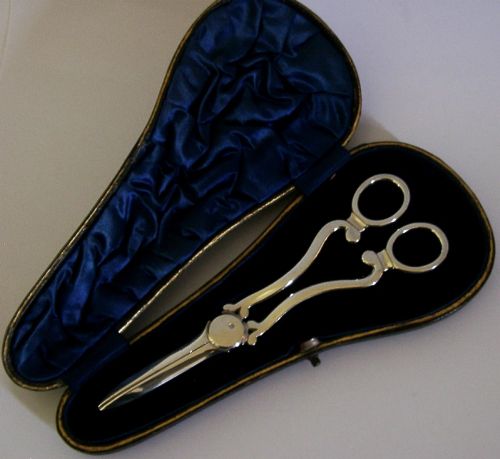
Someone spent decades ensuring families could gracefully sever grapes from the vine with specialised steel and silver scissors.
Standards of Quality
Quality rests upon the weight of the silver, the crispness of any engraved crests or chased decoration, and the integrity of the maker's marks struck into the metal. Substantial gauge silver and balanced proportions separate utilitarian wares from superior dining implements.
The survival of original fitted presentation cases and matching sets also influences the desirability of these pieces. Articulation in moving parts like grape shears or sugar nips indicates careful original manufacture and subsequent preservation.
Henry Wilkinson·Andrew Archer·Tiffany and Company·Dixon and Son·Jonathan Hayne·Hester Bateman·Wilkes Booth·William Devenport·Georg Jensen
The Antique Serving Utensils Glossary
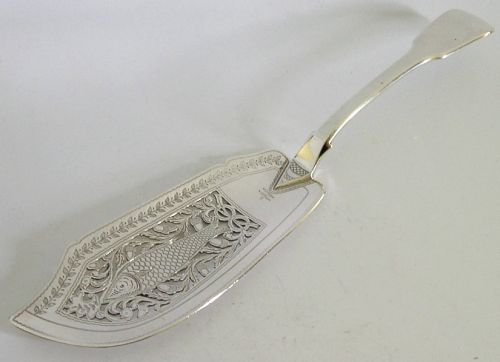
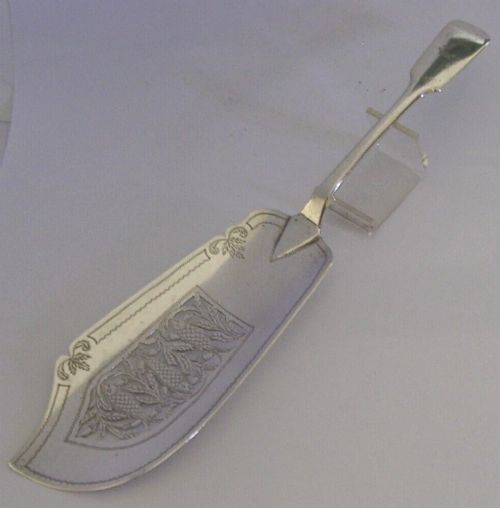
- Fish slice
- A flat, often pierced utensil designed for serving portions of fish at the table. These blades frequently display detailed engraving.
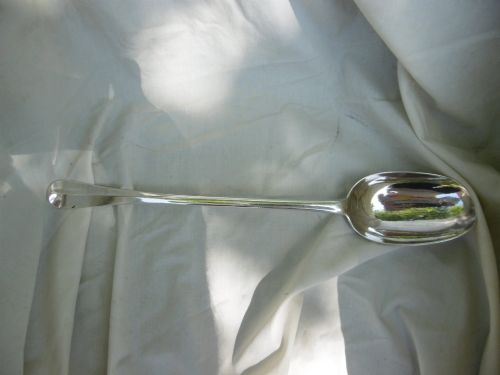
- Basting spoon
- A large spoon originally intended for spooning juices over roasting meat, frequently utilised later as a grand serving spoon.
- Marrow scoop
- A narrow, trough-like implement designed for extracting marrow from bones, often fashioned with double-ended scoops of varying sizes.
- Stilton scoop
- A long, semi-cylindrical utensil created for digging into and serving firm cheeses like Stilton.
Antique Serving Utensils: Frequently Asked Questions
How do I clean antique silver utensils?
Use a soft microfiber cloth and a mild silver dip or paste designed specifically for antique metals. Avoid harsh scrubbing that can wear away crisp engraved crests or thin hallmarks.
Store pieces in dry environments, and if they feature organic handles like mother of pearl, keep them away from excessive moisture.
Can I use these utensils for daily dining?
Many solid sterling silver and pewter serving implements remain entirely functional for modern meals. Hand washing protects the structural integrity and surface finish of older metals.
Take care with delicate mechanisms like grape shears or pieces incorporating glass and velvet lined presentation boxes.
What does a fish slice do?
A fish slice acts as a wide spatula designed to lift and transfer whole fish or large fillets from a platter to a diner's plate. The blade is frequently pierced to let cooking liquids drain away.
These pieces often feature decorative pierced work depicting fish, foliage, or geometric patterns.
How do I identify a Georgian spoon?
Examine the hallmarks stamped into the silver, which reveal assay offices, date letters, and maker's marks corresponding to the reigns of Georges I through IV. Stylistic cues include old English and fiddle pattern handles.
Georgian pieces often display heavier gauges of silver and hand-engraved family crests rather than machine stamping.