
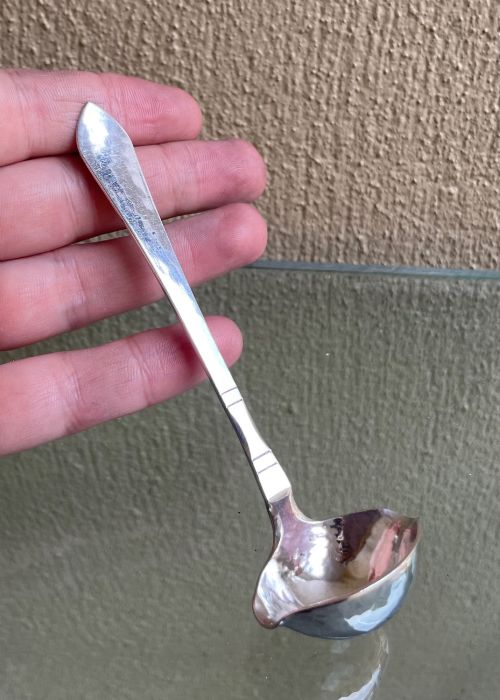


Art Nouveau Flatware
Art nouveau flatware brings the organic line of the turn of the century straight to the dining table, offering collectors elegance with everyday utility.
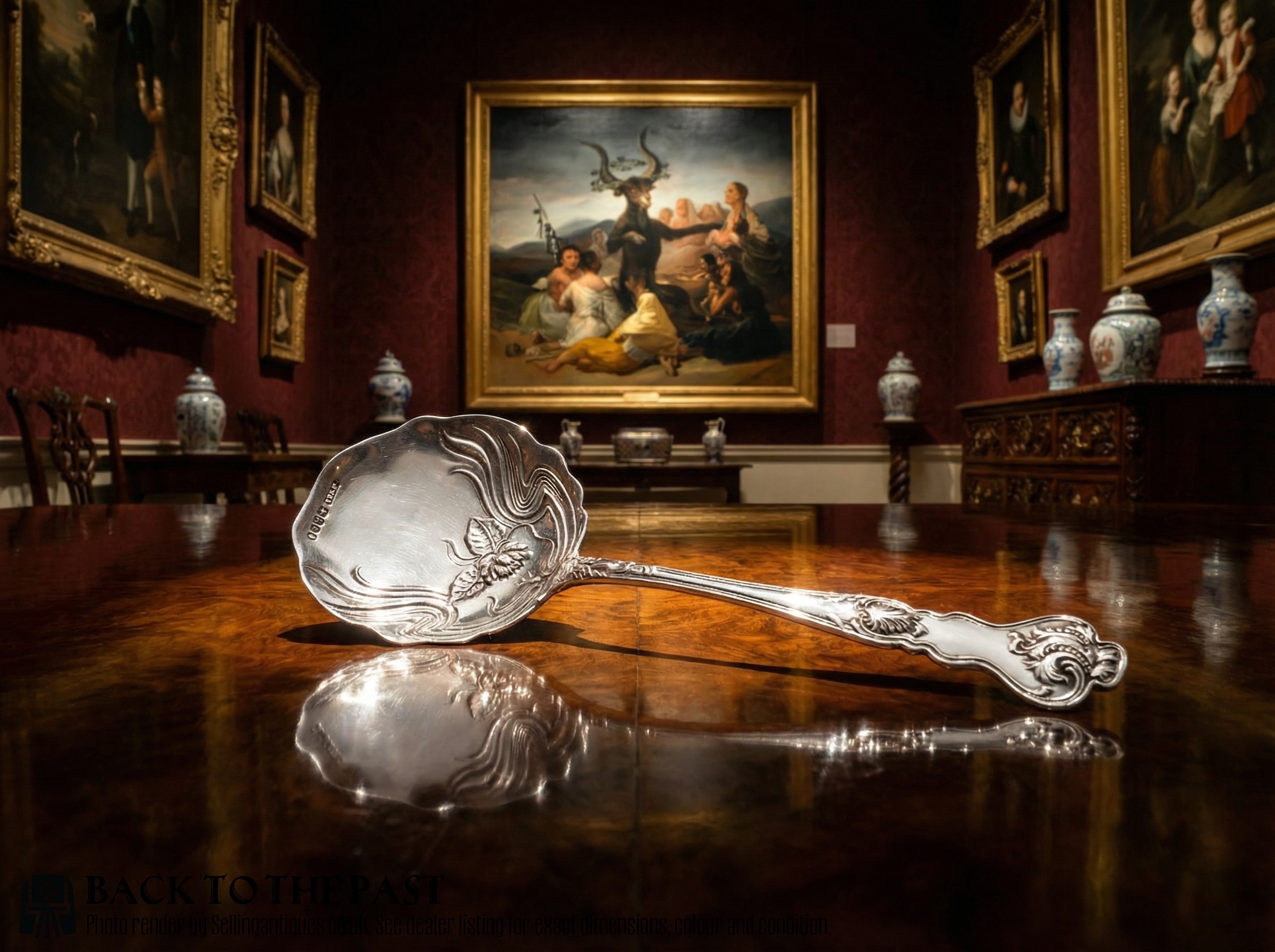
Art Nouveau Flatware
Art nouveau flatware encompasses functional dining utensils shaped by the aesthetic movements of the late nineteenth and early twentieth centuries. These pieces emerge from periods spanning the late nineteenth century through to the mid-twentieth century, capturing the transition from Victorian tastes into modernist design.
Buyers on this page most frequently encounter teaspoons, serving spoons, and ladles executed in sterling silver or silver. Many examples arrive complete with fitted boxes lined in velvet or leatherette, preserving the set as it left the silversmith.
The objects cross several stylistic boundaries, showing direct influences from the Arts and Crafts movement alongside Danish modern iterations. Originating from British, continental European, and Scandinavian workshops, the forms range from standard tea service accessories to specialised caddy spoons and christening sets.
How art nouveau flatware was made
Makers shaped these utensils primarily from solid silver and sterling silver, employing traditional smithing and casting techniques to achieve fluid, plant-inspired handles. Certain pieces receive an additional layer of gold-gilt to the bowl or tines, enriching the metallic contrast.
The production relies heavily on hand-finishing, where silversmiths chased and engraved intricate floral and whiplash motifs directly into the metal surface. Presentation sets often incorporate fitted cases constructed from rigid materials and finished with textured leatherette and soft velvet interiors.
Art Nouveau Flatware Retail Price Guide 2026
Typical asking prices for art nouveau flatware among the pieces listed under this phrase on Sellingantiques today, from the lower quarter to the upper quarter. They describe what is for sale here now, not the wider market.
Materials appearing across current selections include velvet and leatherette, primarily used for protective fitted presentation boxes.
What varies in quality
The distinction between standard examples and exceptional work rests on the clarity of the design and the reputation of the maker. Pieces bearing attribution to known designers or prominent Scandinavian and British firms display superior balance and deeper relief work in the foliage motifs.
Condition of the metal surface and the presence of original fitted packaging significantly influence the character of an item. Crisp hallmarks, intact gilding, and well-preserved velvet linings distinguish the finer survivals from heavily polished or routine production pieces.
Georg Jensen·Oliver Barker·Evald Nielsen·Archibald Knox·John Round
The Art Nouveau Flatware Glossary
- Sterling silver
- A standard alloy consisting of a high proportion of pure silver combined with other metals to ensure durability for daily use. This material forms the primary body of the finest spoons and ladles.
- Caddy spoon
- A specialised short utensil designed originally for measuring loose tea leaves from a storage caddy. These small spoons frequently carry the most exuberant decorative handles in a collection.
- Gold-gilt
- A thin layer of gold applied chemically or mechanically to the surface of silver items. It provides a warm, contrasting tone to the bowl of a spoon or the prongs of a fork.
- Hallmark
- An official stamp struck into precious metals to indicate the standard of purity, the assay office, and the date of manufacture. These marks allow collectors to verify the exact provenance of a piece.
- Assay
- The official testing of metal purity conducted by an authorised office before stamping. It ensures the silver meets the required legal standard for trade.
Art Nouveau Flatware: Frequently Asked Questions
How do I clean antique silver flatware?
Clean silver flatware gently using warm water, mild soap, and a soft cloth to preserve the original details of the metal. Avoid harsh abrasive dips that strip away the natural patina accumulated over the decades.
Store the pieces in dry conditions, preferably within anti-tarnish rolls or their original velvet-lined boxes, to minimise exposure to air and moisture.
Can I use art nouveau spoons daily?
Many silver spoons and forks remain sturdy enough for regular dining use, provided they are washed by hand rather than placed in a mechanical dishwasher. Sterling silver withstands careful handling during meals without losing its structural integrity.
For delicate serving pieces or gilt items, limit usage to special occasions to protect the fine surface details and any applied gold layer.
How do I date art nouveau cutlery?
Dating relies primarily upon the official hallmarks stamped into the metal, which record the assay office and year letter for British items. Stylistic clues, such as the transition from Victorian ornamentation to flowing Edwardian lines, also help narrow the timeframe.
Designer signatures and retailer marks provide further historical context, placing specific manufacturing dates around the turn of the twentieth century.
What is a caddy spoon used for?
A caddy spoon serves as a small scoop designed to measure dry tea leaves from a caddy into a teapot. Their compact size allowed silversmiths to experiment freely with decorative handles.
Collectors prize them for their sculptural forms, which often showcase the most elaborate interpretations of floral and organic design within a dining service.