
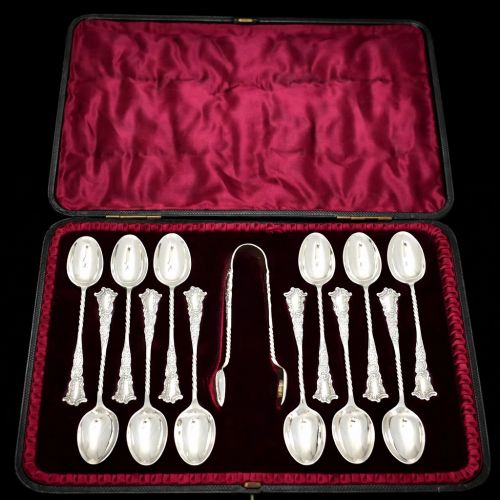


Vintage Silver Teaspoons
Vintage silver teaspoons bring domestic ritual to the table, offering tactile weight and historic charm that modern cutlery simply lacks.
Understanding vintage silver teaspoons
When you search for vintage silver teaspoons, you encounter miniature implements designed for stirring tea or coffee, shaped by the social habits of past decades. These small spoons appear in various forms, from single pairs with dog nose handles to cased sets intended as gifts.
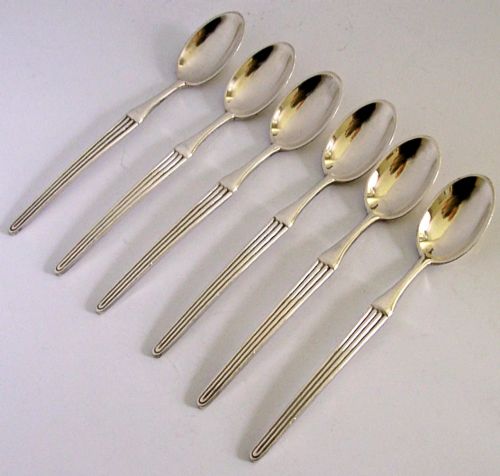
The pieces listed on this page span several decades, originating from around 1900 to 1940. This timeframe encompasses distinct aesthetic movements, including Art Nouveau, Art Deco, Victorian, and Queen Anne influences applied to domestic tableware.
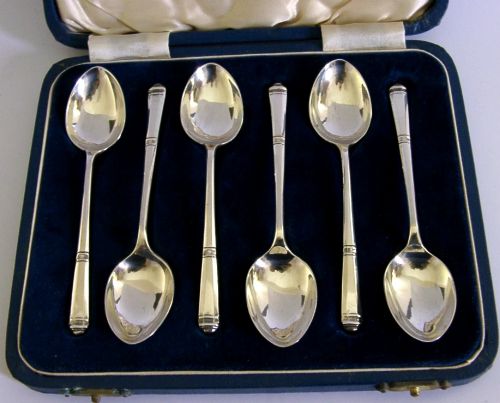
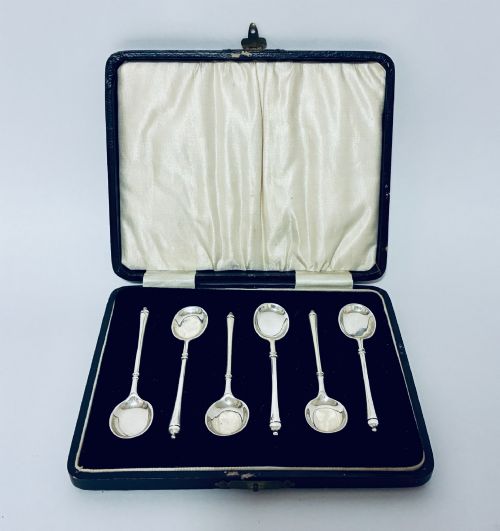
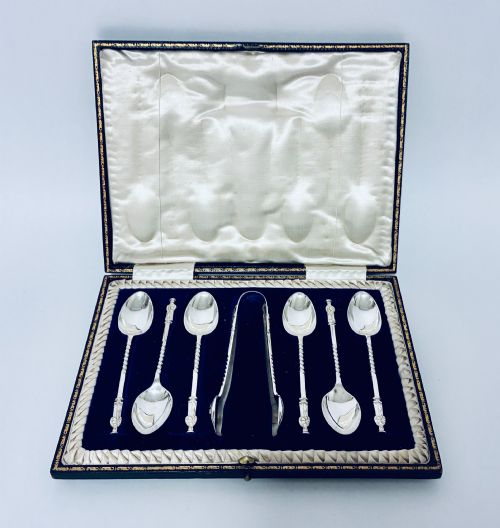
Sets vary in scale, appearing as pairs or as larger collections of six spoons. Many arrive housed in original fitted containers lined with materials like velvet or leatherette, preserving them for daily use or display.
Materials and construction
The construction relies on solid sterling silver or German silver, chosen for durability and lustre. Metalworkers shape these materials through traditional smithing techniques, forming slender stems and small bowls.
Handles receive careful attention, featuring period-specific designs such as the early dog nose profile or geometric Art Deco facets. Presentation boxes utilise protective outer layers of leatherette alongside soft velvet interiors to secure the spoons.
Current listings feature items spanning four distinct decades: the 1900s, 1920s, 1930s, and 1940s.
Evaluating quality and design
Quality rests in the crispness of the metalwork and the integrity of the design motifs. Finer examples display sharp, well-defined stylistic details on the handles, whether flowing Art Nouveau lines or geometric Art Deco angles.
The presence of a matching fitted case adds another layer of distinction. Complete sets housed in sound velvet and leatherette containers maintain their historical context better than loose spoons gathered over time.
The Vintage Silver Teaspoons Glossary
- Sterling silver
- A silver alloy containing 92.5 percent pure silver and 7.5 percent other metals, usually copper. This standard ensures sufficient hardness for functional cutlery while maintaining a bright appearance.
- Dog nose handle
- An early handle style featuring a rounded, downturned terminal resembling a canine's nose. This traditional form appeared on spoons during the late seventeenth century and was revived in later periods.
- Art Deco
- A design style characterised by sleek geometric shapes, streamlined forms, and modern industrial motifs. It dominated decorative arts during the 1920s and 1930s.
- Art Nouveau
- An international style of art and architecture that peaked in popularity around 1900. It is marked by intricate linear designs and flowing, natural curves inspired by plant and floral forms.
- Leatherette
- A form of simulated leather used as a durable outer covering for presentation cases. It mimics the texture of animal hide while protecting the contents within.
Frequently Asked Questions
What were silver teaspoons used for originally?
These small spoons served primarily for stirring sugar or milk into tea and coffee. They were standard additions to formal dining and afternoon tea services.
Over time, they evolved from functional implements into decorative tableware often given as commemorative gifts or wedding presents.
How do I care for vintage silver teaspoons?
Regular, gentle cleaning with a specialised silver cloth maintains the metal's lustre without causing abrasion. Avoid harsh chemical dips that strip away the subtle patination built up over decades.
Storing the spoons in a dry environment, ideally within their original fitted cases, prevents unnecessary tarnishing and protects the delicate metalwork from scratches.
How can I tell the period of a silver teaspoon?
Stylistic clues provide the first indication of age, with distinct motifs like geometric angles pointing to the 1930s or flowing lines suggesting 1900. Examining the handle shape and overall proportions helps align a piece with its design era.
Packaging also offers context, as fitted presentation boxes lined with velvet often reflect the manufacturing standards and tastes of their specific decade.
Can I use antique silver spoons every day?
Solid silver is durable enough for daily use, provided you wash the pieces by hand rather than placing them in a mechanical dishwasher. Hand washing prevents extreme heat and harsh detergents from damaging the metal.
Using them regularly actually helps prevent heavy tarnish accumulation, keeping the surface bright through natural friction while connecting you to centuries of domestic tradition.