





Victorian Silver Teaspoons
Victorian silver teaspoons bring the quiet ceremony of nineteenth century tea service to the modern table.
Victorian Silver Teaspoons
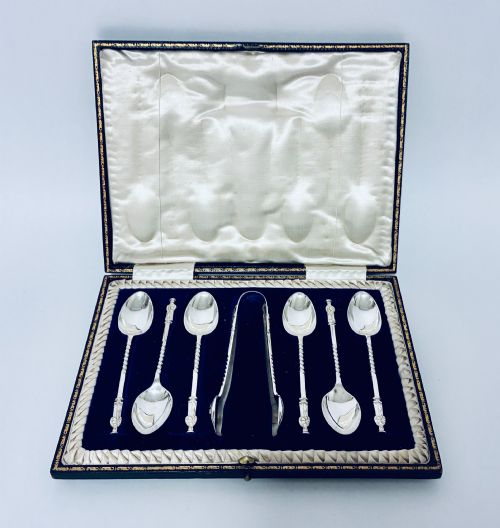
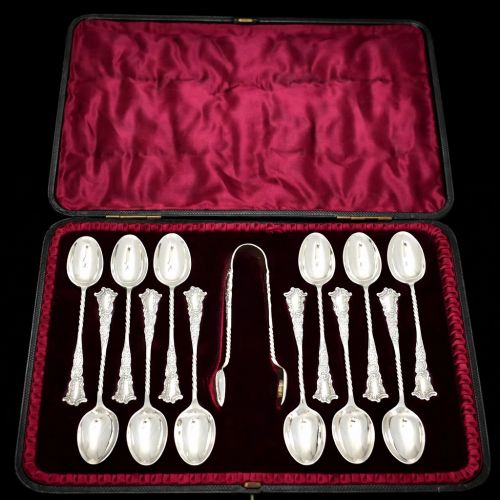
Victorian silver teaspoons are small spoons produced during the nineteenth century, often found as matched sets accompanied by sugar tongs within fitted cases lined in velvet, silk, or leatherette. The pieces recorded span the middle and late Victorian periods, alongside related items from the turn of the twentieth century. A buyer searching this phrase encounters individual spoons as well as cased sets intended for tea and coffee service.
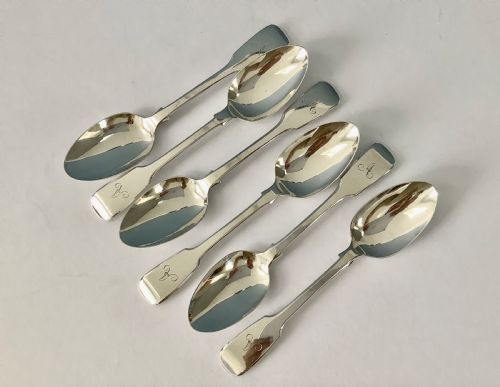
The forms range from plain bowls and fiddle handles to ornate patterns including Onslow, Kings, Fiddle, Thread and Shell, and Rat Tail designs. Specialised examples feature apostle figures, soldier motifs, palm patterns, and grape vine decorations in solid silver or silver gilt. Provincial items from assay offices in Exeter, York, Chester, and Glasgow appear alongside London work.
Cased presentation sets frequently pair the teaspoons with matching sugar tongs for service. Related cutlery such as butter knives and coffee spoons occasionally accompany these gatherings. The materials stretch from standard sterling silver and silver plate to silver gilt and polychrome enamel work.
Materials and construction
Silversmiths shaped these spoons from sterling silver and silver gilt using traditional casting, hammering, and stamping methods. Handles often display detailed cast or chased enrichment, such as the intricate scrollwork of the Onslow pattern or the grape vine motifs on silver gilt versions.
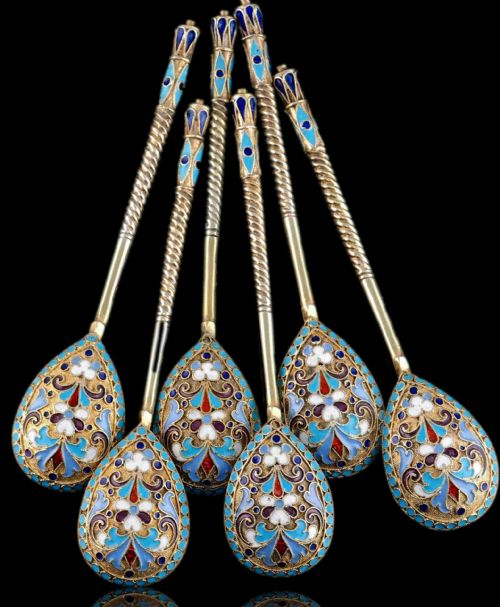
Enamel work appears on select pieces, adding coloured glass paste fired onto the silver base to create intricate cloisonné designs. Many sets are housed in protective cases constructed from wood or card covered in leatherette and lined with silk or velvet to cushion the cutlery.
Apostle spoons bring tiny saints to the tea table, ensuring your sugar is stirred under celestial supervision.
Distinctions in craftsmanship
Quality rests upon the crispness of the chasing and the weight of the metal in the hand. Master silversmiths achieved deep, sharp relief in patterns like Fiddle, Thread and Shell, whereas lesser examples show softened detail from worn dies or lighter gauge silver.
The completeness of a fitted case and the preservation of original silver gilt or enamel surfaces elevate specific sets. Provincial items bearing marks from collectable regional assay offices carry distinct historical interest.
Dmitrii Nikolaevich Nikolaev·Robert Stebbings·Charles Boyton·Chawner & Co·Robert Pringle & Sons·Thomas Bradbury
The Victorian Silver Teaspoons Glossary
- Sterling silver
- An alloy containing 92.5 percent silver by weight, used for the majority of these spoons. It provides the necessary durability for daily dining use.
- Silver gilt
- Silver that has been coated with a thin layer of gold on its surface. This technique produces a rich, warm tone seen on decorative dessert and tea sets.
- Assay office
- An official body responsible for testing the purity of precious metals and stamping them with hallmark symbols. Regional offices included locations such as Exeter, Chester, York, and Glasgow.
- Fiddle, Thread and Shell
- A traditional nineteenth century cutlery pattern featuring a fiddle shaped handle edge with a raised thread border and a shell motif. It represents a heavier, more formal style of dining silver.
- Cloisonné
- An enamelling technique where metal wire is soldered to the metal base to create compartments filled with coloured paste. It produces vibrant decorative patterns on specialised spoons.
Victorian Silver Teaspoons: Frequently Asked Questions
How were Victorian teaspoons used?
These spoons were utilised during formal afternoon tea and evening gatherings for stirring sugar and cream into cups. They formed an essential component of household tableware.
Larger sets were frequently kept within protective presentation cases and reserved for entertaining guests.
Can I use them every day?
Solid silver spoons are durable enough for regular daily dining provided they receive gentle hand washing. Avoiding abrasive cleaners preserves the fine detail on the handles.
Cased sets with delicate enamel or silver gilt benefit from more careful handling to protect their decorative finishes.
How do I date these spoons?
Hallmarks stamped directly onto the reverse of the stem provide the exact assay office, standard mark, and date letter. Comparing these stamps against official registry records reveals the year of manufacture.
Stylistic elements like Onslow patterns or bright cut engraving also offer strong clues to the decade of production.
Why do some sets include tongs?
Sugar tongs were manufactured to match the teaspoons for the hygienic transfer of sugar lumps into tea cups. These matching pieces completed the service set within the presentation case.
Finding a complete set with both spoons and tongs intact is typical of nineteenth century presentation boxes.