


Sterling Silver Teaspoon
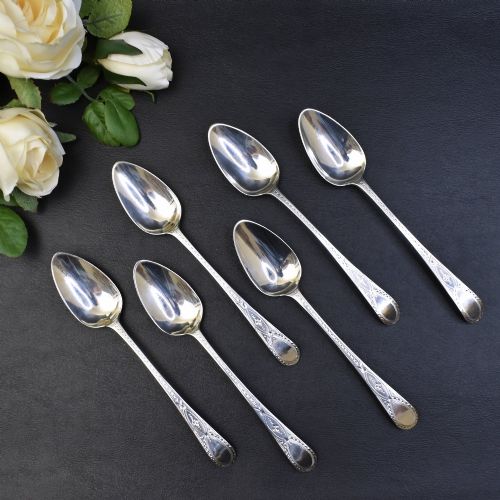
These sterling silver teaspoon pieces offer refined domestic utility and collectible interest, spanning Victorian forms through to mid-century designs.
Identifying your sterling silver teaspoon
A sterling silver teaspoon represents a versatile form of silverware found across multiple periods, including Victorian, Edwardian, Art Deco, and mid-century modern eras. Buyers examining this page encounter individual examples and complete cased sets designed for functional dining or commemorative display.
The evidence shows various thematic and regional types, such as golf spoons, shooting interest pieces, and Scottish items linked to specific locations like the Burgh of Kingussie. Cased sets frequently appear alongside individual collector spoons and commemorative designs.
Materials and construction
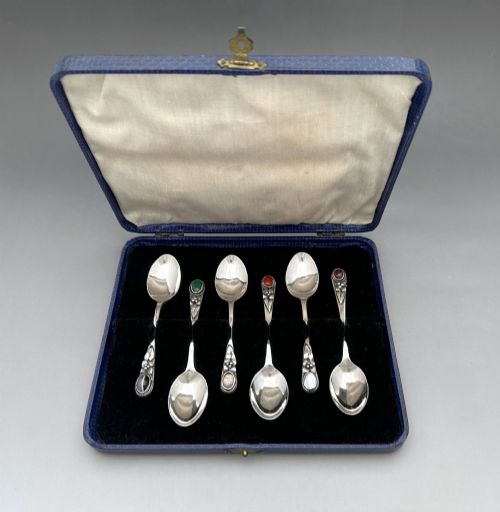
These items utilise solid silver and sterling silver materials, often incorporating decorative techniques such as pierced stems and enamel work. Manufacturing methods rely on traditional silversmithing processes associated with established assay offices in cities like Sheffield, Birmingham, and London.
Specialised patterns, including the palm design, acorn pattern, and St Dunstans pattern, demonstrate detailed surface ornamentation. Production spans domestic British workshops and international makers, evidenced by import marks and American-origin pieces.
Materials documented across the inventory consist entirely of sterling silver and solid silver.
Judging quality in silver spoons
Quality depends upon the weight of the metal and the crispness of the designated pattern, distinguishing heavy utilitarian pieces from lighter souvenir items. Maker reputation also influences standing, with products from notable firms showing superior finishing in handle detailing and bowl formation.
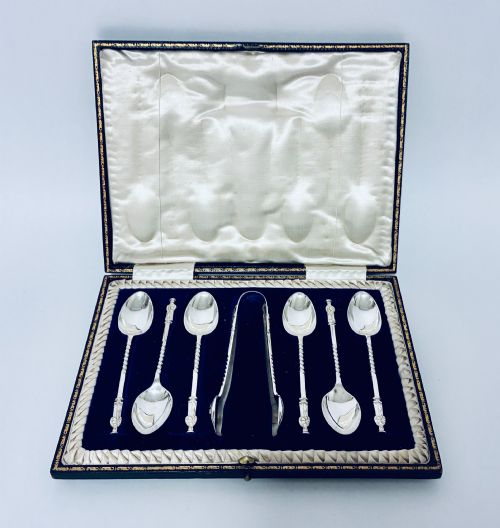
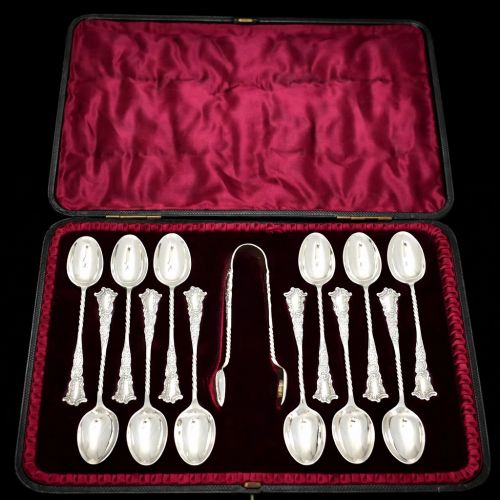
Completeness alters the character of an acquisition, separating loose individual spoons from cased sets complete with matching sugar tongs. The presence of clear hallmarks and distinct commemorative or thematic motifs adds substantial contextual value to individual examples.
WALKER AND HALL·GEORG JENSEN·TIFFANY AND CO
The Sterling Silver Teaspoon Glossary
- Sterling silver
- A standard alloy consisting of silver and other metals, typically copper, meeting a specific purity standard required for quality silverware.
- Hallmark
- An official stamp applied by an assay office indicating the purity of the metal, the place of manufacture, and the date letter.
- Assay office
- An official body that tests the purity of precious metals and applies hallmarks, with locations such as Sheffield and Birmingham appearing in the evidence.
- Collectors spoon
- A specialised piece created for display or commemoration rather than everyday dining use, often featuring thematic handles.
- Cased set
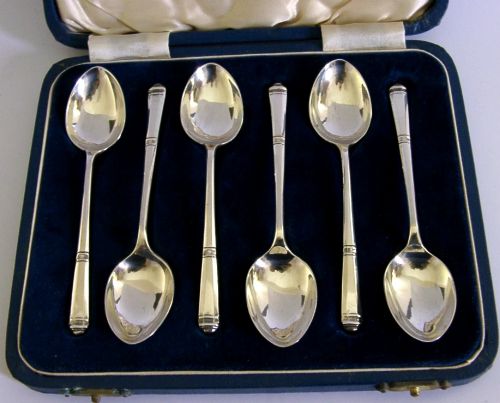
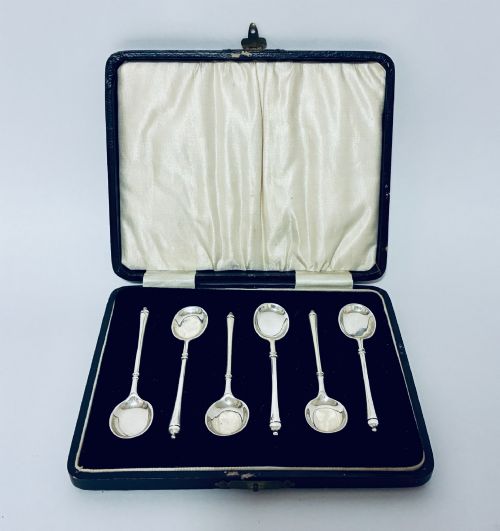
- A matched group of spoons, sometimes accompanied by sugar tongs, housed in a fitted presentation box.
Frequently Asked Questions
How do I date a silver teaspoon?
Dating relies primarily on official assay office hallmarks stamped directly onto the metal surface. These marks often include specific date letters indicating the precise year of manufacture.
Additional chronological clues come from stylistic indicators, such as Victorian ornamentation, Art Deco enamel work, or mid-century modern forms.
Are these spoons meant for daily use?
Many solid silver teaspoons were originally produced for domestic dining and function perfectly well for regular use today. Sturdier examples handle routine washing easily, provided gentle cleaning methods are applied.
Delicate commemorative or enamelled collector pieces are better suited for display rather than everyday handling.
What does a cased set include?
Cased sets frequently contain a matched grouping of six or twelve teaspoons designed for formal hospitality. Some presentations also incorporate matching sugar tongs within the fitted box.
These complete sets preserve the original packaging context, which adds distinct appeal for collectors.
Why do some spoons feature golf or shooting themes?
Thematic spoons were commonly issued to commemorate sporting events, club victories, or specific recreational interests. Manufacturers produced these specialty items with customized stems or bowls depicting particular pastimes.
Such pieces functioned both as functional cutlery and as personalized mementos for enthusiasts.