
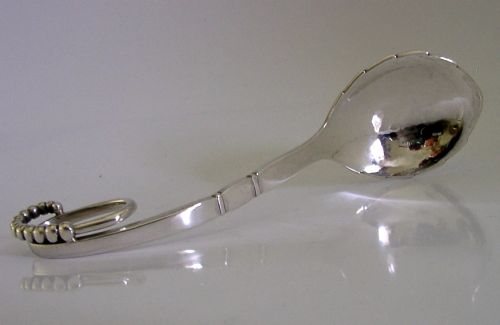
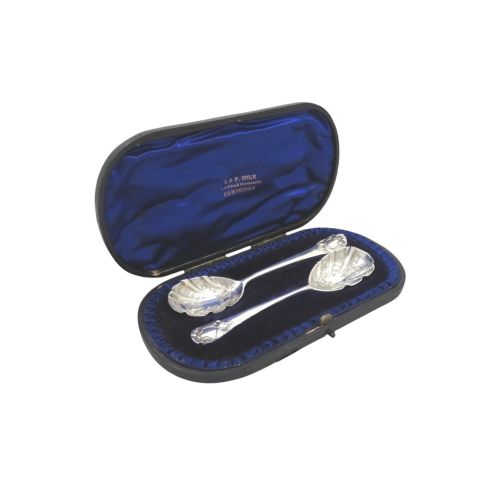


Silver Jam Spoon
A silver jam spoon brings small-scale elegance to the breakfast table, combining practical service with period design.
Identifying a silver jam spoon
A silver jam spoon is a specialised piece of flatware designed for serving preserves, often found alongside butter knives and pickle forks in fitted cases. These utensils appear frequently from the Edwardian era, alongside examples from the Victorian period and the nineteen-thirties.
The form typically combines a shallow, rounded bowl with a decorative handle, though variations include preserve spoons paired with glass pots or handles set in mother of pearl. Most examples originate from British workshops or international makers working in sterling silver and silver plate.
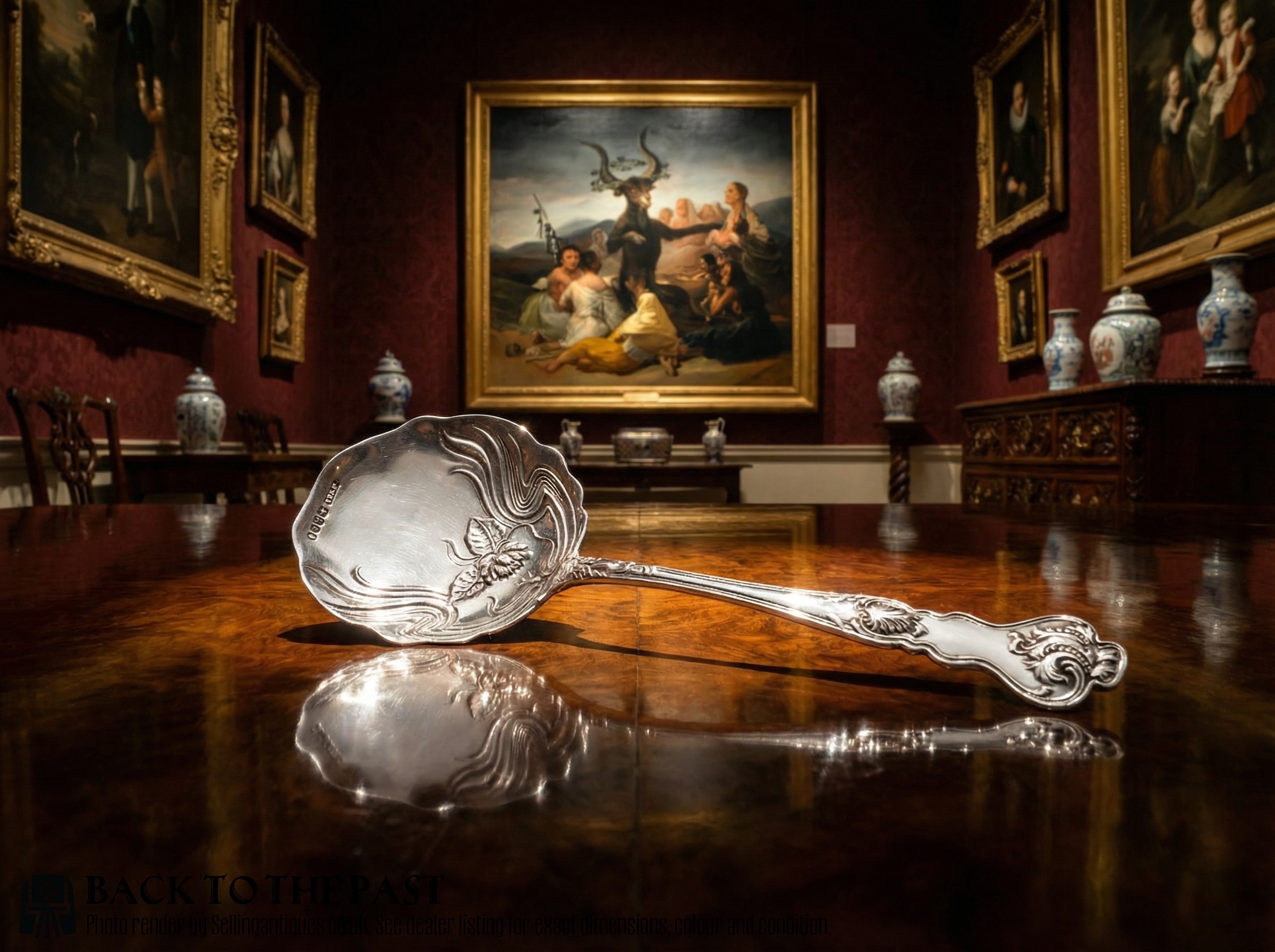
Buyers seeking this phrase encounter distinct aesthetic movements, particularly the fluid vegetal motifs of Art Nouveau and the hammered surfaces of Arts and Crafts design. Pieces from the Art Deco period also emerge, offering geometric restraint alongside traditional forms.
Materials and construction
The majority of these pieces are fashioned from sterling silver, stamped with hallmarks that record the assay office, city, and year of production. Specialised techniques such as plique-à-jour enamel and gilding appear on select items, adding colour and texture to the bowl or handle.
Handles incorporate diverse materials beyond solid metal, including carved mother of pearl and specialised green stones like jade. Manufacturing methods range from traditional hand-hammering by silversmiths to mass-produced stamped silver plate intended for middle-class dining.
Some breakfast tables required an entire architectural committee of matched tools, uniting jam spoons, butter knives, and pickle forks in harmony.
Distinctions in standard
Quality rests upon the weight of the metal and the crispness of the decorative motifs cast or chased into the handle. Pieces bearing distinct maker marks and clear city hallmarks command greater attention than unmarked or heavily worn plated equivalents.
The integrity of the design scheme defines the superior examples, whether through the hand-wrought texturing characteristic of Arts and Crafts metalwork or the delicate enamel work found on Scandinavian pieces. Complete cased sets maintaining their original silk and velvet linings elevate the historical interest of the utensils.
Georg Jensen·Levi and Salaman·James Collins·William Jamieson·James McKay and Andrew Wilkie·James Dixon and Sons·Stephen Adams·James Wakely and FC Wheeler·James Deakin and Sons
The Silver Jam Spoon Glossary
- Sterling silver
- An alloy consisting of ninety-two point five percent silver and seven point five percent other metals, usually copper. This standard composition is verified by official assay office hallmarks.
- Plique-à-jour
- An enamelling technique where enamel is applied to a cellular framework without a backing, creating a translucent stained-glass effect. Light passes directly through the coloured glass panels.
- Flatware
- Table utensils used for eating and serving, including spoons, forks, and knives. The category encompasses both everyday dining sets and specialised service pieces.
- Preserve spoon
- A dedicated serving implement featuring a bowl shaped specifically for scooping fruit jams, jellies, and marmalades. These items frequently accompany breakfast services.
- Hallmark
- A series of official marks stamped onto precious metal items to guarantee the purity of the metal, the maker, and the year of assay. British pieces typically show a lion passant and town mark.
Frequently Asked Questions
How were silver jam spoons used?
These spoons served jams, jellies, and marmalades from central table pots onto individual plates during breakfast and afternoon tea.
They were kept distinct from standard dessert spoons to prevent cross-contamination of flavours across different fruit preserves.
What periods do these spoons date from?
The available pieces span from the Edwardian era through the nineteen-thirties, with earlier Victorian and Georgian examples appearing in the archive.
Design styles shift from ornate floral motifs to the geometric lines of Art Deco and the artisanal textures of Arts and Crafts.
Are cased sets common?
Many examples survive within their original velvet and silk-lined presentation cases, often packaged alongside matching butter knives or pickle forks.
These fitted boxes protect the soft silver surfaces and indicate the items were intended as gifts for weddings or household establishment.
How do I care for silver flatware?
Routine washing in warm soapy water using a soft cloth preserves the metal surface without causing abrasion.
Regular gentle polishing removes tarnish while maintaining the crisp definition of the maker marks and decorative chasing.