


Vintage Salad Servers
Vintage salad servers bring utility and elegance to the table, combining silver, crystal, and ceramics for daily dining.
Vintage Salad Servers
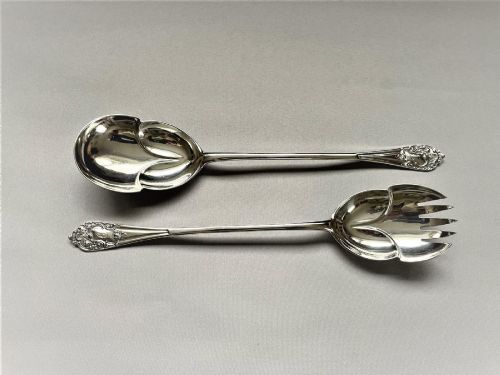
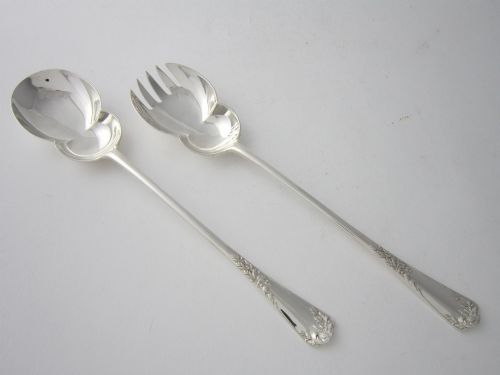
Vintage salad servers comprise paired utensils designed specifically for tossing and serving greens at the table. When searching for vintage salad servers, buyers encounter items dating from the nineteenth and twentieth centuries, spanning Victorian, Edwardian, and Art Deco styles.
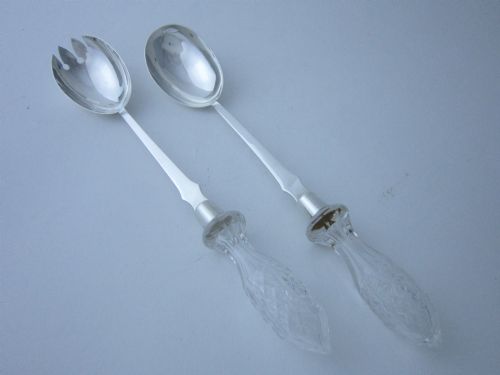
Edwardian and Victorian examples dominate the available offerings, reflecting formal dining traditions of the period. Buyers frequently find pieces incorporating glass handles, rat tail bowls, and majolica or stoneware elements.
How they were made
Silversmiths shaped sterling silver and silver plate into sturdy shafts and broad bowls, often engraving handles with floral or geometric motifs. Workshops utilised techniques such as casting and piercing to create ornate yet functional serving spoons.
Glassmakers cut crystal and glass to form sparkling components that paired with metal ferrules and mountings. Potters shaped earthenware and stoneware into bowls, glazing the surfaces with rich colours and earthy tones.
Joiners combined polished oak with metal mounts to construct composite serving items intended for domestic use. Artisans secured these multi-material pieces using traditional adhesives and mechanical fixings.
Even a humble bowl of lettuce deserves a heavy silver spoon to toss it with proper Victorian authority.
What varies in quality
The weight and thickness of the metal determine the rigidity and balance of silver servers in the hand. Substantial gauge silver resists bending during use, whereas thinner plated alternatives feel lighter and less durable.
The clarity of the crystal and the precision of the cut facets distinguish superior glass components from standard production. Crisp cutting reflects light evenly and demonstrates greater skill by the glasscutter.
The artistry applied to ceramic bowls and handles influences the overall character of the service. Detailed hand-painted glazes and well-defined mouldings elevate utilitarian items into decorative works of craft.
Georg Jensen·Doulton Lambeth
The Vintage Salad Servers Glossary
- Rat Tail
- A strengthening ridge running down the back of a spoon bowl. This feature derives from seventeenth-century manufacturing traditions and provides structural support to the joint.
- Majolica
- A type of earthenware coated with an opaque tin glaze and painted with metallic oxide colours. This technique produces vibrant surfaces popular during the nineteenth century.
- Sterling Silver
- An alloy consisting of pure silver and other metals, usually copper, to increase durability. Items made to this standard typically bear hallmarks indicating their metal purity.
- Silver Plate
- A base metal coated with a thin layer of pure silver through electroplating or older mechanical methods. This process offered a bright finish at a lower cost than solid silver.
- Cut Crystal
- Glass containing lead oxide that is cut and polished with geometric patterns. The lead content increases the refractive index and weight of the material.
Vintage Salad Servers: Frequently Asked Questions
What materials are vintage salad servers made from?
Vintage salad servers utilise a range of materials including sterling silver, silver plate, cut crystal, and polished oak. These substances were chosen for durability and visual appeal at the dining table.
Makers frequently combined metal handles with glass or ceramic components to create complementary serving sets.
How do I identify Edwardian salad servers?
Edwardian salad servers often display hallmarks corresponding to the early twentieth century and reflect neoclassical or floral design motifs. These pieces typically feature bright silver surfaces and slender proportions.
They frequently appear alongside matching glass bowls or crystal serving dishes characteristic of the Edwardian dining room.
What is a rat tail on a spoon?
A rat tail is a tapering tongue-like ridge extending from the handle down the reverse side of a spoon bowl. This feature originally reinforced the weak junction between handle and bowl.
Its presence on later Edwardian silver indicates a deliberate nod to earlier historic styles.