


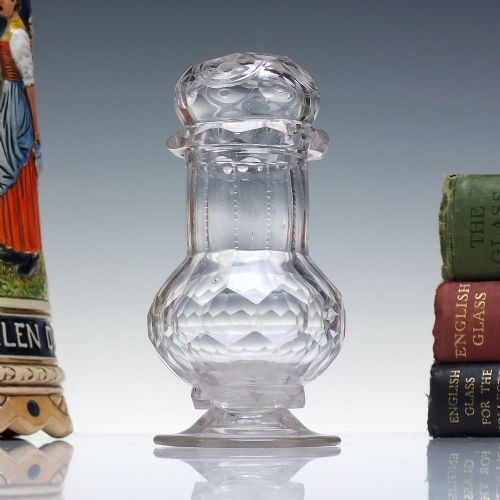


Clear Crystal Tableware
Clear crystal tableware brings brilliant sparkle to the dining table through heavy lead crystal glass, salt cellars, decanters, and vases.
Clear Crystal Tableware
Clear crystal tableware encompasses functional and decorative items designed for dining and entertaining across the Georgian, Victorian, and Edwardian eras. You will frequently find salt cellars, decanters, vases, and finger bowls made from heavy glass and crystal.
The selection ranges from eighteenth-century sugar casters and Regency condiments to late Victorian etched wine jugs and Edwardian fruit bowls. These items were made to catch the candlelight on formal dining tables and display the host's refined taste.
How they were made
Pieces were shaped using free-blown or mold-blown techniques before artisans applied deep hand-cutting to the thick lead crystal. This combination of glassblowing and cold-working created the heavy weight and sharp facets characteristic of period tableware.
Many items incorporate sterling silver mounts, screw feet, or fitted saucers that required specialist silversmithing alongside the glass production. Etched and engraved motifs, such as grape and vine designs or Greek key borders, were added by hand using rotating wheels.
Victorian diners apparently required dedicated finger bowls just to wash away the evidence of formal multi-course feasts.
What varies in quality
The distinction between ordinary and superior pieces rests upon the crispness of the hand-cutting and the clarity of the metal. Fine examples exhibit deep, sharp facets that refract light brilliantly without cloudiness in the material.
Weight and balance signal quality, as finer lead crystal objects feel dense and substantial in the hand. The precision of associated silver mounts, original cases, and matching sets further elevate the standing of individual items.
Asprey & Co.
The Clear Crystal Tableware Glossary
- Lead crystal
- Glass containing a high percentage of lead oxide, which increases weight, refractive index, and softness for easier cutting. This material produces the characteristic ringing tone when tapped.
- Celery vase
- A tall vessel used on nineteenth-century dining tables to hold and display celery stalks upright in water or ice. These pieces often feature pedestal bases and deep cut glass decoration.
- Sugar caster
- A tabletop shaker with a pierced top used for sprinkling sugar over fruit or desserts. Eighteenth-century examples frequently employ threaded screw feet to secure the metal cover.
- Finger bowl
- A small bowl filled with scented water, placed before diners between courses for rinsing fingers. Victorian sets often display matched etched glass patterns such as Greek key motifs.
- Comport
- A large pedestal bowl or dish used for serving fruit or sweets centrally on the table. These items showcase hand-blown bowls raised upon sturdy stems and feet.
Clear Crystal Tableware: Frequently Asked Questions
How do I clean antique crystal?
Wash pieces gently by hand in warm water using a mild detergent, avoiding harsh scrubbers and sudden temperature changes. Place a towel at the bottom of the sink to protect fragile rims and pedestals.
Dry immediately with a lint-free cloth to maintain the brilliant sparkle of the hand-cut facets and prevent water spots from forming on the glass surface.
Can I use these for dining today?
Most clear crystal tableware items remain fully functional for modern entertaining, from serving drinks in decanters to presenting condiments in salt cellars and preserve pots.
Exercise caution with fragile eighteenth-century or nineteenth-century pieces by washing them by hand and keeping them away from modern dishwashers and acidic foods.
How do I date cut crystal?
Examine the weight, colour, and cutting style of the glass, noting that eighteenth and early nineteenth-century pieces often display hand-polished pontil marks on the base. Victorian and Edwardian items frequently feature sharper machine-assisted cutting or delicate acid-etched motifs.
Look at any accompanying silver mounts, hallmarked fittings, or original cases, which provide secure chronological markers for the period of manufacture.
Why is lead crystal so heavy?
The addition of lead oxide to the molten glass mixture increases the overall density of the material compared to standard soda-lime glass. This added weight gives quality tableware its substantial feel.
The dense composition also allows artisans to cut deeper facets into the surface without compromising the structural integrity of the vessel.