


Cut Crystal Servers
Cut crystal servers combine heavy refractive glass with silver mounts, offering a practical way to serve biscuits, salads, and wine.
Cut Crystal Servers
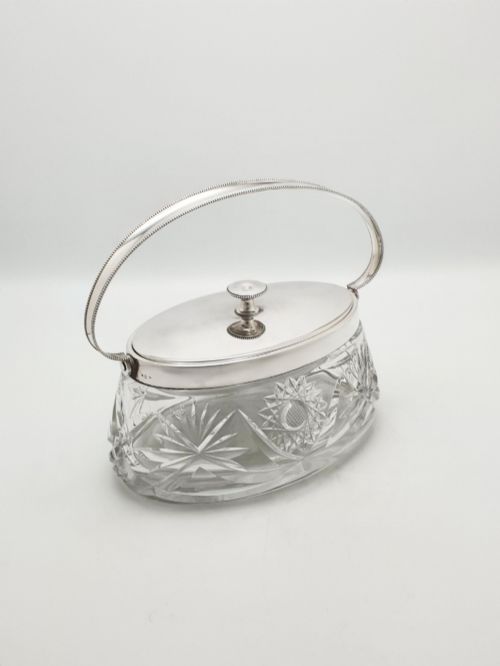
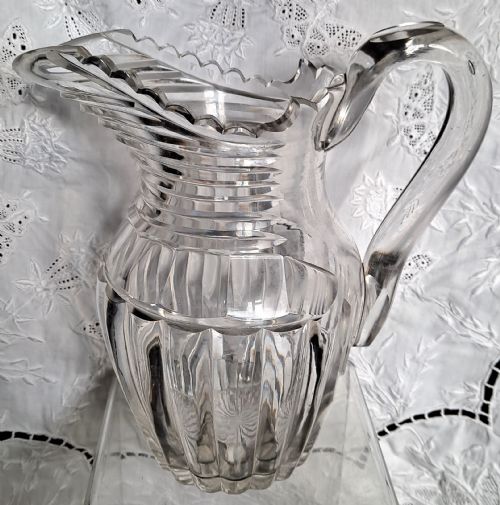
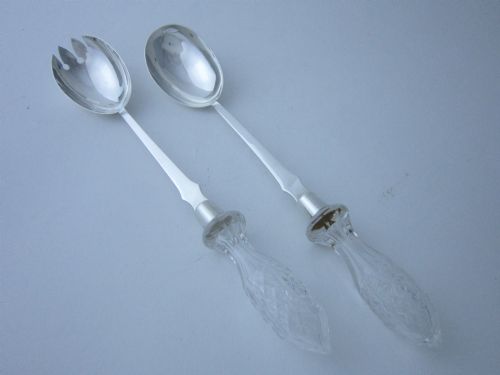
Cut crystal servers encompass a varied group of serving vessels and implements found across this page, designed for dining tables from the nineteenth and early twentieth centuries. These objects bring together heavy glass containers and metal mounts, appearing as biscuit barrels, salad servers, claret jugs, and condiment stands.
The versions most commonly met here hail from the Edwardian period and around nineteen hundred, alongside Victorian and Art Deco examples. They take the form of handled boxes, water jugs, and lidded jars intended for formal entertaining.
Makers utilised distinct styles such as Jugendstil, Regency, and Victorian alongside Edwardian designs to shape these functional items. The combination of cut glass and silver plate or sterling silver defines the core of this grouping.
How they were made
Makers produced these pieces using heavy lead crystal or cut glass bodies shaped by pressing or blowing, followed by hand-cutting geometric or floral patterns into the surface. This cutting creates the sharp facets and deep grooves that catch the light.
Silver plate and sterling silver formed the mounts, handles, rims, and lids that fitted securely onto the glass bodies. Silversmiths cast and engraved these metal elements to complement the brilliance of the crystal underneath.
Listings feature items spanning the nineteenth century, the Edwardian era, and the nineteen thirties, utilising both silver plate and sterling silver.
What varies in quality
Quality rests in the crispness and depth of the glass cutting, where sharper facets and thicker lead crystal produce a heavier, more resonant piece. Plain or shallow grinding shifts a vessel down the range.
The choice of metal mount also sets examples apart, with substantial sterling silver mounts and fitted rat tail mechanisms holding higher regard than standard silver plating over base metal. The integrity of the fit between metal and glass dictates the overall substance of the piece.
WMF·Walker and Hall
The Cut Crystal Servers Glossary
- Cut glass
- Glass decorated by grinding facets or patterns into the surface using a rotating wheel. This technique creates sharp edges and high optical clarity.
- Silver plate
- A layer of silver fused or electroplated onto a base metal such as copper or nickel brass. It provided the appearance of solid silver at a lower cost.
- Sterling silver
- An alloy containing ninety-two point five percent silver and seven point five percent other metals, usually copper. It is the standard for durable and valuable silverware.
- Biscuit barrel
- A covered container used for storing and serving dry biscuits or crackers at the dining table. They frequently feature swing handles and silver-plated rims.
- Claret jug
- A pouring vessel specifically designed for serving red wine. They combine glass bodies with hinged metal lids and spouts.
Cut Crystal Servers: Frequently Asked Questions
What are cut crystal servers?
Cut crystal servers are serving pieces and vessels made from faceted glass combined with silver or silver-plated mounts. They include items like biscuit barrels, salad servers, and claret jugs.
These pieces date primarily from the nineteenth and early twentieth centuries, reflecting the dining customs of the Victorian and Edwardian eras.
How were they used?
They served functional roles on the dining table for holding and pouring wine, serving salads, or keeping biscuits dry. Lidded jars and caddies protected perishable items from moisture.
Hosts utilised these decorative vessels during formal meals and afternoon teas to display hospitality and wealth.
How do I date a piece?
Dating relies on stylistic clues, hallmarks on the silver mounts, and the depth of the glass cutting. Edwardian pieces often show lighter, more graceful mounts compared to heavier Victorian designs.
Maker marks and silver assay stamps provide precise years or reigns for sterling silver components.
How do I clean cut crystal?
Wash pieces gently in warm water with mild detergent, avoiding harsh abrasives that can scratch the glass or wear thin silver plating. Natural drying prevents water spots on the faceted surface.
Remove silver mounts if possible, or take care to keep moisture away from glued or pinned joints.