


Sterling Silver Fruit Spoons
These sterling silver fruit spoons bring tactile history to the table, offering a refined way to serve citrus and berries through forms spanning the Georgian era to the Art Deco period.
Sterling Silver Fruit Spoons
When you search for sterling silver fruit spoons, you encounter specialised flatware designed for desserts, berries, and citrus, most frequently appearing as matched pairs or boxed sets.
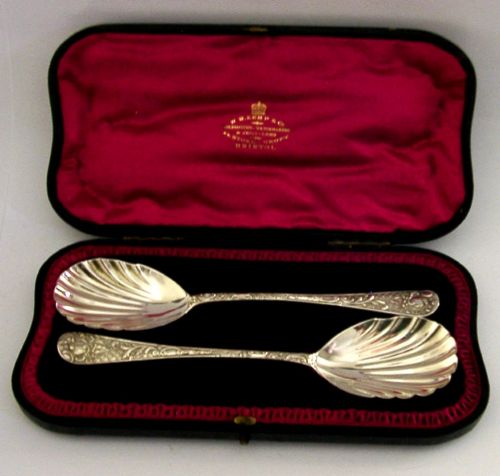
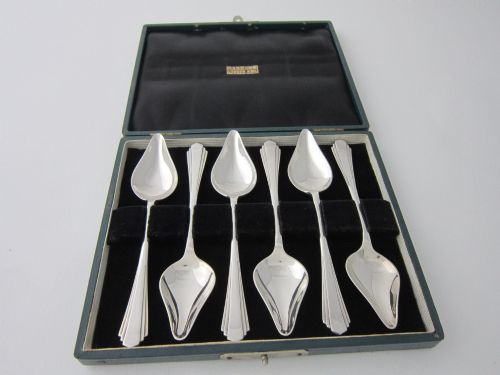
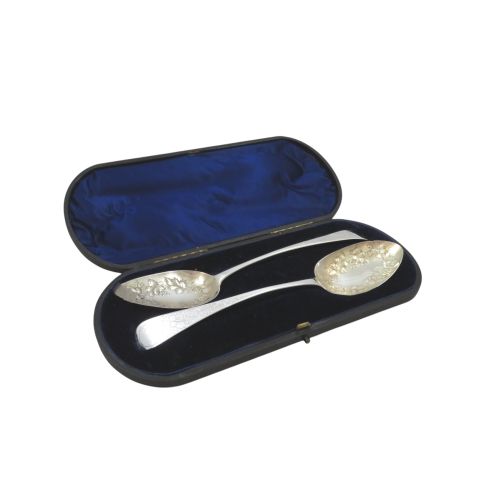
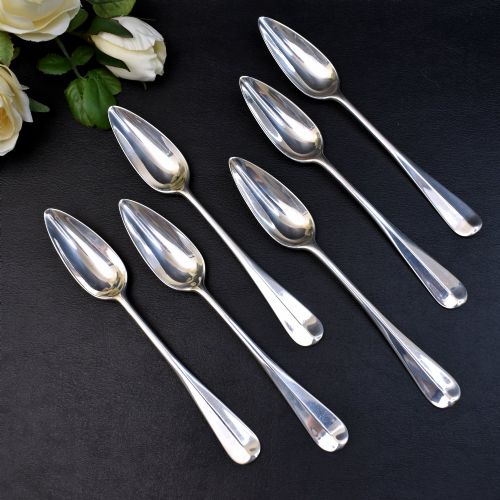
The selection ranges from early Georgian berry spoons and Victorian naturalistic leaf designs to geometric Art Deco grapefruit spoons from the twentieth century.
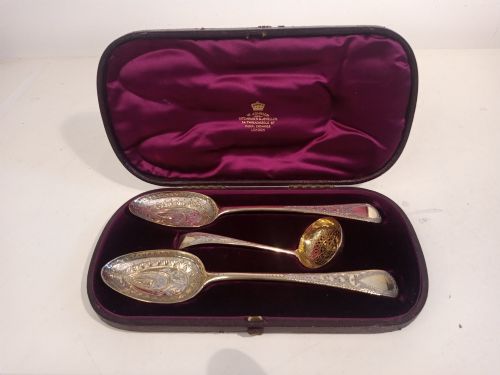
Many examples survive in fitted presentation cases lined with silk, velvet, or leatherette, preserving their original appearance for modern dining.
Making the Spoons
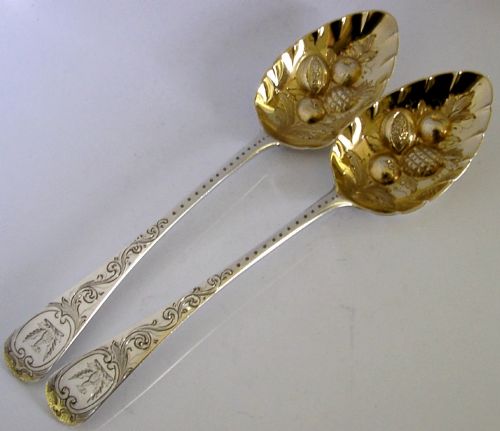
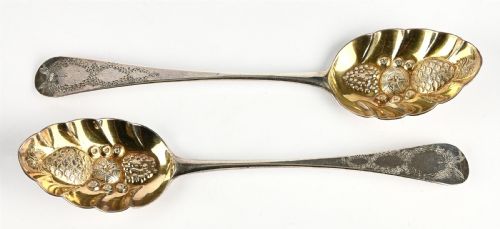
Makers fashioned these pieces from solid sterling silver, frequently applying a layer of silver-gilt to the bowl interior to protect the metal from the acidic juices of citrus fruits.
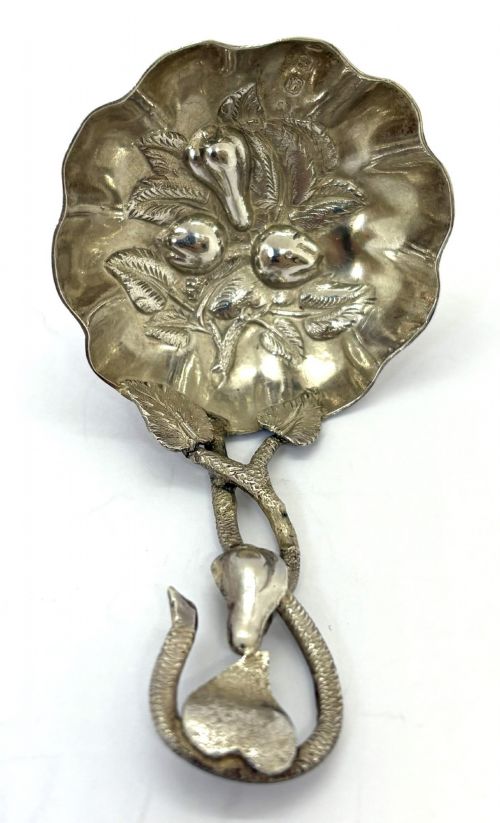
Decoration relied on hand-engraved handles, applied crests, and chased fruit motifs, alongside naturalistic shell shapes and leaf forms shaped by Victorian silversmiths.
Many Georgian spoons enjoyed a second career when Victorians retrofitted their plain bowls with chased clusters of berries.
Assessing the Quality
Quality rests upon the crispness of the chasing on the bowl and the depth of the hand-engraving along the handle, which determines how sharply the fruit or floral motifs register.
The presence of a matching original fitted case lined with fabric adds considerable weight to the integrity of a set, as does the balance and heft of the solid silver in the hand.
Hamilton & Inches·Peter & Anne Bateman·William Chawner II·Sebastian Crespell·Whiting Co.
The Sterling Silver Fruit Spoons Glossary
- Berry spoon
- A large serving spoon, often originally made in the Georgian period and later retrofitted with chased fruit and foliage designs during the Victorian era.
- Silver-gilt
- Sterling silver that has been coated with a thin layer of pure gold, often used on the bowl interiors of fruit spoons to prevent corrosion from acid.
- Caddy spoon
- A small specialised spoon originally intended for measuring loose tea leaves, occasionally found alongside fruit serving utensils in period collections.
- Hallmark
- The official stamp applied by an assay office indicating the purity of the silver, the city of origin, and the date letter for the year of manufacture.
Sterling Silver Fruit Spoons: Frequently Asked Questions
What are berry spoons used for?
Berry spoons were traditionally utilised for serving soft fruits at the dining table, featuring wide bowls that could easily scoop portions without crushing the fruit.
Many earlier examples were subsequently embellished with chased fruit designs during the Victorian period to suit changing dining fashions.
How do I clean antique silver spoons?
Maintenance requires gentle washing in warm soapy water followed by thorough drying with a soft cloth to preserve the polished surface and any original silver-gilt.
Harsh abrasive dips should be avoided to protect delicate hand-engraving and hallmarks stamped into the metal.
Are grapefruit spoons different from dessert spoons?
Grapefruit spoons are narrower and frequently feature pointed or serrated tips designed to segment citrus fruit cleanly from the rind.
Standard dessert and fruit spoons tend to have rounded or shell-shaped bowls intended for soft fruits and berries.
How can I date silver fruit spoons?
Dating relies upon the assay office hallmarks stamped directly onto the silver, which record specific year letters and maker marks.
Stylistic indicators such as Art Deco geometric lines or Victorian naturalistic leaf motifs also help narrow down the period of manufacture.