




Victorian Fruit Serving Spoons
Victorian fruit serving spoons bring ornamental silver and silver-gilt work to the table, offering shaped bowls and engraved handles for serving fruit.
Victorian Fruit Serving Spoons
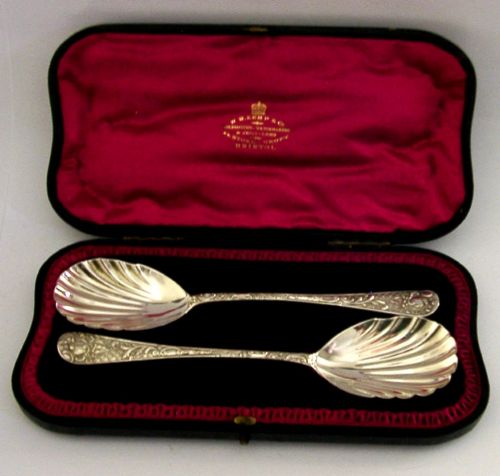
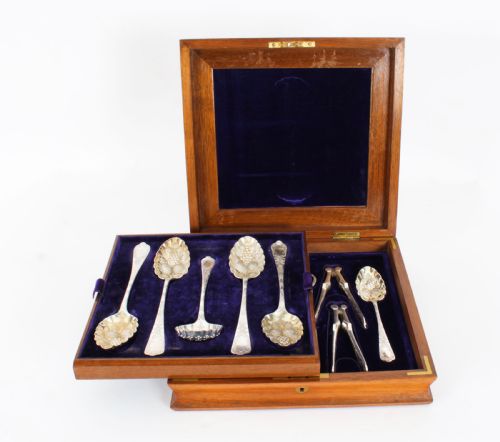
Victorian fruit serving spoons are specialised flatware items designed for dessert and fruit courses, often appearing in cased pairs or matched sets alongside nutcrackers and grape scissors. These pieces emerge predominantly from the Victorian and Edwardian eras, with occasional 18th-century examples and items dated around eighteen-ninety appearing in the selection.
The forms span ornate dessert spoons, naturalistic leaf designs, and shell-shaped bowls, reflecting the diverse table service needs of the period. Buyers frequently encounter boxed presentation sets that include specialised serving cutlery alongside the spoons themselves.
Originating primarily from English silversmiths, these serveware items demonstrate the decorative ambitions of nineteenth-century dining. The surviving pieces range from solid sterling silver and silver gilt to silver plate.
Materials and Techniques
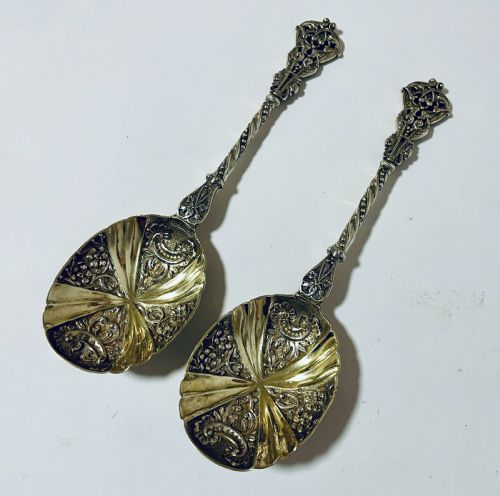
Makers utilised sterling silver and silver plate as the foundational metals for these serving spoons, frequently applying a gold wash known as silver-gilt to the bowl interiors. Cases lined with materials such as silk, satin, and velvet house the finer cased sets.
Craftsmen decorated the metal surfaces through detailed engraving upon the handles and intricate naturalistic leaf and shell shaping for the bowls. Many pieces incorporate ornate ornamentation executed by hand during the nineteenth century.
Some Victorian spoons were so enthusiastic about fruit they wore gold wash inside their bowls just to meet the peaches.
Quality Variations
Quality in these serving spoons rests upon the weight of the silver and the crispness of the engraved and naturalistic detailing on the handles and bowls. Solid sterling silver or silver-gilt pieces demonstrate superior metal work compared to plated alternatives.
The integrity and original condition of the presentation cases, including their silk, satin, and velvet linings, distinguish superior cased sets from loose items.
Sebastian Crespell·Hukin and Heath
The Victorian Fruit Serving Spoons Glossary
- Silver-Gilt
- Sterling silver that has been coated with a thin layer of gold, often applied to the bowl interior of dessert spoons. This technique enhances the visual contrast of the piece.
- Berry Spoon
- A serving spoon featuring fruit and berry motifs engraved or embossed onto the bowl, popular during the Victorian period. These were often repurposed from earlier spoons or made specifically for dessert courses.
- Flatware and Cutlery
- The broader category of dining implements that includes serving spoons and forks. This term encompasses both everyday table items and specialised service pieces.
- Cased Set
- A matching group of utensils housed in a fitted presentation box lined with velvet, silk, or satin. These boxes protect the silver and indicate a planned gift or premium purchase.
- Serveware
- Tableware items specifically manufactured for serving food rather than individual consumption. This includes large spoons, fruit sets, and auxiliary dining tools.
Victorian Fruit Serving Spoons: Frequently Asked Questions
What are Victorian fruit serving spoons used for?
These spoons were designed for serving fruit and dessert courses at formal nineteenth-century dining tables. They frequently appear alongside specialised implements like grape scissors and nutcrackers within presentation boxes.
Their larger bowls and decorated handles allowed hosts to serve delicate fruits cleanly and with theatrical presentation during the dessert course.
Are these spoons made of solid silver?
The materials vary between solid sterling silver, silver gilt, and silver plate. Listings record both solid silver items and plated versions from the Victorian and Edwardian periods.
Examining the metal type helps identify the grade of the piece, with sterling silver and silver-gilt representing the higher end of the range.
What is a cased fruit set?
A cased fruit set is a matching collection of serving pieces housed in a fitted box. The interiors of these presentation cases are typically lined with silk, satin, or velvet.
These boxes kept the delicate silver-gilt spoons and associated cutlery protected when not in use on the dining table.
How do you identify naturalistic fruit spoons?
Naturalistic fruit spoons feature bowls shaped like leaves or shells, paired with handles decorated to mimic organic plant forms. Makers utilised these designs to bring botanical themes to nineteenth-century table service.
Examples stamped by makers such as Sebastian Crespell show detailed leaf motifs executed in solid silver gilt.