


Silver Dessert Serving Spoons
Silver dessert serving spoons are elegant implements designed for table service, combining functional heft with decorative fruit-and-berry motifs.
Silver Dessert Serving Spoons
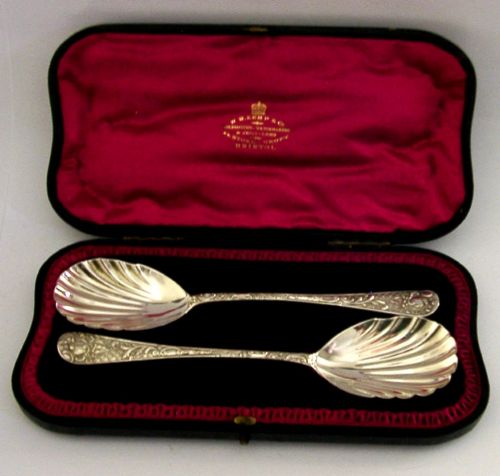
When you search for silver dessert serving spoons, you encounter table implements originating primarily from the Georgian, Victorian, and Edwardian eras. These pieces take the form of individual serving spoons, pairs, and boxed fruit or berry sets often lined with silk, velvet, or satin.
The selection on this page centres heavily on Victorian and Georgian items, including specialised pieces like ice cream servers and sifter spoons. Many examples arrive as cased pairs or matched sets intended for fruit, dessert, and general table service.
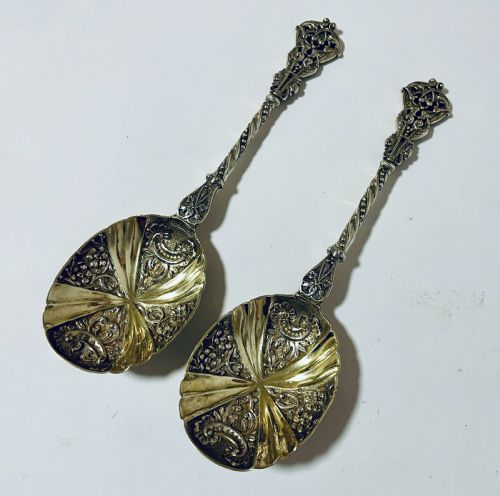
Makers and silversmiths shaped these utensils from sterling silver or silver plate, frequently employing silver-gilt finishes. The forms range from plain serving cutlery to ornately engraved and naturalistic leaf designs.
What varies in quality
Quality rests in the crispness of the hand engraving and the structural weight of the metal. Heavier gauge sterling silver and deeply struck hallmarks indicate superior manufacture compared to lighter silver plate alternatives.
The integrity of the original fitted case, including intact silk or velvet linings, elevates the standing of a cased pair. Finer examples display meticulous chasing on the bowls and handles without softening of the decorative detail.
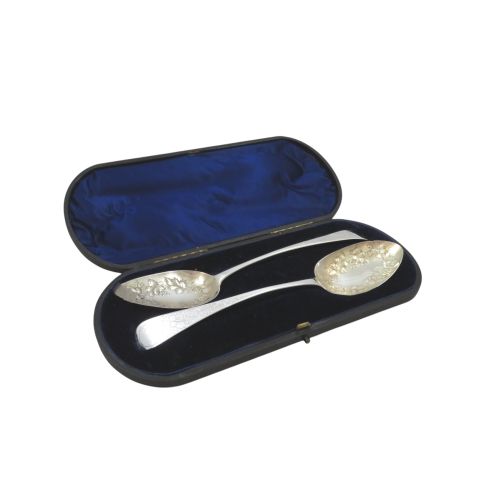
Many Georgian spoons received ornate berry motifs decades after leaving the workshop, transforming plain bowls into fashionable Victorian presentation pieces.
William Chawner II·Sebastian Crespell·Hukin & Heath
The Silver Dessert Serving Spoons Glossary
- Berry spoon
- A serving spoon, typically Georgian or Victorian, featuring fruit repoussé work added to the bowl. These pieces were often retrofitted with fruit decoration long after their initial manufacture.
- Silver-gilt
- Sterling silver that has been coated with a thin layer of gold. This technique provides a warm, rich tone to the surface of the spoon.
- Hallmark
- An official stamp indicating the metal standard, assay office, and year of production. British items carry these marks to verify authenticity.
- Repoussé
- A metalworking technique where the artisan hammers the design from the reverse side to create a raised relief. It appears frequently on Victorian fruit serving pieces.
- Sifter
- A pierced spoon designed for sprinkling sugar over fruit and desserts. These often appear within matched boxed sets.
Silver Dessert Serving Spoons: Frequently Asked Questions
What are silver dessert serving spoons used for?
These implements served for portioning fruits, berries, ice cream, and desserts at the formal dining table. They frequently appeared during the course after the main meal.
Many examples were manufactured as part of larger boxed fruit or dessert sets complete with matching forks, nutcrackers, or grape scissors.
How do I distinguish Georgian from Victorian spoons?
Georgian spoons typically display cleaner neoclassical lines, simpler engraving, and earlier hallmarking styles. They date from the reigns of the Georges and William IV.
Victorian pieces lean towards heavier ornamentation, naturalistic leaf motifs, and extensive repoussé fruit work on the bowls.
Are cased sets original to the spoons?
Most fitted boxes lined with velvet, silk, or satin were tailored specifically for the cutlery they contain. Retailers supplied these presentation cases for gifts and proper storage.
Checking the fit of the spoons within the velvet slots helps confirm the association between the case and the cutlery.
What is the difference between sterling and silver plate?
Sterling silver consists of solid precious metal meeting a specific legal purity standard, marked with traditional assay stamps. It holds its material value over time.
Silver plate involves a base metal core coated with a thin layer of silver, offering the appearance of solid silver at a different production level.
How should I care for antique silver serving spoons?
Wash them gently by hand in warm soapy water and dry them immediately with a soft cloth to protect the finish. Avoid harsh abrasive dips that strip away patination and delicate gilding.
Store them in anti-tarnish cloth rolls or their original lined presentation cases when not in use.