
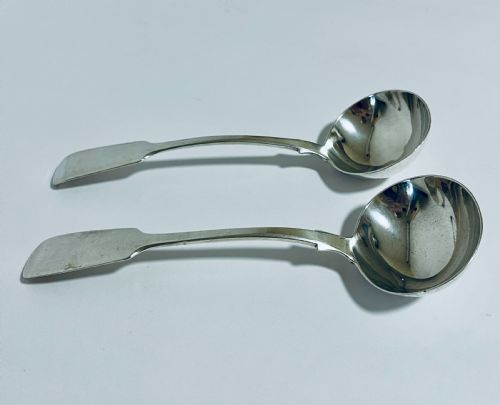
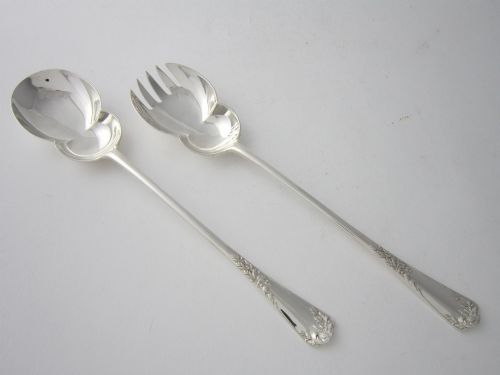


Vintage Silver Serving Pair
A vintage silver serving pair brings traditional elegance to the table, offering practical utility for formal dining and entertaining.
Vintage Silver Serving Pair
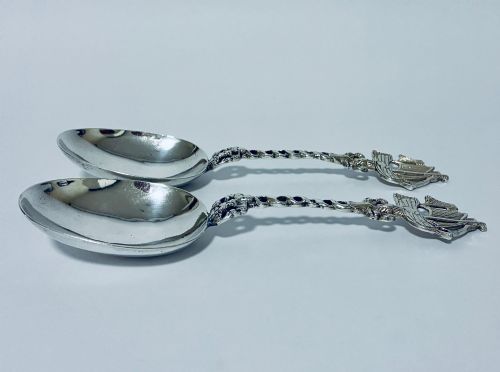
The selection ranges from boxed dessert spoons and berry spoons to heavy chargers and serving tureens. Pieces often reflect specific period styles, including Georgian, Edwardian, Victorian, and Art Deco designs.
Many items survive in fitted presentation cases lined with velvet, silk, or leatherette, highlighting their original purpose as gifts or high-end dining accessories. The variety extends across different origins, including English, Dutch, and French manufacturing.
Materials and Manufacturing
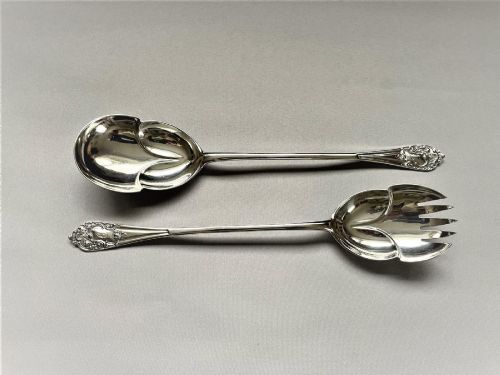
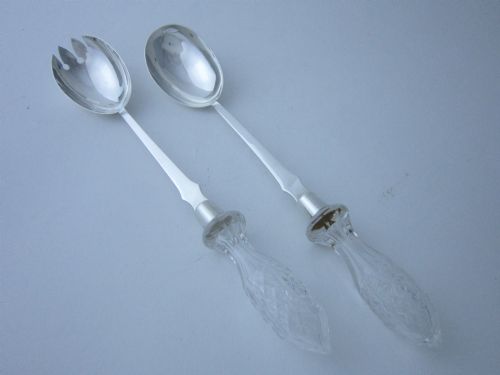
Silversmiths utilised sterling silver and silver plate, alongside nickel silver, pewter, and cut glass for specialised components. Utensils such as salad servers frequently combine silver bowls with wooden handles or glass inserts.
Techniques relied upon traditional hand-working, casting, and ornate engraving to produce decorative motifs like shell shapes and rat tail designs. Presentation pieces often feature fitted boxes finished with silk, velvet, or leatherette interiors to protect the metal.
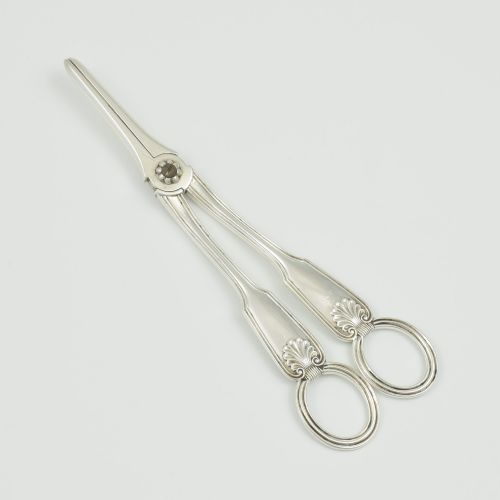
Grape scissors allowed diners to harvest fruit directly from the bunch without touching the grapes with their fingers.
Assessing Quality and Craftsmanship
Quality rests upon the weight of the metal, the crispness of the chasing or engraving, and the structural integrity of joints in hinged items like grape scissors and tongs. Substantial gauge silver and heavy silver plating indicate higher production standards.
The presence of original fitted cases and intact hallmarks or maker marks adds considerable distinction. Refined execution in specialised items, such as pierced fish servers or articulated mechanisms, separates standard utility pieces from finer presentation ware.
Goldsmiths & Silversmiths Co.·Gibson & Langman·Georg Jensen·Hamilton & Inches·Walker and Hall·Matthew Linwood
The Vintage Silver Serving Pair Glossary
- Sterling silver
- A silver alloy containing 92.5 percent pure silver by mass, widely used in British hallmarked tableware.
- Silver plate
- A layer of silver applied to a base metal such as nickel silver or copper, offering the appearance of solid silver.
- Rat tail
- A strengthening tongue of metal on the reverse of a spoon bowl, characteristic of earlier dining silver.
- Entree dish
- A covered serving vessel traditionally used for presenting main courses or side dishes at the table.
Vintage Silver Serving Pair: Frequently Asked Questions
What is included in a serving pair?
A serving pair typically comprises two matching utensils or vessels designed for table service, such as salad servers, fish servers, or vegetable dishes.
These sets were created to coordinate the presentation of specific courses during formal meals.
How do I care for silver serving pieces?
Regular gentle cleaning with a dedicated silver cloth prevents tarnish buildup without abrading the surface.
Storing pieces in dry environments or original fitted boxes protects the metal from atmospheric oxidation.
Are silver plated items durable?
Silver plate uses a layer of pure silver bonded over a base metal, providing robust daily utility when handled with care.
Heavier plating grades withstand decades of regular polishing and use while retaining their bright finish.
How can I date my serving set?
Hallmarks stamped onto sterling silver pieces provide specific letters and symbols corresponding to assay office records and production years.
Stylistic elements like Art Deco geometry or Victorian ornamentation also offer clear clues to the period of manufacture.