


Embossed Silver Berry Spoons
These embossed silver berry spoons are decorative serving pieces designed for fruit, combining historic forms with later chased work.
Embossed Silver Berry Spoons
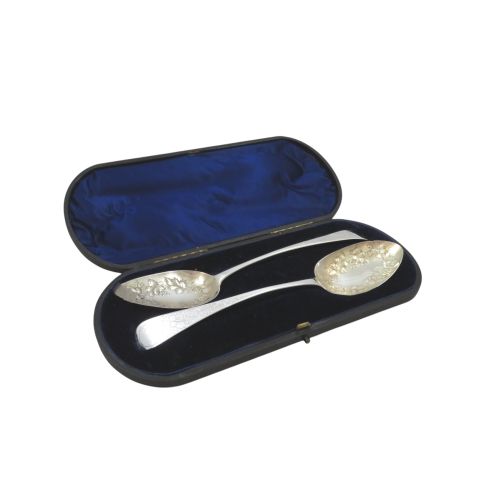
When you search for embossed silver berry spoons, you encounter historic serving utensils that typically date from the Georgian and Victorian periods. Most examples appear as matched pairs, frequently housed in fitted velvet or silk-lined cases alongside matching sifters or dessert cutlery.
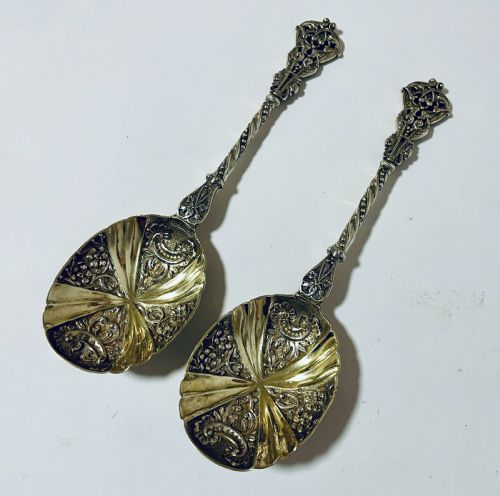
Makers remade standard dining spoons from the eighteenth and nineteenth centuries by adding elaborate fruit and foliage embossing to the bowls. These decorative serving spoons originate from English workshops and continental makers working in Georgian and Victorian styles.
How they were made
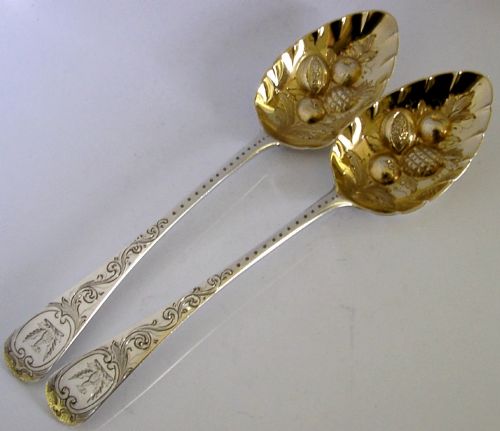
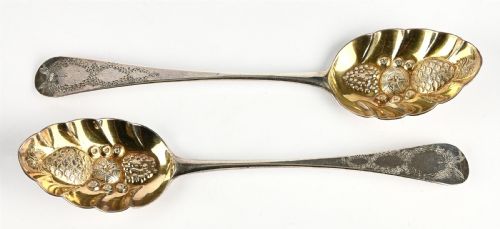
Silversmiths utilised sterling silver and silver gilt to shape these serving spoons before applying detailed hand-chased and embossed ornamentation. The bowls feature raised fruit motifs pressed or hammered from behind, often accompanied by fine engraving along the handles.
Many items incorporate selective gilding known as silver-gilt, creating a contrasting golden finish within the embossed bowls. Presentation sets often arrived in fitted wooden boxes lined with silk and velvet to protect the polished metal.
Listings feature sterling silver, silver gilt, and silk-lined velvet cases across Georgian and Victorian periods.
What varies in quality
The distinction between ordinary and superior pieces rests upon the crispness of the embossed detail and the balance of the engraved handles. Finer examples retain deep, sharp fruit motifs in the bowl without excessive thinning of the silver from repeated polishing.
Completeness also dictates standing, particularly when spoons survive in original cases alongside fitted sifters or companion dessert implements. Maker marks and clear hallmarks add historical substance to the silver work.
peter & Anne Bateman·William Chawner II·George Smith III
The Embossed Silver Berry Spoons Glossary
- Berry spoon
- A large serving spoon adapted with embossed fruit and foliage designs, typically used for serving dessert. These utensils often date from the Georgian era with later decorative alterations.
- Silver-gilt
- Silver that has been coated with a thin layer of gold on its surface. This technique produces a warm dual-tone appearance inside the bowl of the spoon.
- Hallmark
- An official stamp indicating the metal purity, place of assay, and date of manufacture. These marks help identify English silver production years.
- Sifter
- A perforated spoon designed for sprinkling sugar over fruit, frequently found accompanying berry spoons in fitted presentation cases.
Embossed Silver Berry Spoons: Frequently Asked Questions
What were berry spoons used for?
These utensils served desserts and soft fruits at the dining table during the Georgian and Victorian periods. The wide bowl accommodated portions of berries and soft fruits.
Hosts used them alongside matching sifters to distribute sugar over fresh fruit courses. Their decorative nature meant they functioned as display pieces during formal meals.
Are these spoons original Georgian pieces?
Many examples began life as plain dining spoons during the eighteenth or early nineteenth century. Silversmiths later embossed the bowls with fruit and foliage designs during the Victorian era.
This practice of retrofitting older silver explains why Georgian hallmarks frequently accompany Victorian decorative styles. The dual history forms a standard characteristic of this category.
How should I store boxed sets?
Fitted velvet and silk-lined cases protect the silver from tarnishing too rapidly in open air. Keep the boxes in stable indoor environments away from direct sunlight.
Avoid using harsh chemical dips on silver-gilt surfaces to preserve the gold layer inside the bowl. Soft microfiber cloths maintain the polished finish safely.
How do I identify Victorian examples?
Victorian pieces often display heavier cast ornamentation and engraved handles alongside nineteenth-century date letters. They frequently appear as matched pairs in fitted presentation boxes.
The presence of Flemish Baroque revival motifs also points toward late nineteenth-century manufacturing preferences.