


Victorian Serving Spoons
Victorian serving spoons bring solid silver weight and ornate nineteenth-century engraving to the dining table.
Victorian Serving Spoons
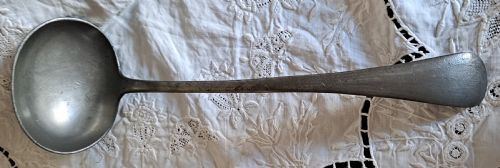
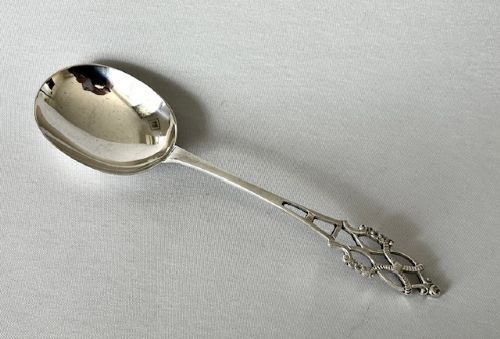
Victorian serving spoons encompass large implements designed for the nineteenth-century dining table, ranging from single ladles to matched pairs housed in presentation cases. Buyers encountering this phrase will find heavily decorated silver flatware intended for dessert, fruit, gravy, or soup service.
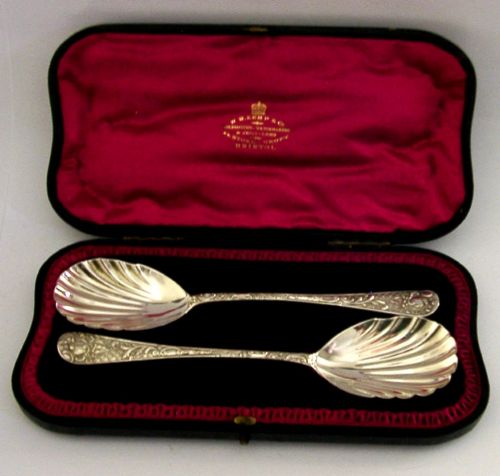
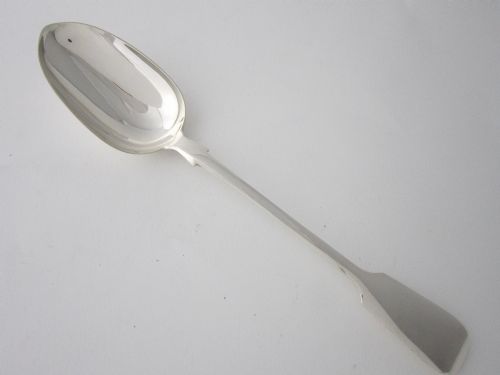
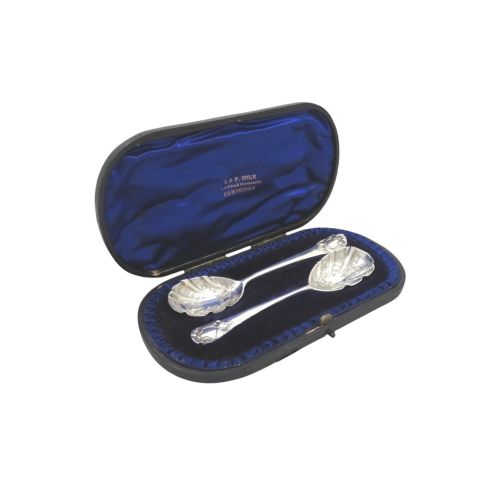
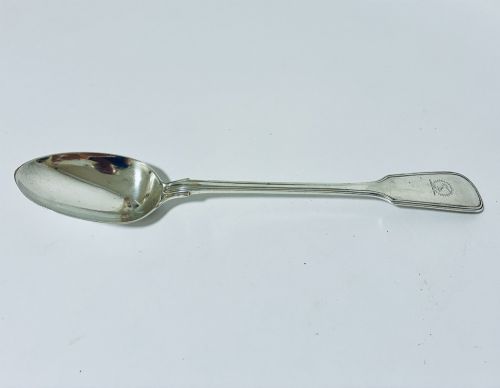
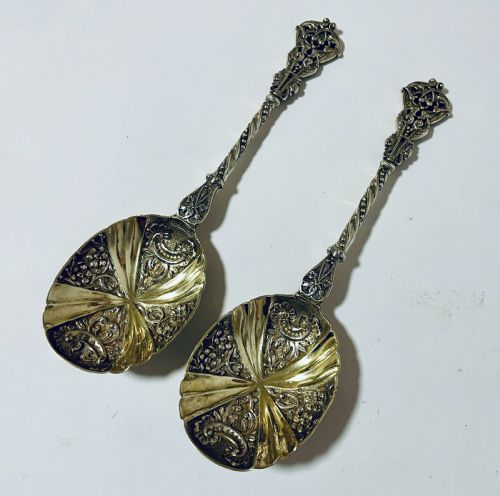
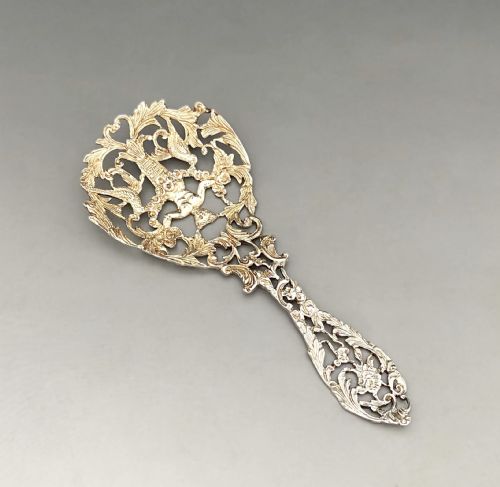
The selection includes traditional Fiddle and Queen's pattern stems alongside highly ornamental berry spoons with embossed fruit bowls and engraved handles. Many examples arrive complete with their original velvet or silk-lined presentation boxes from the latter half of the nineteenth century.
Specialised variants such as jam spoons, mustard ladles, and sugar sifters also appear frequently alongside larger basting implements and complete cutlery canteens. These pieces reflect the elaborate dining rituals of the period, often featuring figural terminals or parcel-gilt finishes.
Materials and Craftsmanship
Sterling silver dominates the fabrication of these items, frequently worked into heavy gauges or cast in intricate naturalistic and religious motifs. Silversmiths employed techniques such as chasing, embossing, and piercing to decorate the bowls and stems of the spoons.
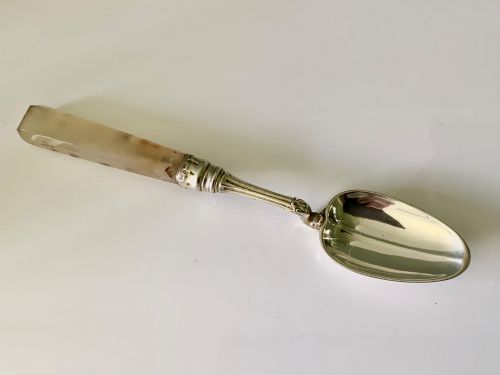
Silver plate and pewter also feature among the heavier serving pieces, while supplementary materials like horn, agate, and porcelain appear in specific handles and warming vessels. Interior gilding, known as silver-gilt or wash gilt, provides a contrasting golden finish to the bowls of many dessert and berry spoons.
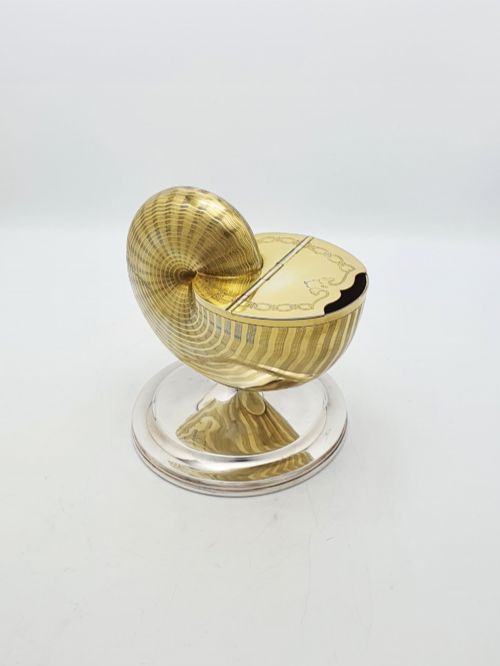
Marine buoy novelty warmers and horse hoof handles prove that Victorian silversmiths possessed a wonderfully nautical sense of humour.
Distinctions in Quality
The distinction between standard utility flatware and superior pieces rests upon the depth of the metal gauge and the crispness of the hand-chased ornamentation. Heavy solid silver examples with fully articulated cast handles or detailed figural terminals represent the upper tier of manufacture.
The presence of original fitted cases lined in silk and velvet elevates the desirability of a set, as does documented provenance linking the work to notable nineteenth-century silversmiths and workshops.
John Yates·William Comyns·Mary Chawner·Sebastian Crespell·Hukin Heath·Walter John Barnard
The Victorian Serving Spoons Glossary
- Berry spoon
- A large serving spoon featuring fruit embossed or chased into the bowl, often retrofitted or manufactured during the Victorian era. These pieces frequently showcase extensive scrolling engraving along the handle.
- Basting spoon
- An elongated spoon utilised for pouring juices over meat during roasting or for general table service. They typically display robust proportions and traditional handle patterns.
- Silver-gilt
- Sterling silver that has been coated with a thin layer of gold through an electrolytic or chemical process. This treatment imparts a rich golden interior to the bowl while retaining the silver structure.
- Fiddle pattern
- A flatware handle design characterised by a narrow stem that broadens near the terminal into the shape of a fiddle or violin. It remains one of the most widespread traditional English silver patterns.
- Queen's pattern
- An ornate Victorian flatware design featuring shell and scroll motifs decorating the edges of the expanded handle terminal. It provides a heavier and more decorative alternative to simpler handle styles.
Victorian Serving Spoons: Frequently Asked Questions
How were Victorian serving spoons used?
These implements served specific functions at the nineteenth-century table, moving food items such as fruit, berries, gravy, and vegetables from communal dishes to individual plates. Larger ladles managed soups and sauces, while smaller cased sets handled desserts.
The inclusion of specialised pieces like sugar sifters and jam spoons highlights the formal division of labour across the dining service during this period.
Can I use these spoons every day?
Solid silver and plated serving pieces tolerate regular use provided they receive proper hand-washing without harsh abrasives. Storing cased sets in their original fitted boxes prevents surface scratching when the items are not in service.
Silver naturally tarnishes over time and requires periodic polishing with a soft cloth to maintain its bright reflective finish.
How do I identify the date of a spoon?
British silver bears a series of hallmarks stamped directly into the metal, including a maker's mark, a standard mark indicating silver purity, and a date letter that corresponds to a specific assay office year. These official stamps provide the most reliable method for dating an individual piece.
Stylistic indicators such as heavy embossing or specific handle patterns like Queen's or Fiddle also point toward the broader Victorian manufacturing period.