


Antique Embossed Spoons
Antique embossed spoons bring rich, raised ornamentation to the table, and the pieces found here span Georgian and Victorian silver work.
Antique Embossed Spoons
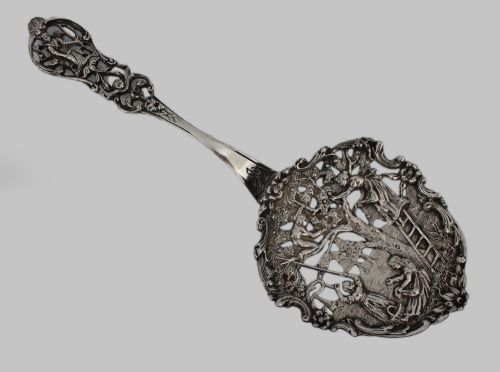
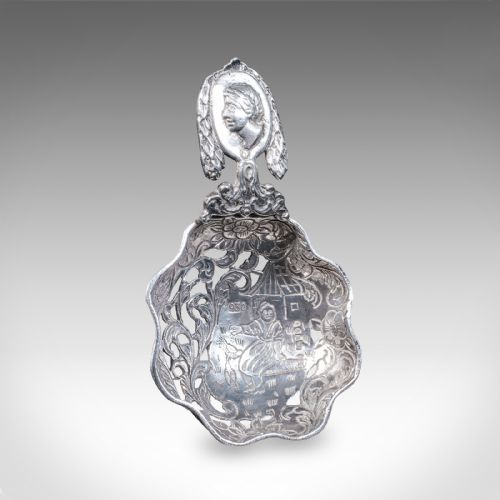
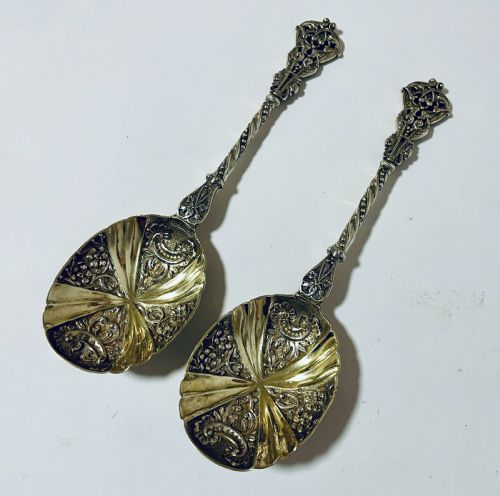
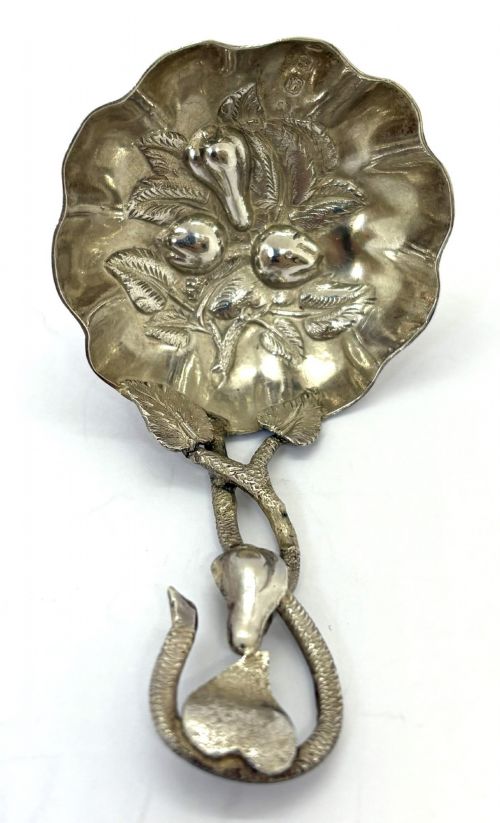
When you search for antique embossed spoons, you encounter functional tableware that carries deep surface relief created by hammering or pressing from behind. These objects include serving spoons, caddy spoons, and berry spoons shaped for specific dining rituals.
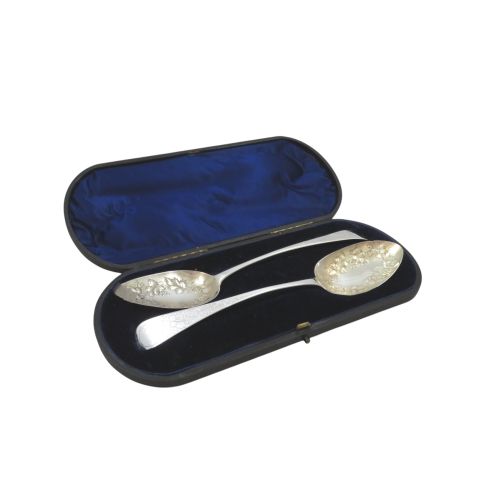
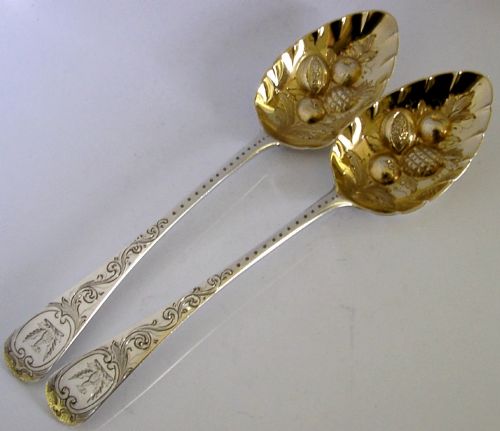
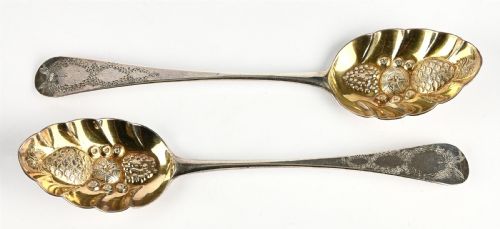
The versions most commonly met on this page belong to the Georgian and Victorian periods, often taking the form of berry spoons or dessert service pieces. Many survive in pairs or matched sets, frequently housed in fitted velvet or silk lined cases.
Makers utilised techniques like repoussé and chasing to push metal outward and refine the details from the front. This ornamentation transforms utilitarian silver into decorative serveware adorned with fruit, foliage, and family crests.
How they were made
Silversmiths worked primarily in sterling silver and silver gilt, shaping bowls and handles before applying relief work. The metal was heated and hammered from the reverse side to raise the design, a process known as repoussé.
Chasing tools were then used on the front surface to sharpen contours, add texture, and engrave fine details such as foliage or crests. Gilt finishes were sometimes applied to create a two-tone contrast between the bowl and the decorated stem.
What varies in quality
Quality rests in the crispness of the raised ornament and the depth of the metal relief. Superior pieces retain sharp contours where the artisan pushed the silver outward, whereas worn examples show softened edges from decades of polishing.
The weight of the silver and the balance of the handle dictate the standard of manufacture. Finer examples feature well-defined cast or chased elements that integrate smoothly with the original spoon bowl rather than appearing thin or pressed too flat.
Peter and Anne Bateman·William Chawner II·Berthold Herman Muller·Henry William Curry
The Antique Embossed Spoons Glossary
- Repoussé
- Metalworking technique where a design is hammered into relief from the reverse side. This method creates the raised fruit and floral patterns seen on berry spoons.
- Berry spoon
- Large serving spoon with fruit embossed into the bowl, typically adapted during the Georgian period. They were used for serving soft fruits and desserts.
- Caddy spoon
- Small spoon designed for measuring loose tea from a caddy into a teapot. These often feature decorative bowls and short, embossed handles.
- Silver gilt
- Sterling silver that has been coated with a thin layer of gold. This treatment adds a warm tone and protects the underlying metal.
- Hallmark
- Official stamp guaranteeing the purity of silver, the place of assay, and the date letter. These marks help identify the maker and year of production.
Antique Embossed Spoons: Frequently Asked Questions
What are berry spoons used for?
Berry spoons were designed specifically for serving soft fruits such as strawberries and raspberries during formal dessert courses. Their wide bowls often featured embossed fruit designs that matched the function.
Over time, many of these large spoons were adapted for general serving use on the dining table. Today they remain practical serving utensils as well as decorative items.
How do I clean silver spoons?
Clean silver spoons gently using a soft cloth and a specialised silver polish formulated to protect historic metal. Avoid harsh abrasives that can wear down embossed details and fine chasing.
Store them in dry conditions, and if they came in a fitted velvet or silk case, keep them housed there to prevent tarnish.
Are caddy spoons different from regular spoons?
Caddy spoons are considerably smaller than standard tableware and feature specialised short handles designed to fit inside tea canisters. Their bowls are often shaped like leaves, shells, or deep ladles.
Victorian and Georgian tea drinkers relied on them to measure loose tea leaves accurately before the widespread use of tea bags.
How can I tell a Georgian spoon from a Victorian one?
Georgian spoons typically display cleaner neoclassical lines or early floral chasing, while Victorian pieces often embrace heavier revival styles like Rococo or Flemish Baroque. Examining the hallmarks provides the exact year of manufacture.
Stylistic shifts in the embossing also offer clues, as Victorian work frequently covers the entire handle and bowl in dense, high-relief foliage.