




Victorian Berry Spoons
Victorian berry spoons are large serving flatware pieces designed for fruit, combining solid sterling silver or silver plate with ornate historical engraving.
Victorian Berry Spoons
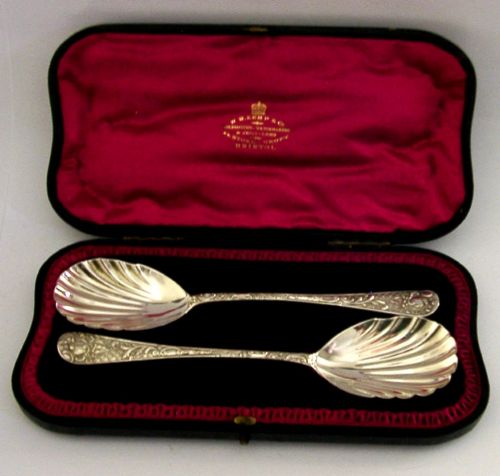
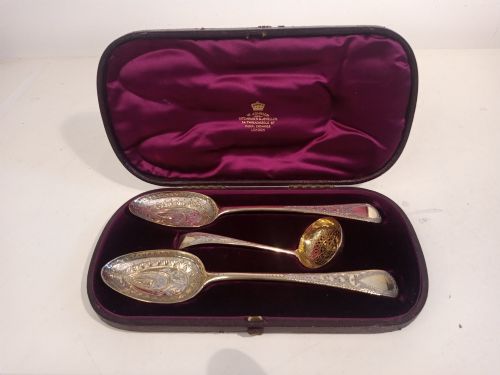
Victorian berry spoons are serving pieces typically found in pairs, often accompanied by matching sugar sifters within fitted presentation cases lined with velvet, silk, or satin. These items serve the purpose of portioning fruit at the table during formal dining occasions, reflecting the domestic habits of the nineteenth century.
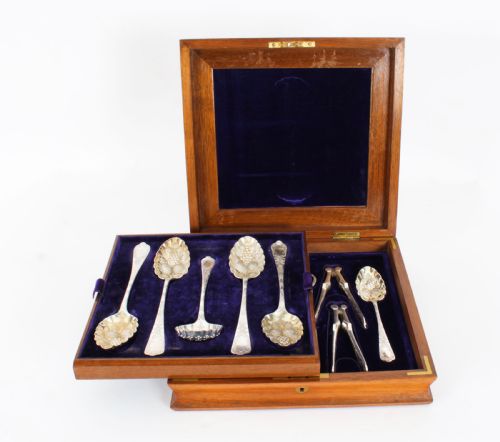
While many examples originate from the Victorian period, the archive and current listings include related pieces from the Edwardian era, the nineteenth century, and occasionally earlier Georgian dates. Buyers encounter these serving spoons both individually and in sets complete with nutcrackers and grape scissors.
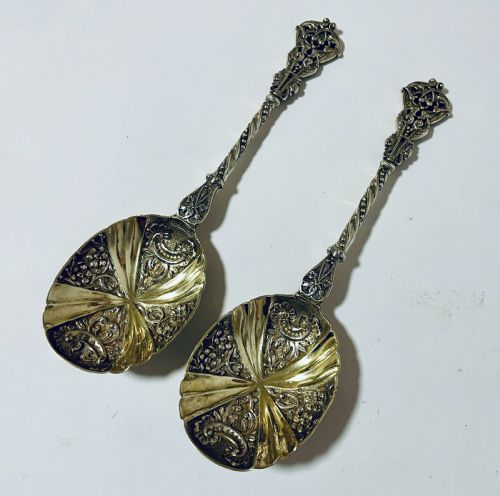
The physical form centres on a broad, deep bowl intended to hold soft fruits without bruising them. Handles often display elaborate ornamentation, ranging from naturalistic leaf motifs to intricate chased patterns applied by silversmiths.
Materials and technique
Makers utilised sterling silver and silver plate as the primary metals for these serving utensils, frequently applying a silver gilt finish to the bowl interior for a contrasting golden tone. This combination of base material and surface wash provides both durability and decorative appeal.
Techniques relied upon by silversmiths include detailed chasing, engraving, and casting, particularly in styles that incorporate naturalistic leaf or shell shapes. Many surviving examples retain their original fitted presentation boxes lined with satin or velvet to protect the metalwork.
Listings feature sterling silver, silver plate, and silver-gilt materials, often paired with satin or velvet lined presentation cases.
Evaluating quality
Quality rests upon the weight of the metal and the crispness of the engraved or chased decoration across the bowl and handle. Heavy sterling silver construction distinguishes superior examples from lighter silver-plated alternatives.
The presence of a matching fitted case and the original accompaniment of related pieces such as a sugar sifter or fruit knife set elevate the desirability of the item. Craftsmanship shown in naturalistic leaf or shell forms demonstrates the skill of the maker.
Sebastian Crespell·Hukin & Heath·Thomas Hart Stone·Chawner & Co
The Victorian Berry Spoons Glossary
- Silver-gilt
- Sterling silver that has been coated with a thin layer of gold on the surface. This technique creates a rich two-tone appearance inside the bowl of the spoon.
- Chasing
- A metalworking technique where the smith pushes the metal from the front using a hammer and punch to create raised decorative designs. It differs from engraving by displacing metal rather than removing it.
- EPNS
- Electroplated Nickel Silver, a base metal core covered with a layer of pure silver through an electrical process. This method offered an accessible alternative to solid sterling silver during the nineteenth century.
- Sugar sifter
- A specialised spoon with a pierced bowl designed for sprinkling loose sugar over fruit or desserts. These frequently accompany berry spoons inside fitted presentation boxes.
Victorian Berry Spoons: Frequently Asked Questions
What are victorian berry spoons used for?
These large serving spoons were designed specifically for serving berries and other soft fruits at the dining table. Their broad bowls allowed guests to portion fruit neatly without damaging the produce.
Over time, many sets transitioned into display pieces or retained their utility for formal dessert courses. Today, they remain functional serving implements as well as collectible silver antiques.
Are these spoons made of solid silver?
Listings include both solid sterling silver and silver-plated examples, often referred to as EPNS. Hallmarks stamped into the metal help determine the exact silver standard and origin.
Silver-gilt variants feature a gold wash applied over the sterling silver bowl for a decorative contrast. Each material offers a different weight and finish while retaining the same traditional form.
Do victorian berry spoons come in boxes?
Many surviving examples are housed in their original fitted presentation cases lined with materials like velvet, silk, or satin. These boxes often accommodate matching sugar sifters or larger fruit service sets.
Cased sets generally indicate a higher level of preservation and were originally intended as wedding gifts or presentation pieces. Loose spoons are also common across the marketplace.
How do you date victorian berry spoons?
Dating relies heavily on official hallmarks stamped by assay offices, which indicate the exact year of manufacture and the maker's mark. Stylistic clues such as naturalistic leaf handles or engraved decoration also point to specific decades within the nineteenth century.
Some pieces adapt earlier Georgian bowl designs with later Victorian chasing, bridging multiple design periods.