


Antique Fruit Spoons
Antique fruit spoons bring elaborate silverwork and presentation cases to the table, designed specifically for citrus and soft orchard fruits.
Antique Fruit Spoons
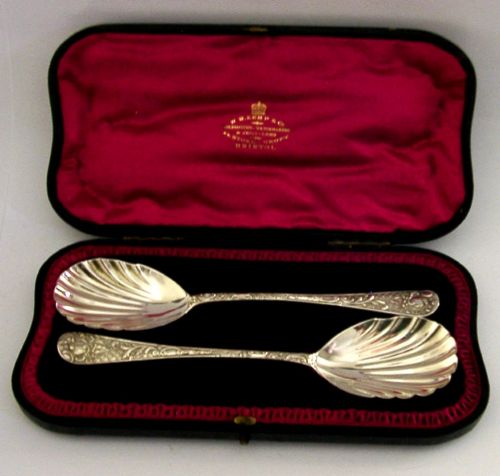
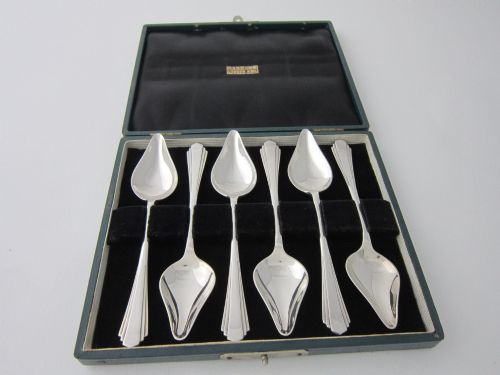
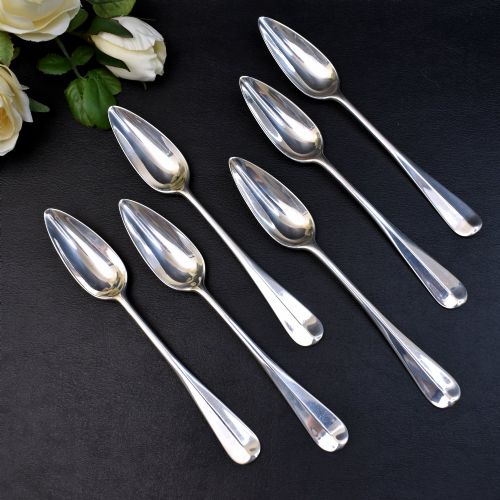
These pieces encompass specialised serving spoons, dessert spoons, and grapefruit spoons produced across the Georgian, Victorian, and later periods. The selection frequently includes matched pairs or boxed sets intended for formal dining or gift presentation.
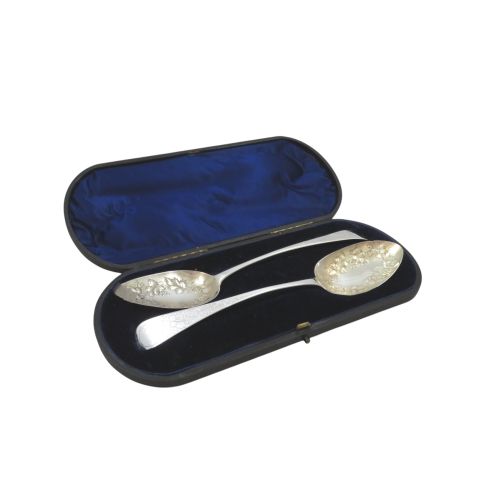
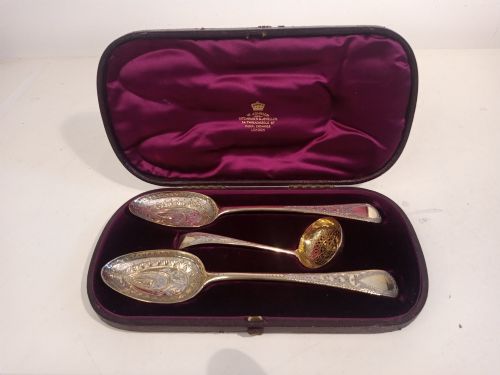
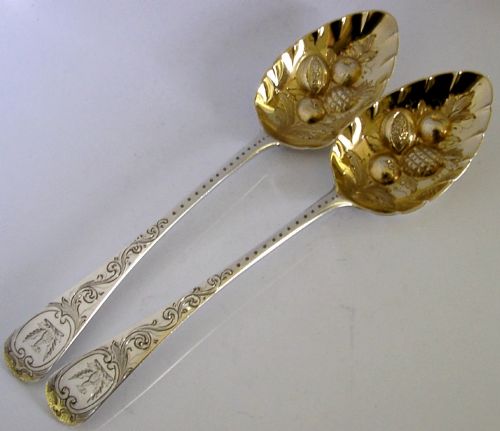
Buyers often encounter berry spoons featuring heavily chased or engraved bowls alongside later Art Deco and Edwardian grapefruit variants. Many survive complete with fitted cases lined in velvet, silk, or satin.
Originating predominantly from British and Irish workshops, these utensils range from single serving implements to full dining sets incorporating nutcrackers and grape scissors.
Materials and construction
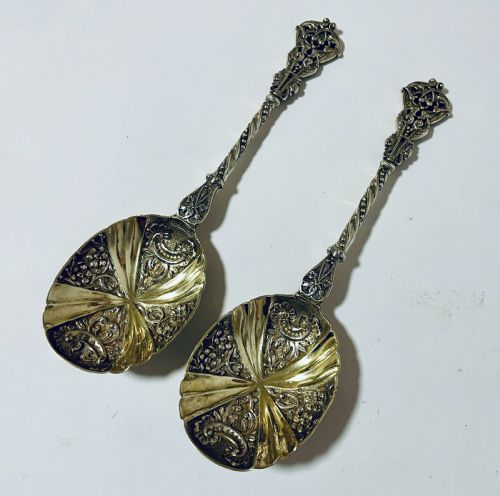
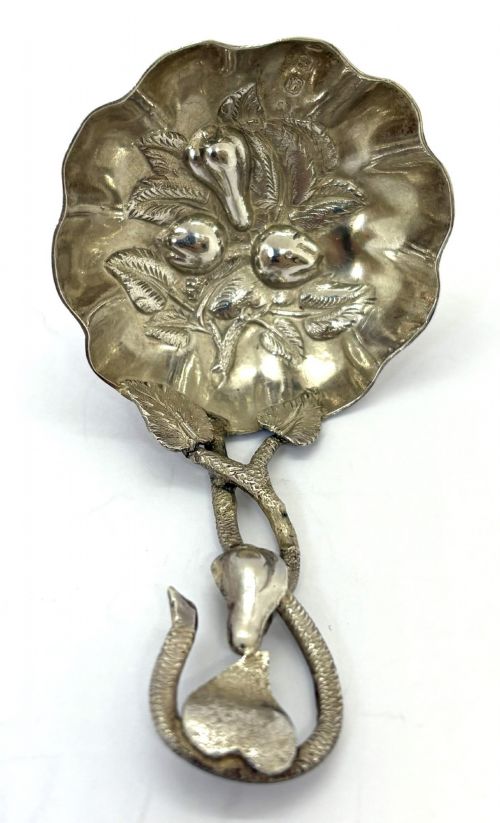
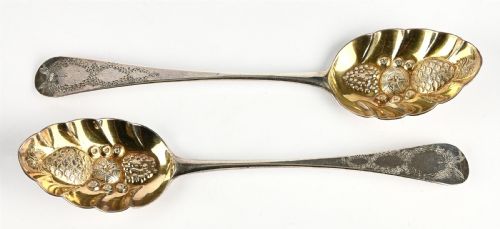
Makers utilised sterling silver and silver plate, frequently applying silver-gilt finishes to the bowl interiors for decorative contrast and protection against fruit acids. Handles received intricate engraving, cast naturalistic leaf motifs, or specialised shaping.
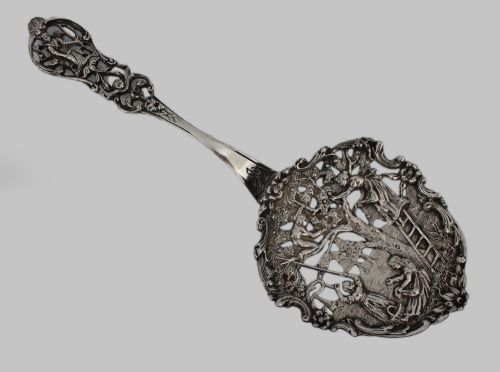
Piercing and chasing transformed standard spoon blanks into elaborate berry spoons with fruit-form pierced bowls. Fitted presentation boxes employed leatherette exteriors paired with plush silk, velvet, or satin internal linings.
Antique Fruit Spoons Retail Price Guide 2026
Typical asking prices for fruit spoons among the pieces listed under this phrase on Sellingantiques today, from the lower quarter to the upper quarter. They describe what is for sale here now, not the wider market.
Some Victorian spoons were retrofitted decades after manufacture with frantic berry chasing to satisfy changing tastes in dessert service.
Assessing quality
The standard of an antique fruit spoon rests on the crispness of the chasing and the depth of the hand-engraving across the bowl and handle. Crisp botanical motifs and deep relief work separate superior examples from routine production.
Completeness dictates much of the value, particularly when original fitted cases retain their silk and velvet linings in sound condition. Maker marks and clear hallmarks from established silversmiths further distinguish finer pieces.
Hamilton & Inches·Peter & Anne Bateman·William Chawner II·Sebastian Crespell·Hukin & Heath·Whiting Co.·Walker & Hall
The Antique Fruit Spoons Glossary
- Berry spoon
- A large serving spoon, often Georgian, later retrofitted or chased with fruit and berry motifs on the bowl.
- Silver-gilt
- Sterling silver that has been plated with a thin layer of gold, providing a warm yellow finish to the interior of the bowl.
- Cased set
- A matched collection of spoons housed in a fitted, protective box lined with materials such as silk, velvet, or satin.
- Chasing
- A metalworking technique where the design is hammered into the front surface of the silver to create raised, textured relief patterns.
- Piercing
- The method of cutting openings through the silver bowl to create decorative latticework or fruit shapes.
Antique Fruit Spoons: Frequently Asked Questions
What distinguishes antique fruit spoons from standard spoons?
These pieces feature specialised bowl shapes, such as pointed tips for citrus or wide, pierced bowls designed specifically for serving berries.
They also frequently appear in matched pairs or full boxed sets accompanied by serving cutlery like grape scissors.
How were these spoons used historically?
Diners utilised them during formal dessert courses for handling fresh fruits that required dedicated implements to protect table linens and fine porcelain.
Grapefruit spoons emerged later in the period with tapered or serrated bowls to segment citrus fruit cleanly.
How should cased sets be stored?
Keep the fitted boxes in a stable environment away from direct sunlight and excessive humidity to protect the delicate velvet, silk, or satin linings.
Storing silver inside closed cases also helps slow down natural tarnishing processes.
How can I identify the period of a spoon?
Examine the hallmarks stamped on the reverse of the handle for monarch duty marks, date letters, and city symbols that indicate the exact year of assay.
Stylistic shifts, such as heavy Victorian naturalistic leaf work versus geometric Art Deco lines, provide additional chronological clues.