


Silver Grape Scissors
Silver grape scissors are specialist tableware designed to snip stems at the dining table, combining utilitarian purpose with ornate nineteenth-century craftsmanship.
What silver grape scissors are
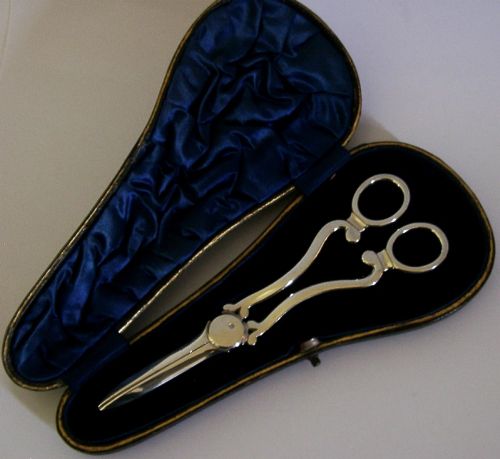
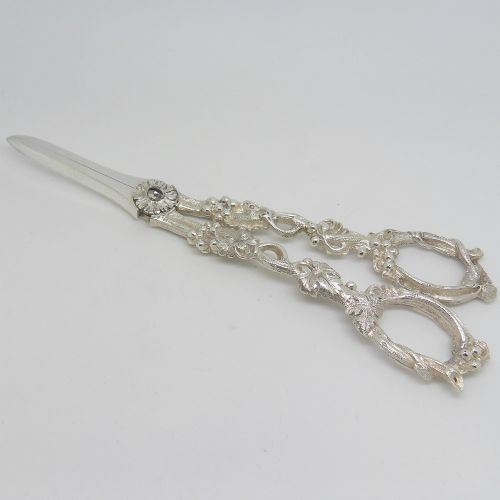
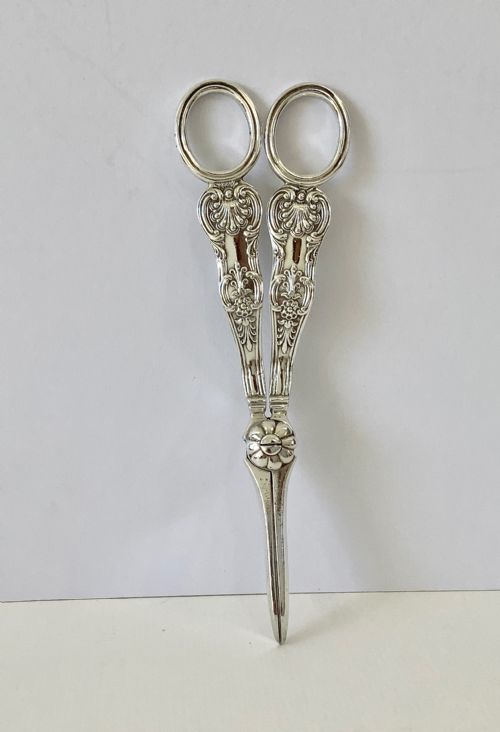
Silver grape scissors are purpose-built implements designed for severing individual clusters of fruit during dessert service. The form typically comprises short blades paired with long, decorative handles that allow the user to reach into fruit bowls without disturbing the arrangement.
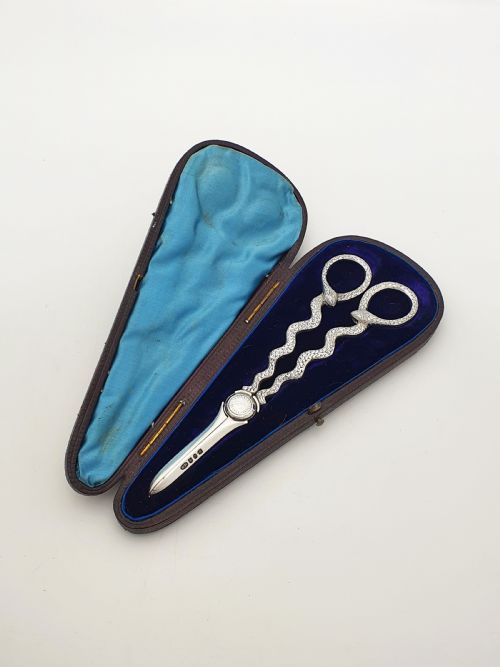
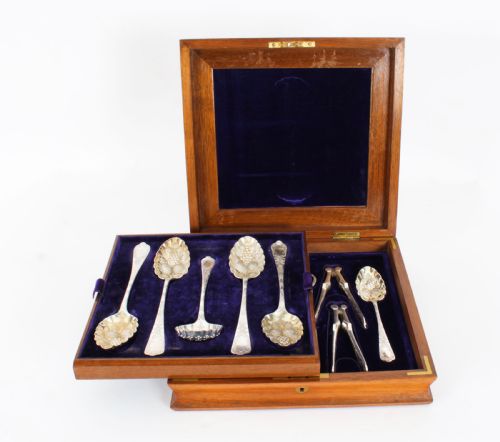
Most examples encountered on this page originate from the Victorian period, though production extends from the Georgian era through the Edwardian years and into the mid-twentieth century. These utensils frequently appear alongside fitted presentation cases, sometimes accompanied by matching stands or fruit knives.
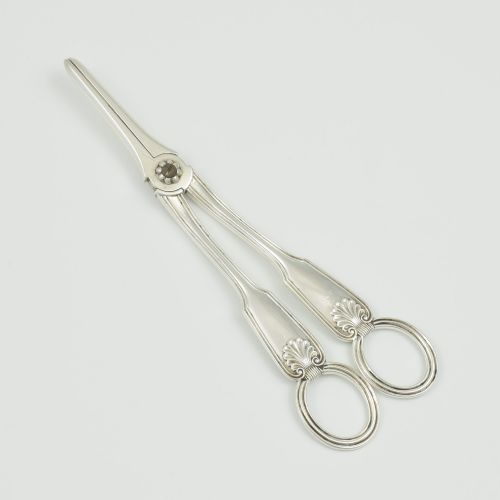
While solid sterling silver dominates the archival record, silver plate alternatives also emerge regularly. Styles range from plain, utilitarian forms to elaborate expressions incorporating cast decoration.
How they were made
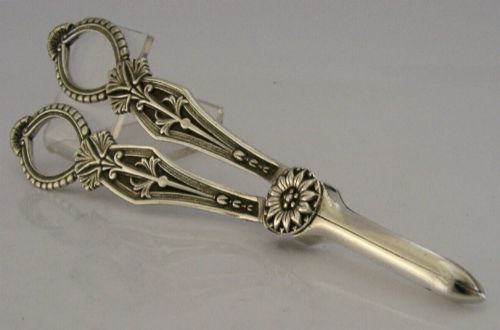
Silversmiths utilised traditional manufacturing methods, combining casting, hand-engraving, and occasionally gold gilt finishes. Handles were frequently cast separately with intricate motifs before being joined to the steel-edged cutting blades necessary for clean snips.
Decoration often involved repoussé work, chasing, or pierced designs, rendering each pair a distinct exercise in decorative metalwork. Fitted storage boxes lined with velvet and leather indicate the high status afforded to these dining implements.
Retail Price Guide 2026
Typical UK retail prices for silver grape scissors, calculated from the Sellingantiques database of over a million retail prices indexed since 2003. This retail price guide relies exclusively on Sellingantiques data; no external sources or auction records are used, so the figures do not describe the wider market.
Listings feature items spanning the Georgian, Victorian, Edwardian, and Art Deco periods, created in both solid sterling silver and silver plate.
What varies in quality
The distinction between standard and superior pieces rests primarily on the depth and complexity of the handle ornamentation. Cast figural designs depicting vines, masks, or animal motifs represent a higher tier of workmanship than plain or stamped patterns.
Weight and structural rigidity also dictate quality, with heavier solid silver gauges providing a more substantial feel in the hand. The presence of original maker marks and matching fitted presentation cases further elevates an example.
Reilly & Storer·Elizabeth Eaton·Francis Higgins·Mappin & Webb·Josiah Williams & Co
The Silver Grape Scissors Glossary
- Silver Plate
- A base metal substrate coated with a thin layer of silver through electroplating or older processes. This technique provided the visual appeal of solid silver at a lower production cost.
- Gold Gilt
- A thin application of gold wash applied to the silver surface, often seen on the interior of blades or across the entire implement to prevent tarnishing from fruit acids.
- Cast Silver
- Molten metal poured into a mould to create three-dimensional relief patterns on handles, allowing for sculptural details such as vines or snakes.
- Kings Pattern
- A traditional decorative flatware motif featuring a shell and scroll design along the handle edges. This formal pattern appeared on tableware throughout the nineteenth century.
- Gothic Revival
- An architectural and decorative style drawing inspiration from medieval forms, characterised in these implements by pointed arches and heavy, robust detailing.
Frequently Asked Questions
How were silver grape scissors used?
These implements were utilised at the formal dining table to snip small clusters of grapes from a larger bunch, preventing guests from handling the entire fruit.
They allowed diners to serve themselves cleanly and maintained the presentation of the fruit bowl throughout dessert.
What periods do these scissors date from?
The selection spans the Georgian, Victorian, and Edwardian eras, with later examples extending into the mid-twentieth century.
Victorian pieces form the largest portion of available items, showcasing styles from Gothic Revival to Art Nouveau.
How should I store cased pairs?
Original leather and velvet lined cases provide the ideal environment for protecting the metal from atmospheric tarnishing.
Keeping the implements dry and away from direct heat sources preserves both the silver and the interior fabric linings.