


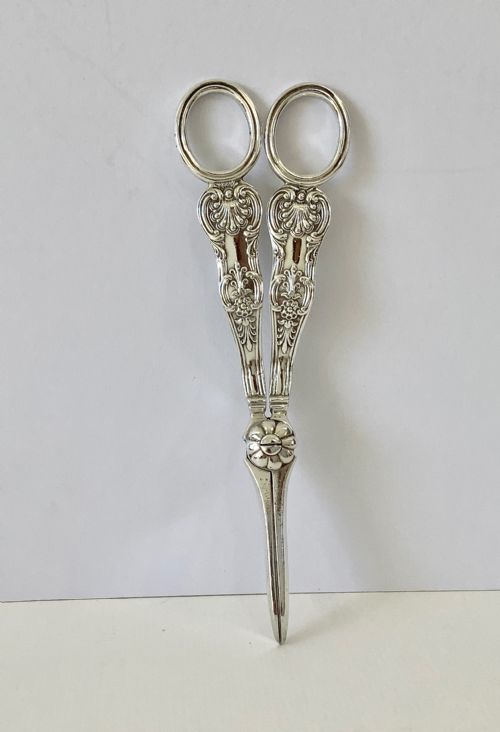
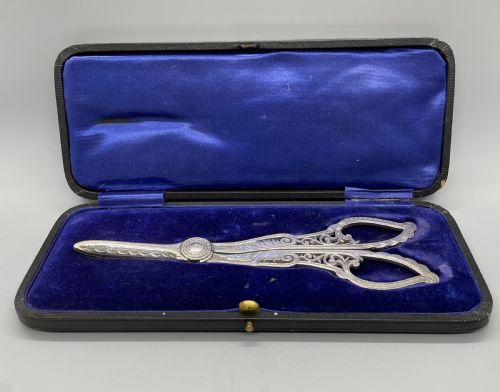

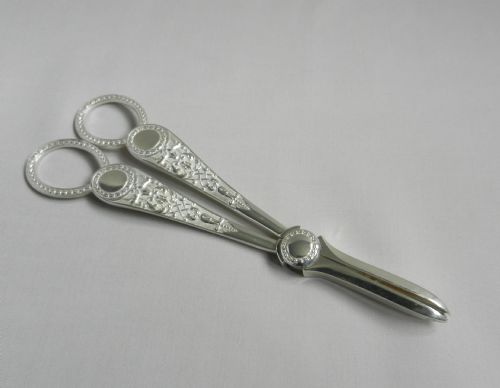
Solid Silver Grape Scissors
Solid silver grape scissors are purpose-made dining implements designed to snip fruit stems at the table, pairing utility with ornamental work.
Solid Silver Grape Scissors
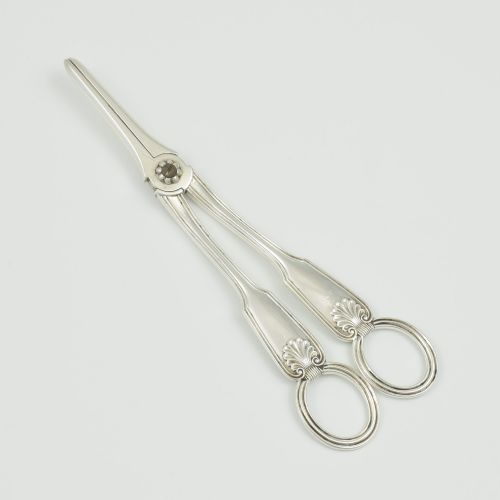
Solid silver grape scissors appear primarily as Victorian, Edwardian, and mid-twentieth-century examples designed for parlour fruit courses. They take the form of specialised shears rather than standard kitchen scissors, often incorporating shaped handles and pivoted blades.
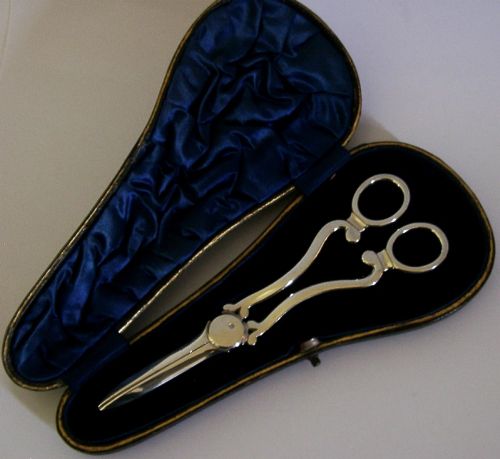
The objects on this page span styles from Gothic Revival to Art Deco and Art Nouveau, reflecting changing decorative tastes across the nineteenth and twentieth centuries. Many pieces survive in fitted cases lined with velvet, satin, or silk, accompanied by matching leather exteriors.
Makers utilised sterling silver and silver gilt, occasionally producing heavier cast versions with significant gram weights intended for formal dining. Both grape scissors and grape shears function interchangeably in the historical record, appearing across various English assay offices.
Materials and Techniques
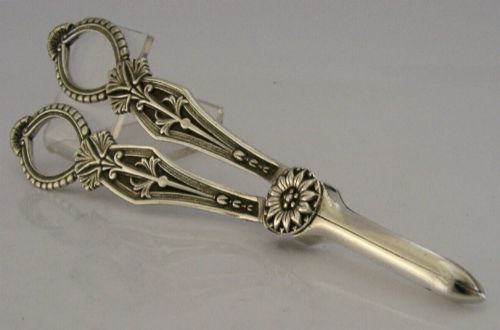
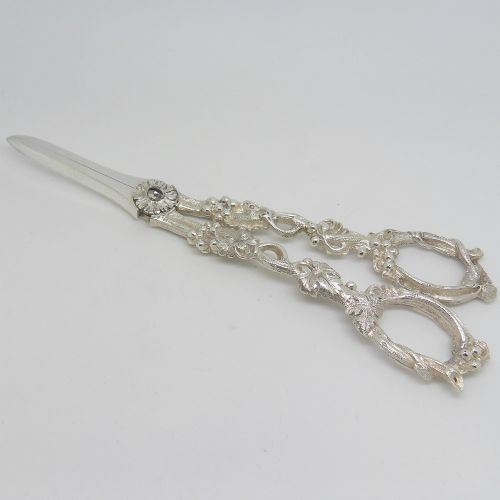
Silversmiths employed sterling silver and silver gilt, shaping the metal through casting and hand engraving. Cast components allowed for high-relief decoration such as vine leaves, acanthus motifs, and figural masks.
Handles often exhibit pierced work or cast grape vine decoration soldered or integrated into the finger loops. Fitted storage boxes lined with velvet, silk, or satin protect the silver surfaces from tarnishing and wear.
Solid Silver Grape Scissors Retail Price Guide 2026
Typical asking prices for solid silver grape scissors among the pieces listed under this phrase on Sellingantiques today, from the lower quarter to the upper quarter. They describe what is for sale here now, not the wider market.
The inventory records pieces spanning from the early nineteenth century through the nineteen-sixties, utilising sterling silver, silver gilt, and fitted velvet or leather cases.
Factors of Quality
Quality rests upon the crispness of the cast decoration and the weight of the metal. Heavier examples with deep, detailed relief work demonstrate superior silversmithing compared to light, plain forms.
The inclusion of original fitted cases lined with silk, velvet, or leather elevates a piece, as does the presence of clear hallmarks from noted makers and workshops.
Goldsmiths And Silversmiths Co·Gibson And Langman·Charles Reily And George Storer·Paul Storr·Chawner And Co·Francis Higgins·John Gilbert·William Eley And William Fearn·George Angel·Mappin And Webb·C J Vander
The Solid Silver Grape Scissors Glossary
- Sterling silver
- A standard alloy consisting of ninety-two point five percent silver by mass, with the remainder composed of copper or other metals. This alloy provides the structural rigidity necessary for functional tableware.
- Silver gilt
- Silver that has been coated with a thin layer of gold on its surface, creating a warm two-tone appearance. This finish appears frequently on nineteenth-century dessert implements.
- Cast
- A manufacturing method where molten silver is poured into a mould to form complex shapes and high-relief ornamentation. Cast grape scissors usually display heavier weights and deeper decoration.
- Hallmark
- An official stamp applied by an assay office to indicate the purity of the metal, the maker, and the year of production. English marks often include a leopard's head, a lion passant, and a date letter.
- Acanthus
- A classical ornamental motif derived from Mediterranean foliage, frequently carved or cast onto the handles of Victorian silver. It provides a scrolling, organic texture to the grip.
Solid Silver Grape Scissors: Frequently Asked Questions
What are solid silver grape scissors used for?
These implements were designed to sever small bunches of grapes at the dining table during formal dessert courses. They allowed guests to take fruit cleanly without handling the main cluster.
Their use formed part of nineteenth and twentieth-century dining etiquette, keeping fingers clean and presentation refined.
How do I identify the date of grape scissors?
Dating relies upon the hallmarks stamped onto the silver, which record the assay office and the specific year letter. English pieces usually feature standard duty marks and maker initials alongside the date stamp.
Stylistic cues such as Art Deco geometric lines or Victorian cast foliage also help narrow down the period of manufacture.
Why do some grape scissors have gilt finishes?
Silver gilt surfaces were applied to prevent the fruit acids from tarnishing the bare silver during use. The gold wash offers a layer of protection while adding a decorative contrast to the handles.
Many of the grandest nineteenth-century examples feature this rich interior coloration.
Are these scissors meant for cutting thick stems?
The blades are engineered for snipping delicate fruit stems rather than woody branches or tough materials. Their pivot action and fine tips target the narrow stem connecting individual grapes to the vine.
Using them correctly preserves the delicate alignment of the blades.