


Antique Grape Scissors
When you handle antique grape scissors, you hold specialist tableware designed to snip small bunches of fruit at the dining table.
Antique Grape Scissors
Antique grape scissors appear primarily across the Victorian and Edwardian periods, alongside Georgian examples, formed specifically as short-handled cutlery for portioning fruit cleanly.
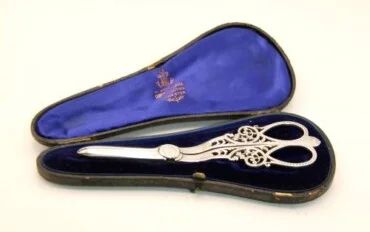
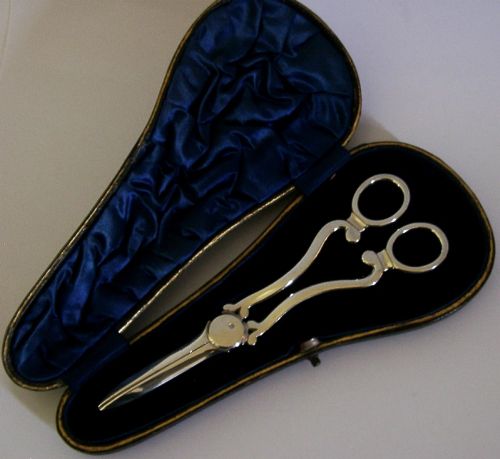
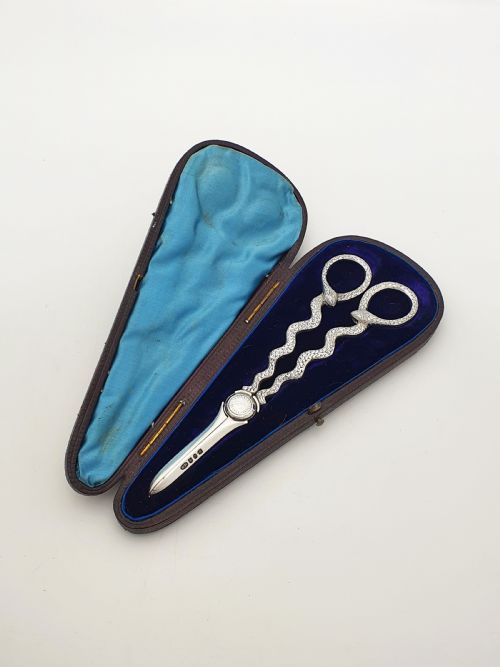
The most common formats met on this page are sterling silver pairs, occasionally accompanied by silver plate, sometimes housed within fitted cases lined with silk, velvet, or satin alongside fruit knives and nutcrackers.
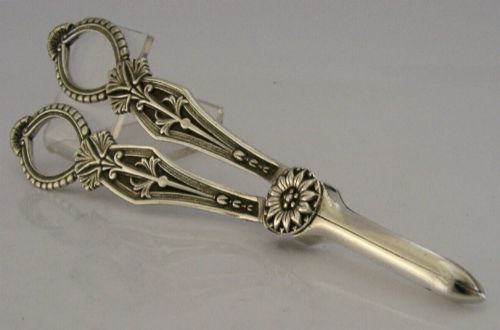
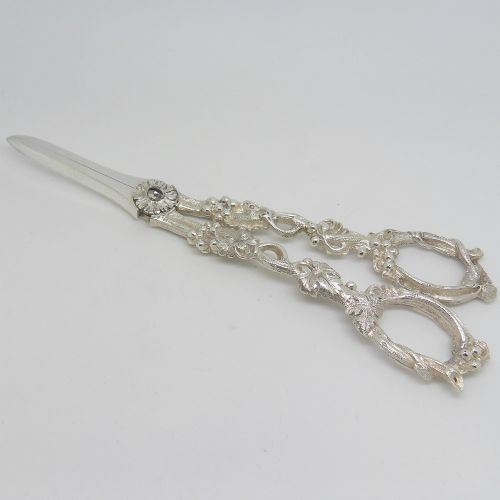
Design variations range from plain silver finishes to elaborate cast or engraved decoration, including figural handles, snake motifs, acanthus leaves, and naturalistic grape vine patterns.
Materials and construction
Silversmiths employed sterling silver and silver plate, frequently utilising casting techniques to create high-relief handles shaped as vines, masks, or serpents.
Many items incorporate hand-engraving across the blades and bows, while fitted presentation boxes utilise wood covered in leatherette, leather, or cloth, lined with satin or velvet.
Listings span the Georgian, Victorian, and Edwardian eras, predominantly fashioned from sterling silver with occasional silver plate.
Evaluating craftsmanship
The distinction between standard examples and the finest work lies in the depth and clarity of the cast ornament, particularly on figural handles and vine-decorated stems.
Heavier gauge silver and crisp, hand-engraved detailing separate workshop output by notable silversmiths from mass-produced plated alternatives.
Goldsmiths & Silversmiths Co·Gibson & Langman·Charles Reily & George Storer·Paul Storr·Chawner & Co·Hukin & Heath·C.J. Vander·Francis Higgins·John Gilbert·Martin Hall & Co
The Antique Grape Scissors Glossary
- Sterling silver
- A silver alloy containing 92.5 percent pure silver by mass, standard for quality British tableware.
- Silver plate
- A base metal substrate coated with a thin layer of silver, providing the appearance of solid silver at a different cost.
- Cast silver
- Molten metal poured into a mould to form high-relief handles and decorative motifs.
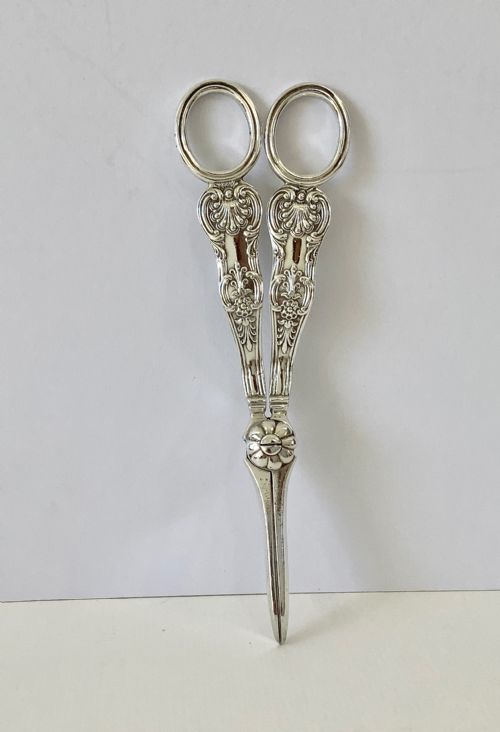
- Kings pattern
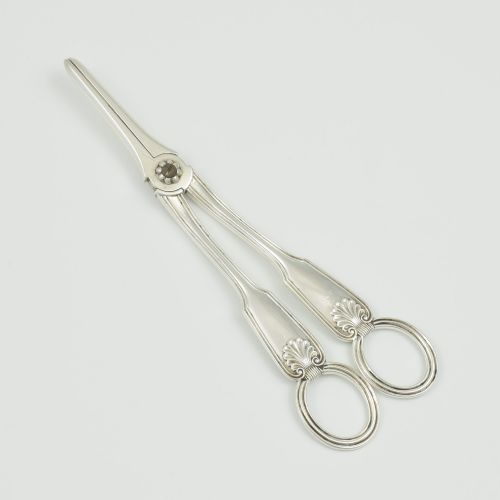
- A traditional ornate cutlery handle design featuring a shell and scroll motif at the terminal.
- Gilt
- A thin application of gold wash over the surface of silver, sometimes termed silver gilt.
Antique Grape Scissors: Frequently Asked Questions
What are antique grape scissors used for?
These specialist shears allowed diners to sever individual small clusters of fruit from a larger bunch cleanly at the table without bruising the surrounding grapes.
They formed part of formal dessert service cutlery arrangements during the Georgian, Victorian, and Edwardian eras.
How do you store cased grape shears?
Cased sets should be kept in their original fitted boxes lined with silk or velvet to protect the metal surfaces from tarnish and physical impact.
Storing them away from direct sunlight and excessive humidity preserves both the exterior leatherette and the interior textile linings.
Are sterling silver grape scissors marked?
British sterling silver examples feature hallmarks indicating the assay office, standard mark, and date letter stamped directly onto the metal.
These marks help identify the specific year of production and the silversmith responsible for the piece.
What is the difference between scissors and shears?
In historical silver terminology, the terms were often used interchangeably for these specific fruit-cutting implements.
Both descriptions refer to short-bladed hinged instruments designed specifically for handling fruit at dessert.