


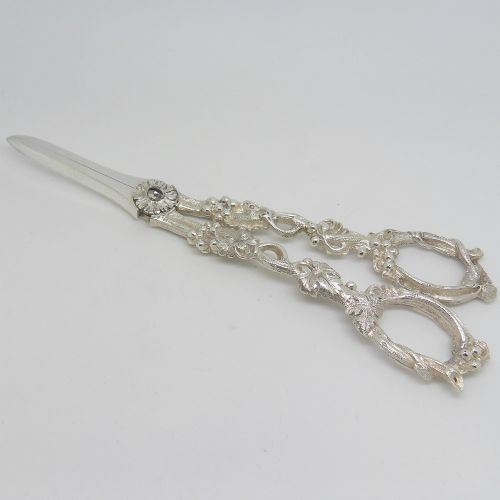
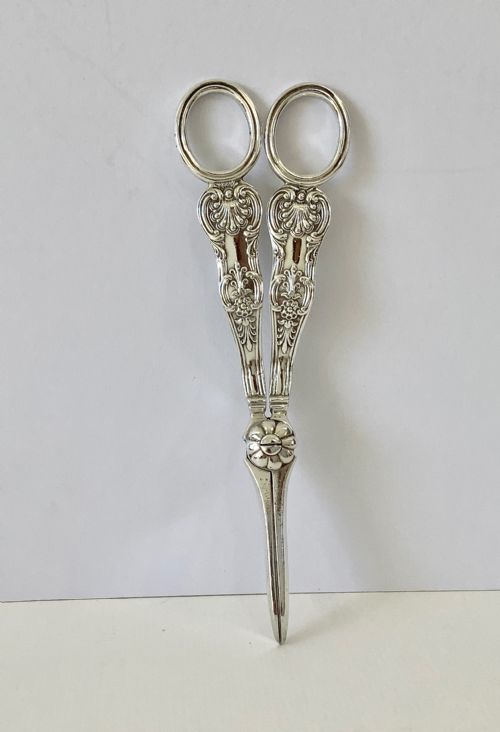


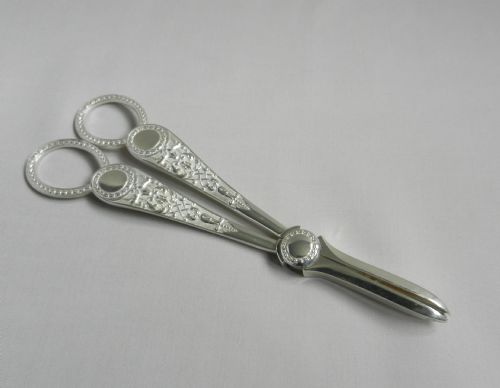
Sterling Silver Grape Shears
Sterling silver grape shears bring the tactile ritual of formal dining into focus through specialist scissor forms designed for severing clusters of fruit.
Sterling silver grape shears
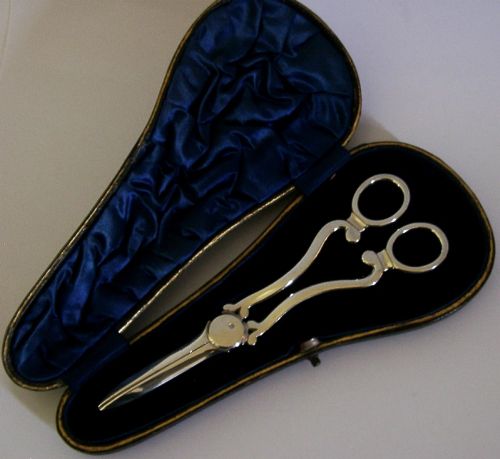
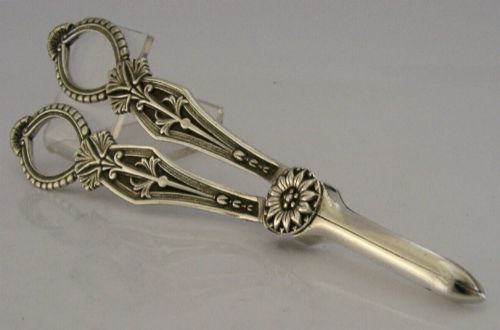
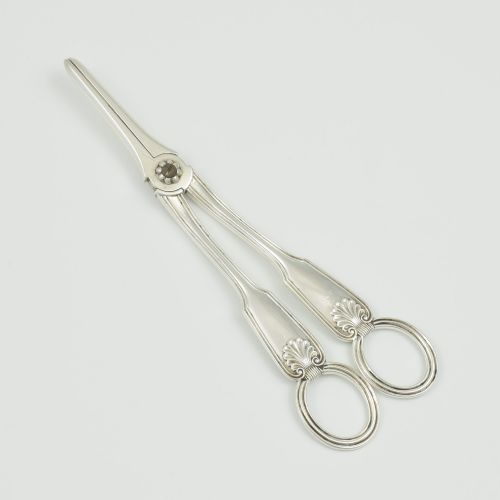
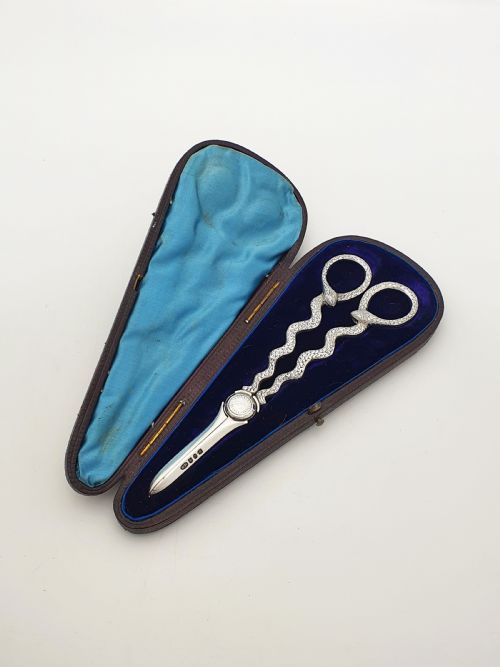
Sterling silver grape shears are specialised implements designed specifically for cutting clusters of grapes at the dining table during formal dessert courses. These items appear in forms such as grape scissors and grape shears, originating across the Georgian, Victorian, Edwardian and mid-twentieth-century periods.
The pieces on this page span styles including Victorian, Edwardian, Gothic Revival and Victorian Revival, demonstrating how dining accessories evolved across generations. Surviving examples frequently arrive complete with fitted protective containers lined with materials such as velvet, leather, satin, silk and leatherette.
Collectors encounter both plain silver surfaces and gilt interiors known as silver gilt, alongside heavy cast barware items from later decades. The design prioritises a long, sturdy handle paired with short, robust blades capable of reaching deep into fruit clusters.
Making sterling silver grape shears
Makers produced these implements primarily using sterling silver, frequently employing casting techniques to create substantial handles with high gram weights. Certain pieces incorporate silver gilt finishes, applying a thin layer of gold over the silver base to enrich the interior bowl of the blades.
The associated fitted cases utilise structural foundations of leather or leatherette, lined internally with soft textiles such as velvet, satin, silk or velvet to cushion the silver implement securely during storage.
Retail Price Guide 2026
Typical UK retail prices for sterling silver grape shears, calculated from the Sellingantiques database of over a million retail prices indexed since 2003. This retail price guide relies exclusively on Sellingantiques data; no external sources or auction records are used, so the figures do not describe the wider market.
Storage accessories for these items include fitted cases lined with silk, satin, velvet, leather and leatherette.
Quality variations in sterling silver grape shears
The physical heft and gauge of the metal define the upper tiers of production, where heavier grams indicate substantial casting rather than light pressed construction. Implements that retain their original fitted cases lined in silk or velvet demonstrate higher degrees of preservation and original intent.
Refinement in surface decoration, from crisp cast foliate motifs to specialist patterns like bead or Kings designs, separates standard utilitarian implements from masterworks of silversmithing. The presence of clear hallmarks identifying prominent makers anchors the provenance and execution standard of the piece.
Goldsmiths & Silversmiths Co.·Gibson & Langman·C.J. Vander·Elizabeth Eaton·Charles Boyton
The Sterling Silver Grape Shears Glossary
- Sterling silver
- A silver alloy containing 92.5 percent pure silver by mass and 7.5 percent other metals, usually copper. This standard composition provides the necessary durability for functional dining implements while maintaining a bright metallic lustre.
- Silver gilt
- Sterling silver that has been coated with a thin layer of gold on its surface. This technique protects the silver from tarnishing in specific areas and creates a striking two-tone visual effect.
- Cast silver
- Metal that has been poured into a mould to form a three-dimensional shape rather than being stamped from sheet metal. This method allows for heavier, more heavily ornamented handles.
- Kings pattern
- A traditional ornate cutlery design featuring a shell motif and a central rib on the handle. It remains popular across Victorian silver production.
- Fitted case
- A custom-made storage box lined with materials such as velvet, satin or silk designed to hold an implement precisely. These cases protect delicate items from accidental knocks and oxidation.
Frequently Asked Questions
What are sterling silver grape shears used for?
These implements were utilised at the dining table to snip individual clusters of grapes from a larger bunch during dessert courses.
Using dedicated scissors prevented guests from having to touch the fruit directly with their fingers when serving themselves.
How do I identify a Victorian pair?
Victorian examples frequently display characteristic period ornamentation such as bead patterns, cast floral motifs or Gothic Revival architectural influences.
Examining the stamped hallmarks on the silver will also reveal assay office marks and date letters corresponding to the nineteenth century.
Why do some shears have gold inside?
The golden finish inside the blades is known as silver gilt, created by applying a thin layer of gold over the sterling silver.
This treatment was often applied to protect the metal from the acidic juices of the fruit during use.
Are fitted cases original to the shears?
Many surviving pairs retain their original fitted cases, which were specifically constructed to match the exact contours of the scissors.
Internal linings of velvet, satin or silk indicate that these items were intended as luxury dining accessories or presentation gifts.
How heavy are these antique shears?
Weight varies considerably depending on the manufacturing period and the casting technique employed by the silversmith.
While lighter examples weigh under eighty grams, heavy cast barware and substantial Victorian or Edwardian pieces frequently exceed one hundred grams.